
- Podcasts
 Podcasts
 - Videos
 Videos
 - Policy Issues
 Policy Issues
 - About
 About
About


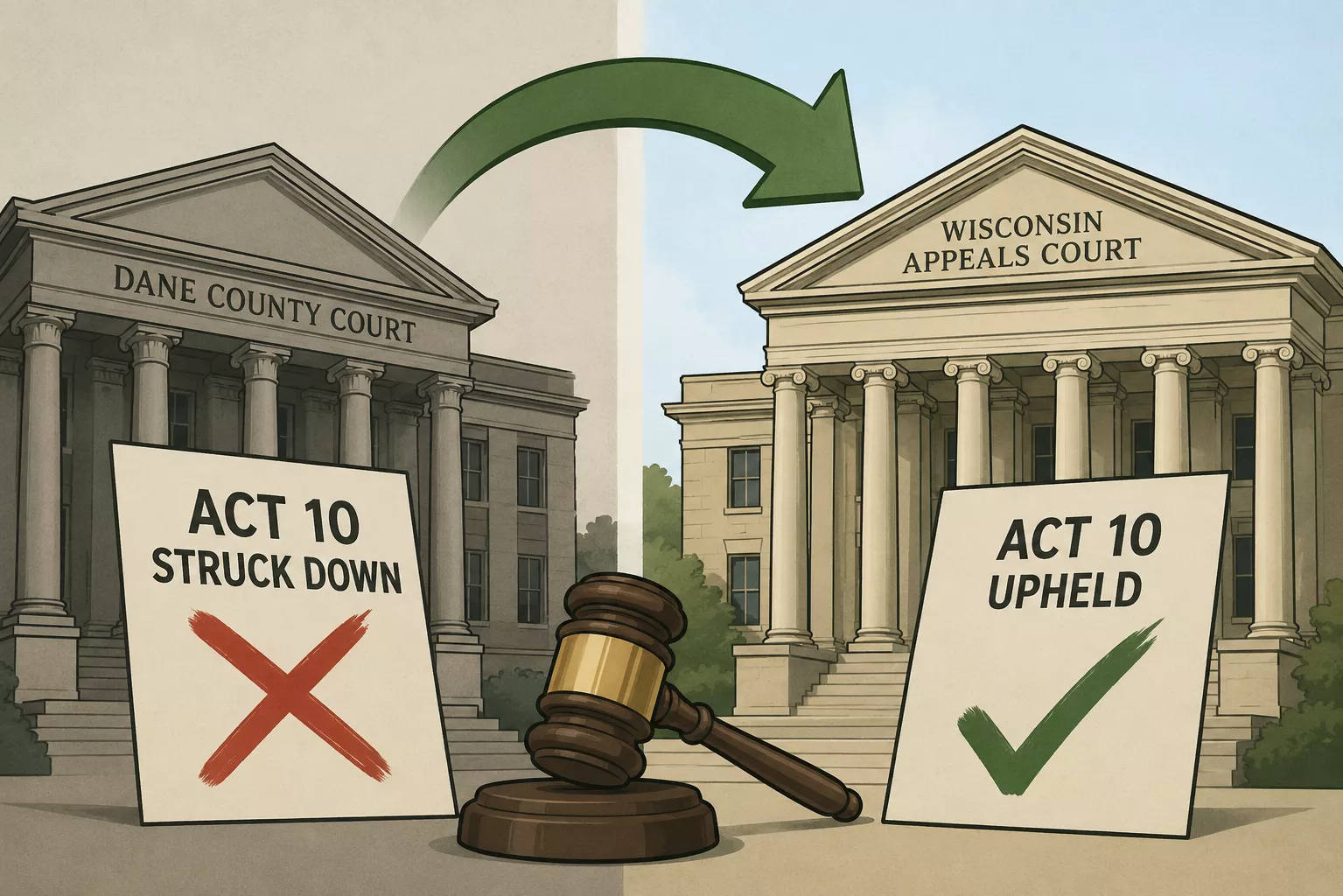
Appellate Court Reverses Act 10 Decision
No one could have predicted the immense impact that Act 10 would eventually have on the State of Wisconsin’s financial destiny when the MacIver Institute first proposed the policy back in November 2010.
In 1959 Wisconsin became the first state to allow public employees to unionize. Soon thereafter, nearly all of them were union members. Local governments got hammered. Union representatives demanded higher and higher wages, more extensive benefits, and increasingly burdensome contracts that stretched local budgets thin.
Property taxes soared and the legislature was forced to put revenue limits on school districts in 1994, and levy limits on counties and municipalities in 2006. But the public sector unions didn't let up, and by the time Scott Walker became governor, the state was facing a $3.5 billion budget deficit.
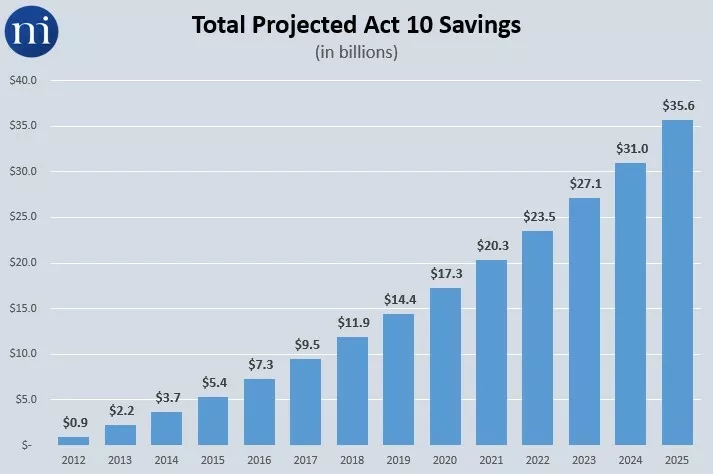
We believed then, as we do now, that Wisconsin had to eliminate collective bargaining for public employees if it ever hoped to achieve fiscal stability in its state and local governments’ budgets. The idea caught on immediately, and Gov. Scott Walker introduced MacIver’s recommendation as the budget repair bill on Feb. 11, 2011. After a brutal month-long political and cultural battle, Walker signed that bill into law as Act 10. Since then, the MacIver Institute conservatively estimates it has directly saved Wisconsin taxpayers $35.6 billion through lower taxes and higher service levels.
But now the savings and accountability that Act 10 created are under threat. In 2023 a Dane County judge overturned Act 10. That decision was appealed and reversed today by a Waukesha Appeals Court, but will now go to the Wisconsin Supreme Court to be decided by a 5-2 liberal majority.
Today’s court decision is a great win for Wisconsin taxpayers and for teachers and others who have been allowed to choose whether they want to join a union by exercising the Right to Work guaranteed by Act 10. Unfortunately, Wisconsin knows all too well the chaos that would ensue should Act 10 be undone––bringing back the high-tax, fiscal nightmare that was rejected by Wisconsinites more than a decade ago.

Interested in the content of this Article?
Reach out to the MacIver Institute to aquire more information


