
- Podcasts
 Podcasts
 - Videos
 Videos
 - Policy Issues
 Policy Issues
 - About
 About
About


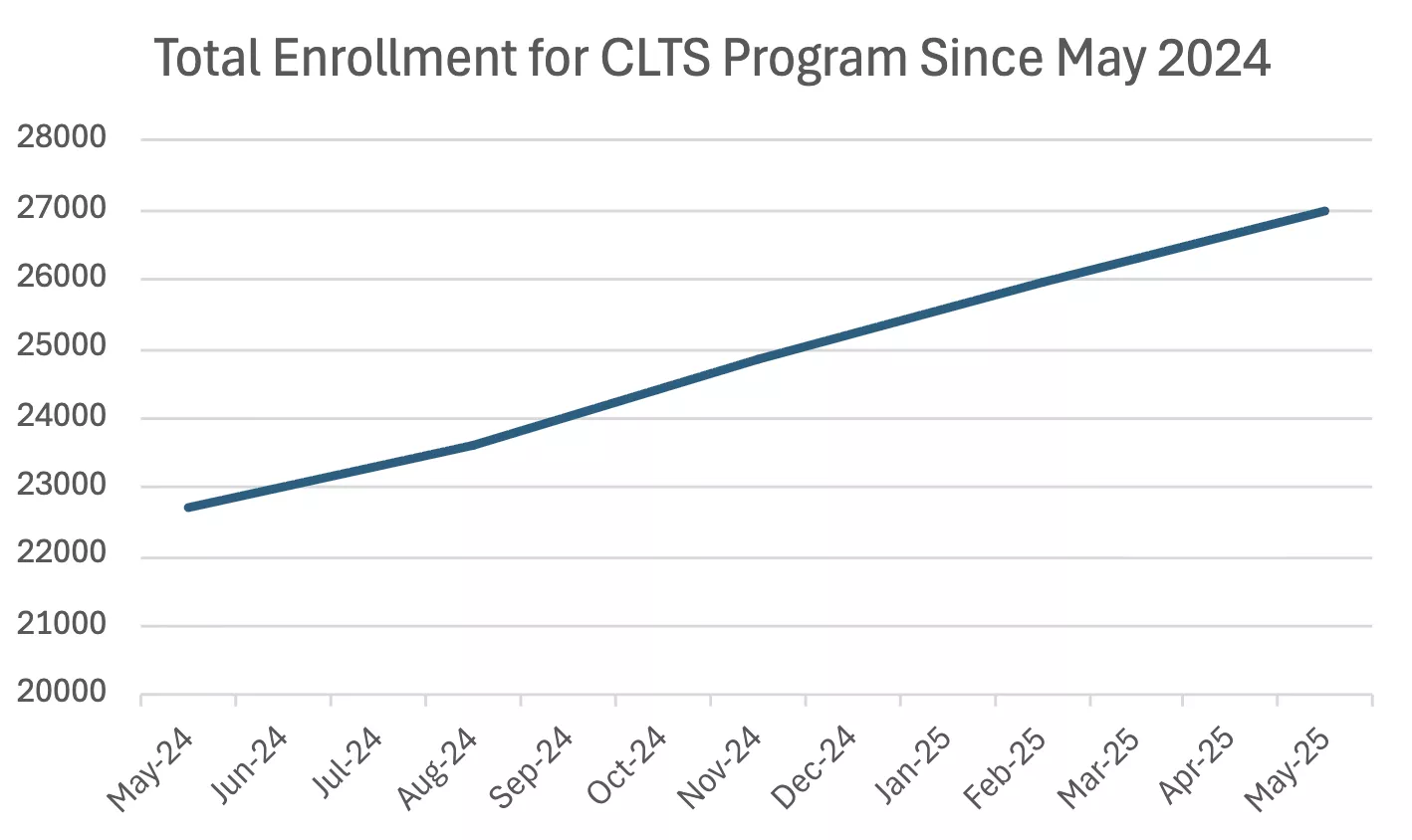
Enrollment in the Children’s Long-Term Support program, which provides waivers for children with institutional-level disabilities, has increased by 361% since 2017. There has also been a 28% jump in enrollment in just the last year and a half.
It’s a statewide phenomenon. Take Rock County for example. For its new 2026 budget, it has requested 10 new hires for the CLTS program. The justification is a rising caseload, reaching 1400 children. This is an increase of 200 in just the last year.
The rapidly rising numbers signal either one of two things: a large increase in the number of children with severe mental/physical disabilities or a large increase in the recognition of these disabilities. Regardless, the numbers are raising concern about the growing mental and physical health crisis in Wisconsin’s young children.
About the Children’s Long-Term Support Program:
In Rock County, the Children’s Long-Term Support program is administered through the Human Services Department. It is funded through both federal and state money, which comes from Medicaid, as well as local government funding.
The CLTS program helps children with disabilities and their families with services and support so they can stay at home rather than go to a medical institution. It works by providing waivers through Medicaid that allow for Medicaid funds to be used for non-medical services.
In order to receive a waiver, a child has to fall into three categories: intellectual/developmental disability, mental health disability, or physical disability. Other requirements for the CLTS program include being under 22 years of age, meeting an institutional level of care, meeting nonfinancial and financial eligibility criteria for a full-benefit category of Medicaid, residing in a setting allowed by CLTS Waiver Program policy, and being enrolled in full-benefit Medicaid.
Birth to 3 Program:
Birth to 3 is an early intervention special education program for children 0 to 36 months. It is a developmental program that covers services such as service coordination, occupational therapy, physical therapy, speech therapy, and special education.
The requirements for a child’s enrollment in Birth to 3 are much more subjective than the requirements for enrolling in the CLTS program. A child who meets the following requirements may be eligible: a developmental delay of at least 25% in one or more areas of development, a physician-diagnosed condition with a high probability of developmental delay, or unusual development that negatively affects your child’s overall development.
A child does not need to have a diagnosis or be enrolled in Medicaid to be a part of the Birth to 3 program. Birth to 3 is not administered by the CLTS program, but the two work closely in conjunction with each other and serve a similar population.
The program has experienced over a 19% increase in enrollment from just 2020 to 2025.
Data:
The Children’s Long-Term Support program focuses on maintaining care at home for children with severe disabilities, rather than significantly improving the status of their disabilities. Therefore, there is no publicly available data on how the conditions of those in the CLTS program have progressed throughout their time receiving the waivers.
The Birth to 3 program, however, issues annual performance data to track how children’s abilities and skills progress throughout the program. Interestingly, the data shows that the Birth to 3 program has not been all that effective in recent years.
The annual report tracks children in two separate age groups, from 0 to 2 and from 3 to 5. It also measures growth in three different categories: social relationships, knowledge and skills, and action to meet needs.
First off, the report tracks the percentage of children who made greater than expected growth during their time in the program. The numbers for this metric have remained fairly strong over the years. In 2023, the most recent year of data, all three categories for both age groups had anywhere from 65 to 83 percent of children making greater growth than expected during their time in the program.
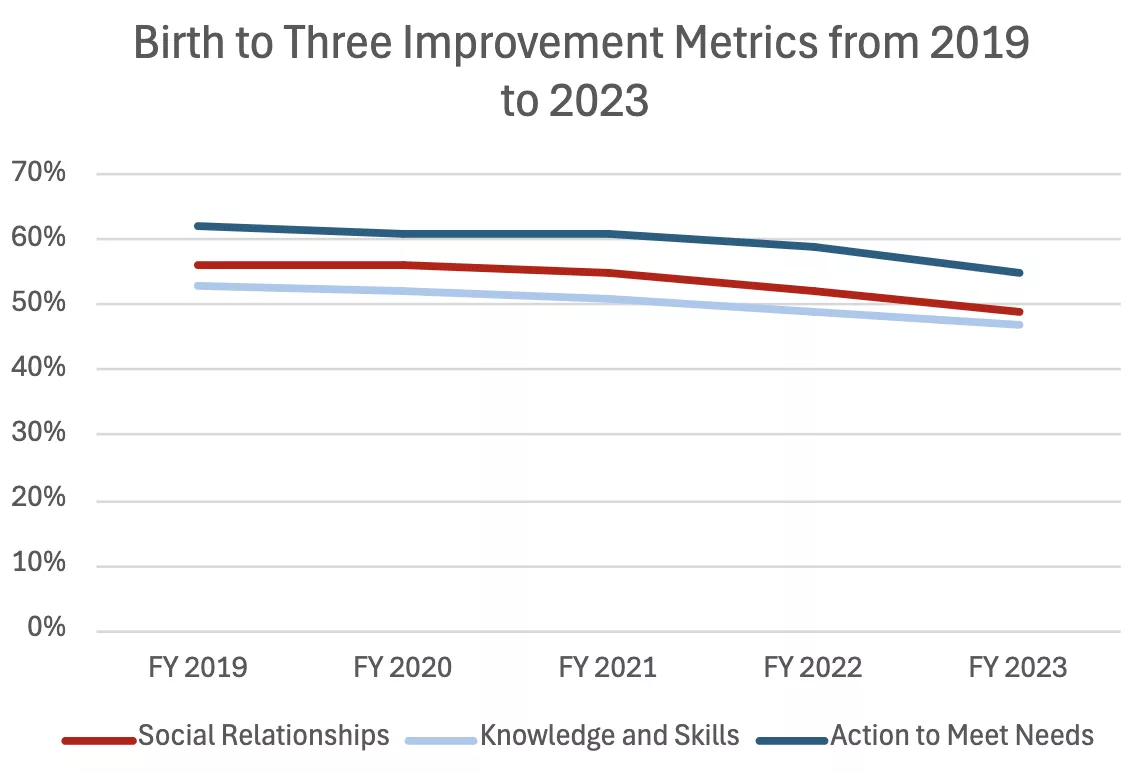
However, the second metric tracks the percentage of children who exited the program at or above age expectations. The percentages for this metric hovered between 43 and 55 percent for both age groups and across all three categories.
Based upon these numbers, roughly half of the children in Birth to 3 exited the program with developmental skills still below age expectations.
It is also worth noting that the statistics are worse for the 0-2 age group. For instance, while 81% of the 3-5 age group made more growth during the program than expected, only 65% of children in the 0-2 age group did the same. This signals that mental and developmental disability intervention is less effective for infants and toddlers.
Moreover, the percentage of children exiting the program at or above age expectations has declined from 2019 to 2023. This could be evidence that the program is not living up to its expectations.
Why is this happening?
While the rapidly rising enrollment in mental and physical disability programs for children is an important discussion, the more important question is, why is this happening?
The rapid growth in the CLTS and Birth to 3 programs suggests either a large increase in the number of children with severe mental/intellectual/physical disabilities or at least a large increase in the recognition of these disabilities.
There are a few different possibilities as to why the caseload is rising so fast. One possible avenue could be the effects of the COVID-19 pandemic. It is reasonable to assume that the isolation and loss of education from the pandemic would lead to an increase in complex developmental issues in young children.
The NIH released a detailed research report on how policies such as prolonged lockdowns, mask mandates, and decreased human interaction affected children’s ability to foster developmental and communication skills. The report found an increase in “unusual early social, cognitive, and emotional development challenges” in young children due directly to the isolated pandemic environment.
Another possibility is changes in policies and funding for programs like CLTS and Birth to 3. There has been an increase in funding and staffing for counties in an effort to reduce the number of children on waitlists. CLTS successfully and substantially reduced their waitlists and added many children to their program in doing so.
As for why the effectiveness of Birth to 3 is declining, the data is unclear.
The annual report from the Birth to 3 program also notes, “Annual performance reports provided key reasons for declines, including impacts of COVID-19, changes to state data collection methods, and other data quality issues. These factors may not reflect a true change in the outcomes of children but rather a change in the data only.”
Given the large influx of enrollment, this could be an accurate statement. A rapidly increasing sample size and increase in outreach would affect the outcomes of the data.
Alternatively, a rising number of complex and hard-to-treat mental and developmental health issues would also explain why Birth to 3 programs have become less effective over the last few years. This would be more in line with Rock County's justification for hiring more CLTS staffers.
Conclusion:
Regardless of the driver behind the increase in the number of enrollees in the CLTS and Birth to 3 programs, the data is clear: Wisconsin’s young children are facing a health crisis.
It is time for us to find the root cause behind the increase in disabilities and developmental issues so that we can help children in Wisconsin live a long, happy, and healthy life.

Interested in the content of this Article?
Reach out to the MacIver Institute to aquire more information


