
- Podcasts
 Podcasts
 - Videos
 Videos
 - Policy Issues
 Policy Issues
 - About
 About
About


Years ago, the MacIver Institute partnered with Americans for Prosperity on an educational campaign called “It’s Working.” The point was to highlight the impact that Gov. Walker’s government labor reforms were having across Wisconsin. The campaign admittedly relied heavily on anecdotal accounts from newspapers, local officials, businessowners, and regular taxpayers, but the overarching theme was undeniable. Walker’s reforms had eliminated the state’s permanent structural deficit, enabled state and local governments to balance their budgets, and led to lower taxes and budget surpluses. That spelled relief for everyone. Unfortunately, a lot has changed since then.
Today, what government is doing is not working. The cost of living is out of control, accompanied by out-of-control government spending. Everyone from the governor down to individual taxpayers say they don’t have enough money to meet their needs. And so, it’s time for MacIver to take up a very different kind of campaign called “It’s Not Working.” This time around, we taking a more objective, data-driven approach which allows us to more completely describe the situation that Wisconsin is facing. This is done using the “It’s Not Working” scorecard.
The scorecard tracks six distinct issue areas: employment and wages, housing, children (daycare and education), energy, healthcare, and taxes and spending. It lists out the metrics we’re following, where we want those metrics to be, and where they are currently. Many of the metrics are measured by comparing Wisconsin to other states in the Midwest. Because we’re tracking undesirable trends, the higher the ranking compared to our neighbors, the worse off we’re doing.
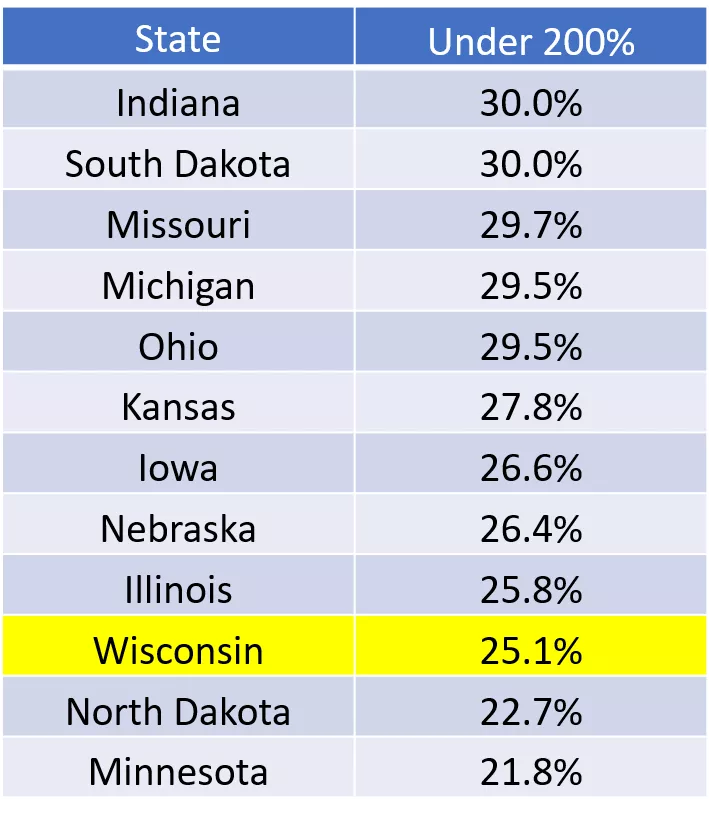
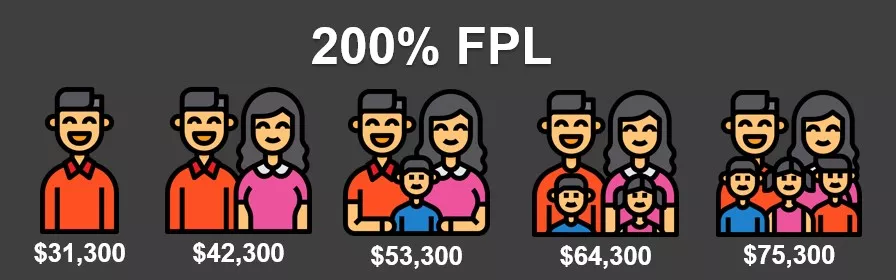
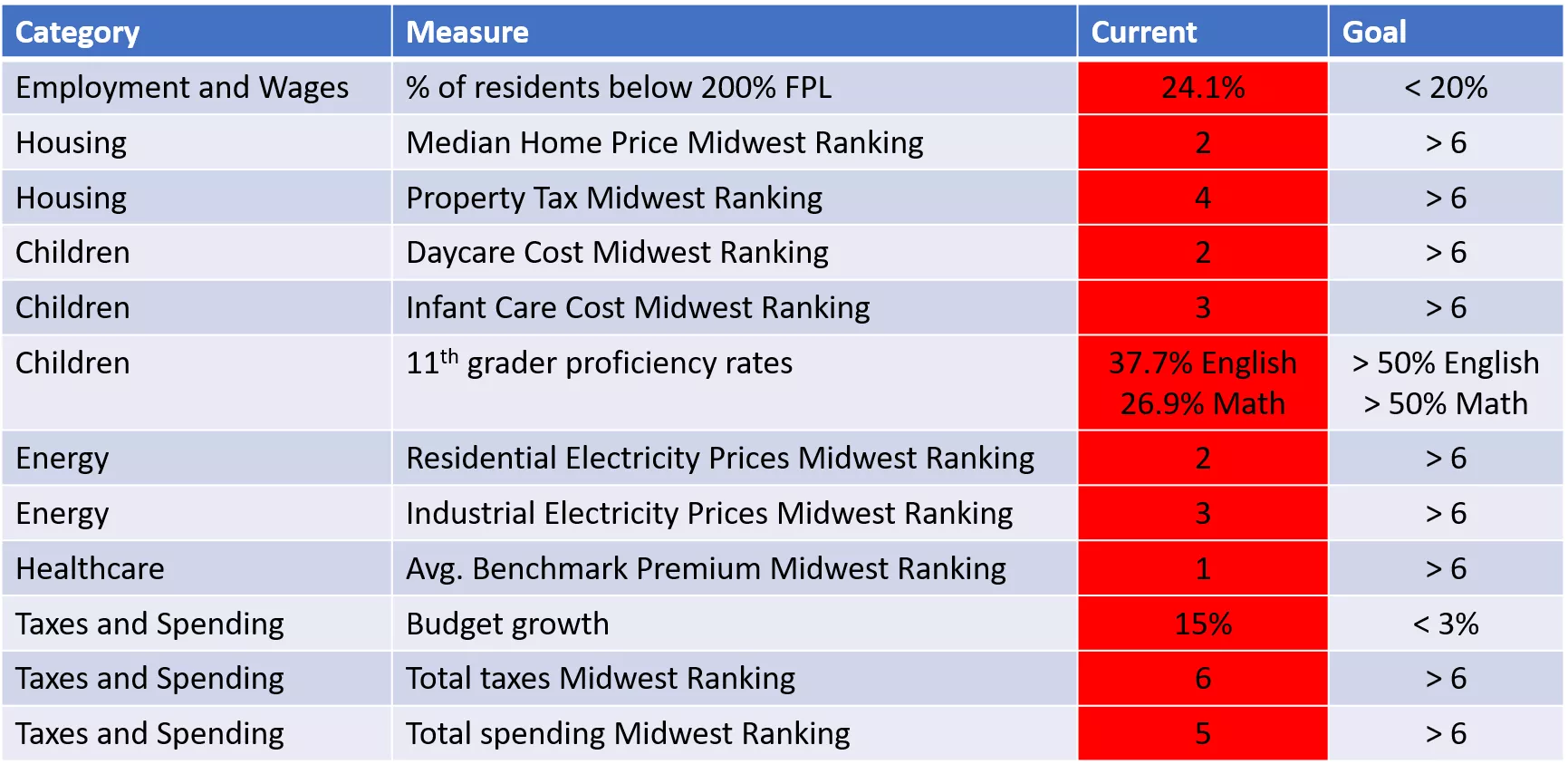
MacIver wants a free and prosperous society. That means people need to make enough money to comfortably raise a family. How much income does that require? A great measure is how many people qualify for welfare benefits. That line is drawn at 200% FPL (federal poverty level). Any household that makes less than amount pretty much qualifies for everything. In Wisconsin, that includes about one out of every four people (25.1%). This is one metric that we don’t compare to our neighboring states because, honestly, it’s too high everywhere. Our modest goal is for less than 20% of people to qualify for welfare.
Government exacerbates this problem by inadvertently subsidizing low wages. For example, when businesses complain that their employees don’t make enough money to afford housing within commuting distance, government looks for a way to build more affordable housing, which relieves pressure on those businesses from having to pay their workers more.
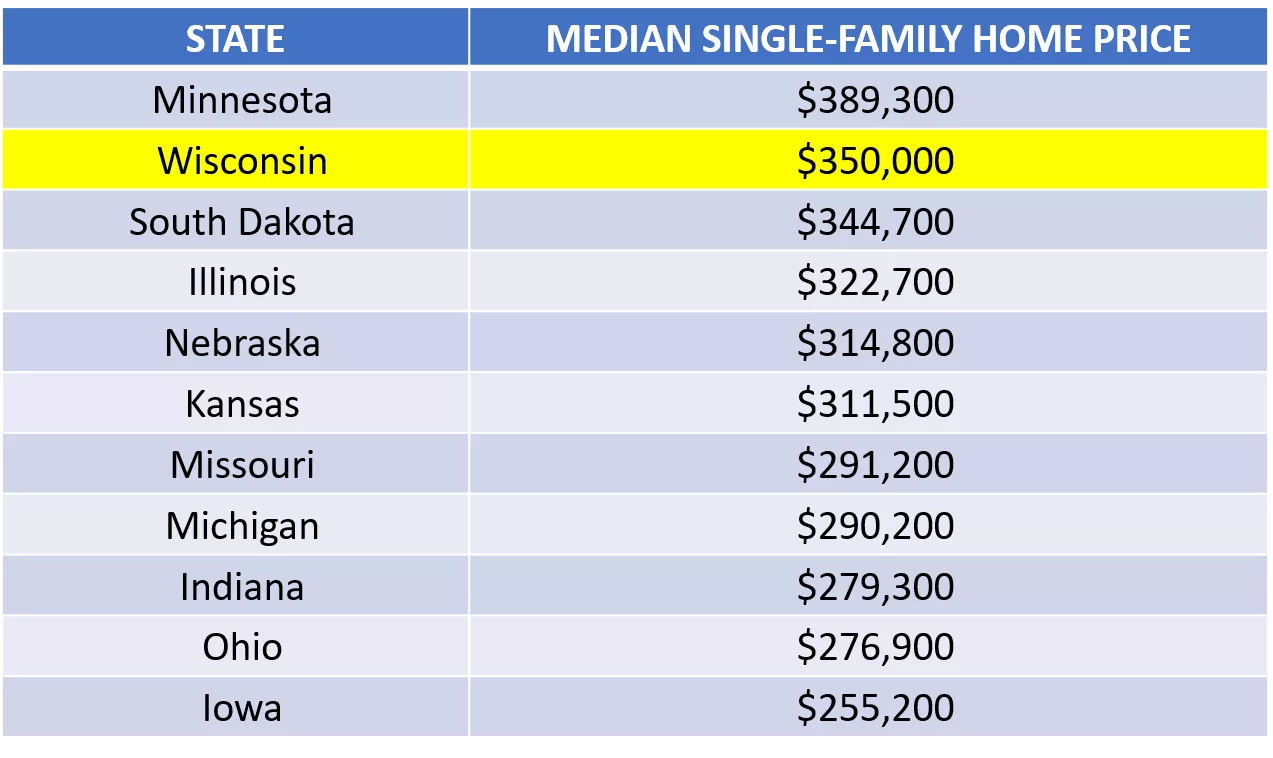
The median single-family home price in Wisconsin is $350,000. That’s the second highest in the Midwest. Government keeps stepping in with heavy handed solutions that only seem to make things worse. MacIver has long advocated for less restrictive zoning and building requirements to increase the housing supply.
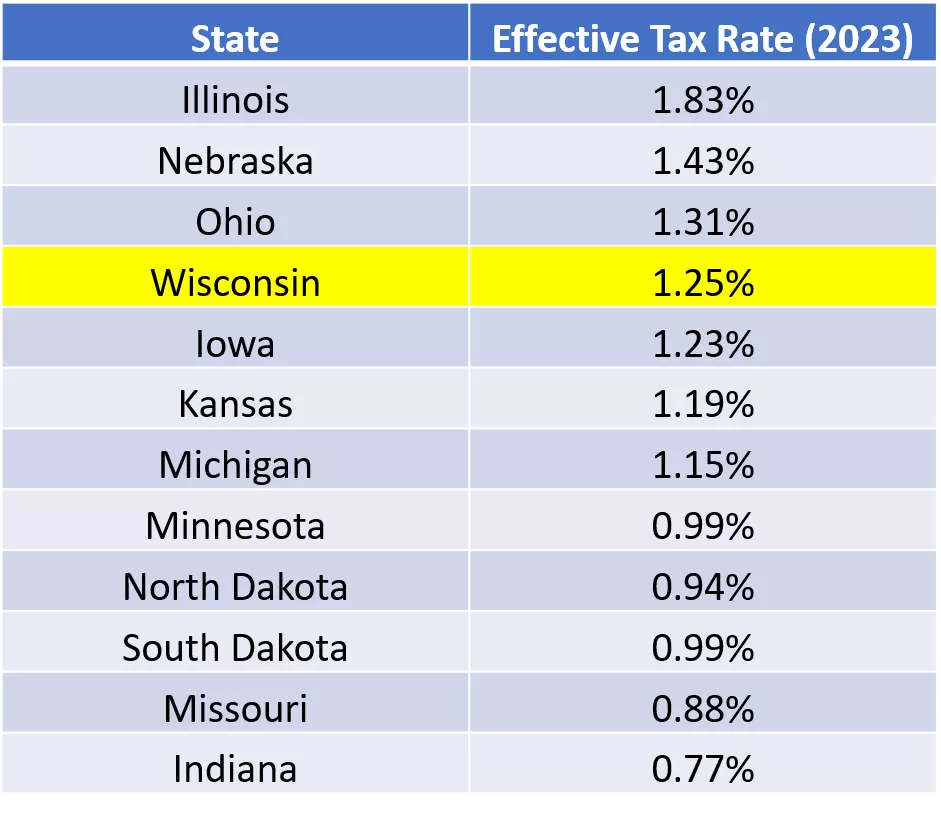
Another component to the housing issue is the high rate of property taxes in Wisconsin. With an average tax rate of 1.25%, Wisconsin ranks fourth among the 12 Midwest state for property taxes.
MacIver’s “It’s Not Working” scorecard addresses two aspects of the state’s problems regarding children: daycare and education.
Wisconsin has the second highest daycare costs in the Midwest, and the third highest infant care costs. We believe government cost controls are a major driver behind this trend.
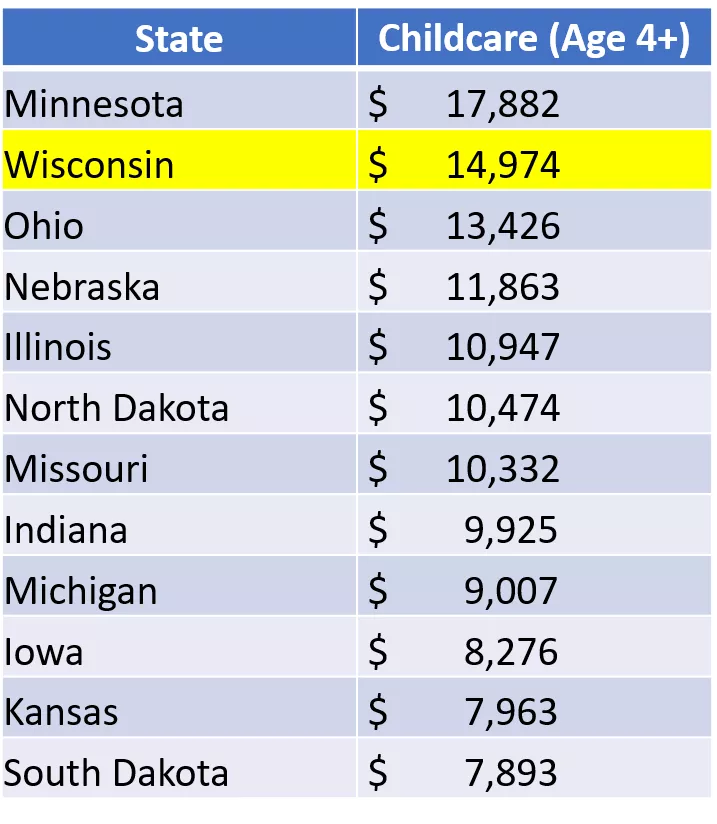
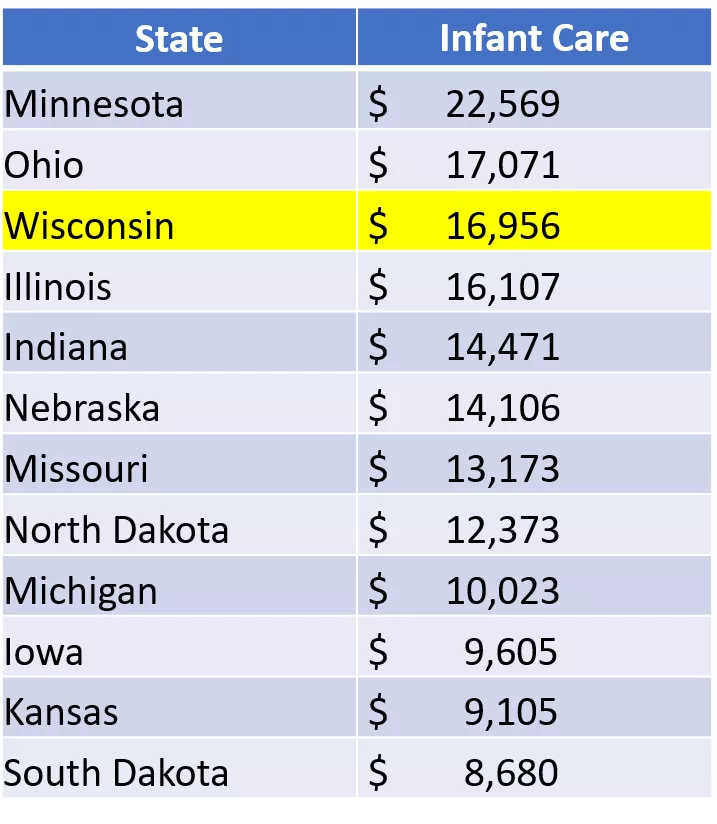
To measure Wisconsin’s educational outcomes, we simply use DPI’s own assessments. Currently only 37.7% of 11th graders are at least proficient in English and 26.9% are proficient in math.
Government has ultimate control over energy costs through its rate and profit approval procedures. As a result of those decisions, Wisconsin has the second highest residential energy costs and the third highest industrial rates.
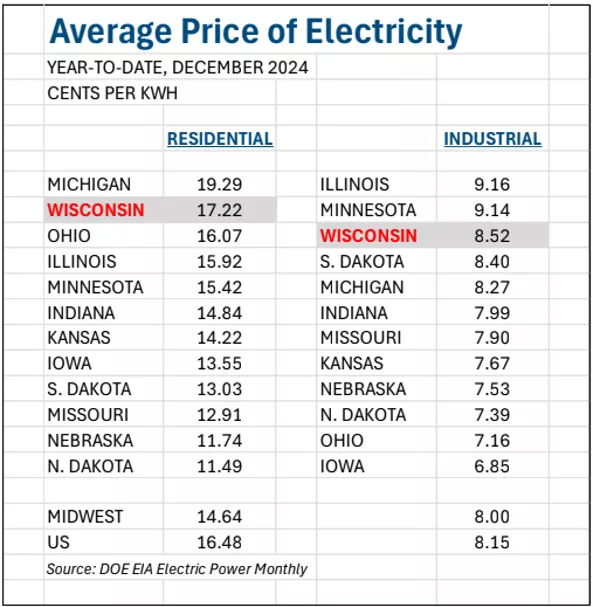
Despite the promises of the Affordable Care Act to make healthcare affordable, wherever you look, monthly premiums average in the hundreds of dollars. However, even with that reality, Wisconsin stands out. It has the highest average premiums in the Midwest, which run 29% higher than the average premium in the region.
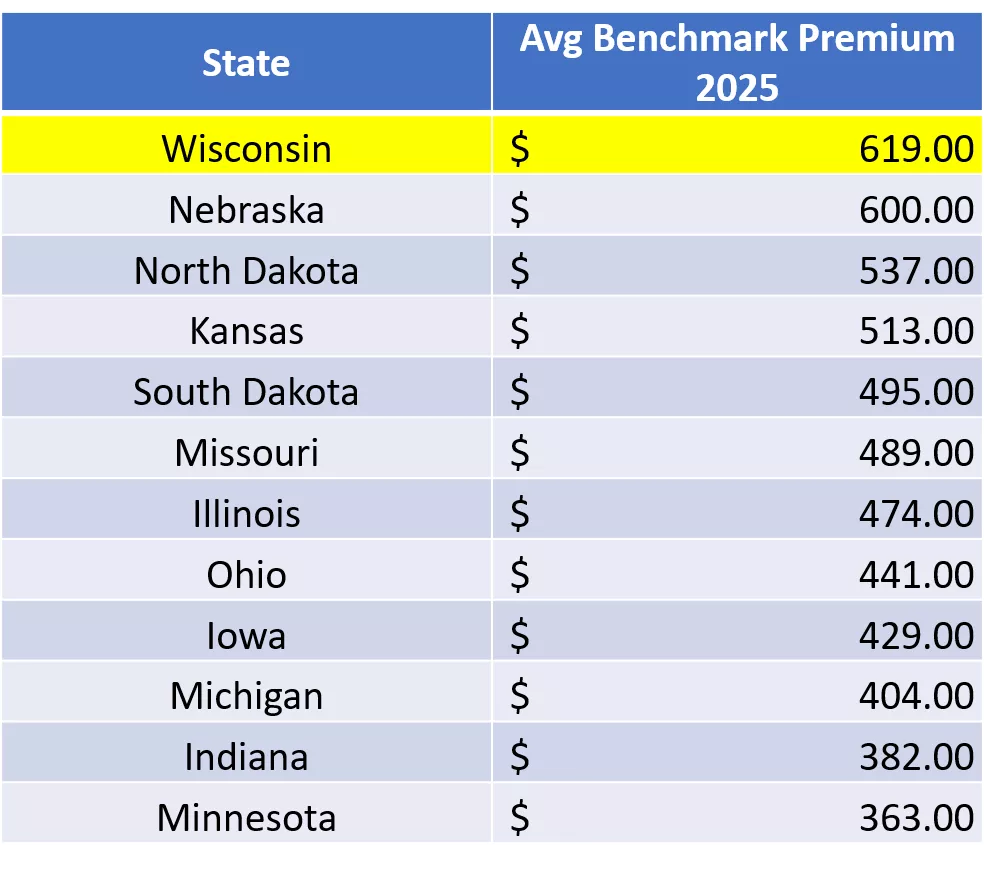
Data from the US Census Bureau in 2023 puts Wisconsin at sixth in the Midwest for taxes and fifth for spending. However, anyone that followed MacIver’s coverage of the 2025-27 state budget knows Wisconsin is likely to move up in that leaderboard before changing course.
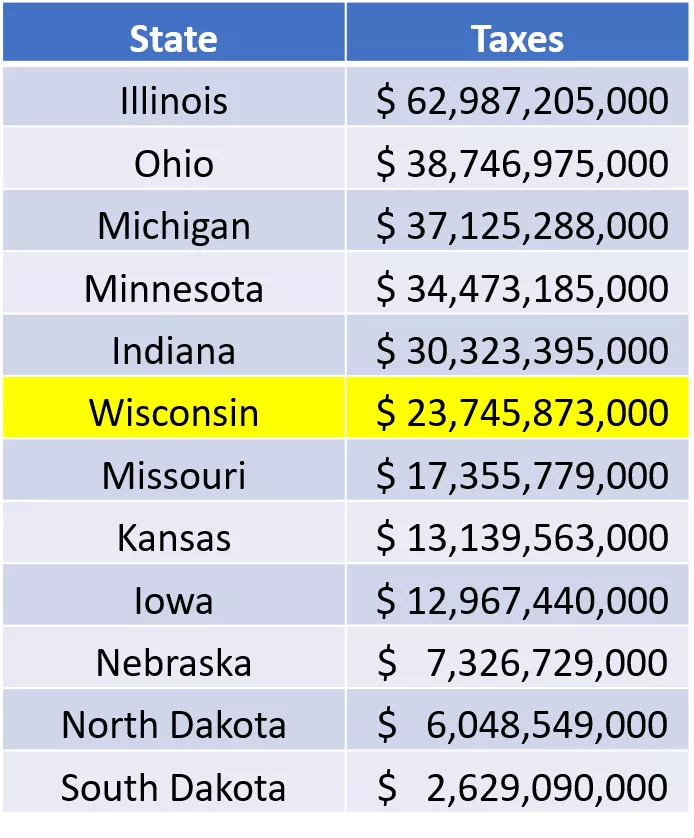
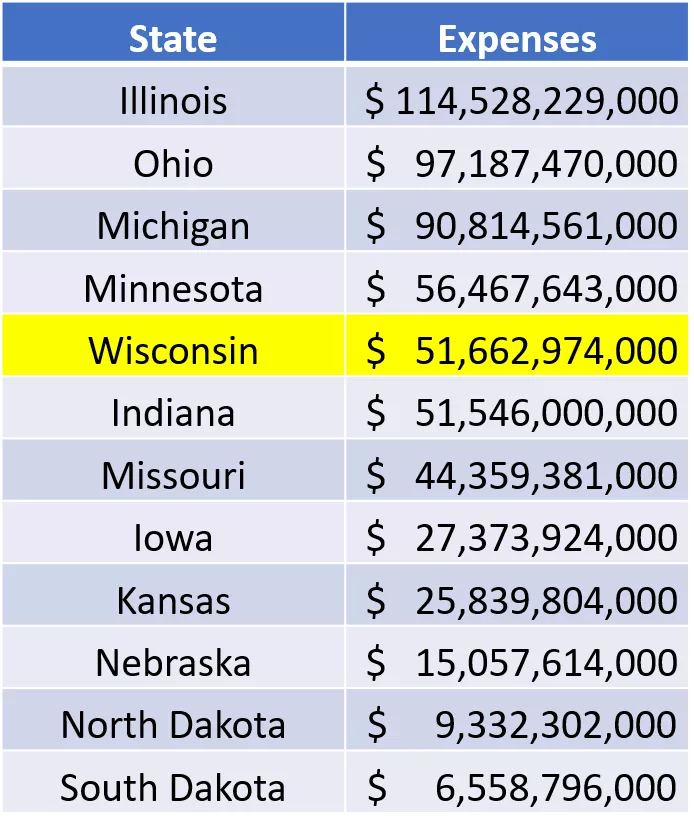
Here’s how to read MacIver’s “It’s Not Working” scorecard. From left to right: the issue area, how we’re measuring it, what our current results are, and where we want those results to be. Most of these metrics concern our ranking among the 12 Midwest states, and we’d like to, at least, be in the bottom half when it comes to costs.
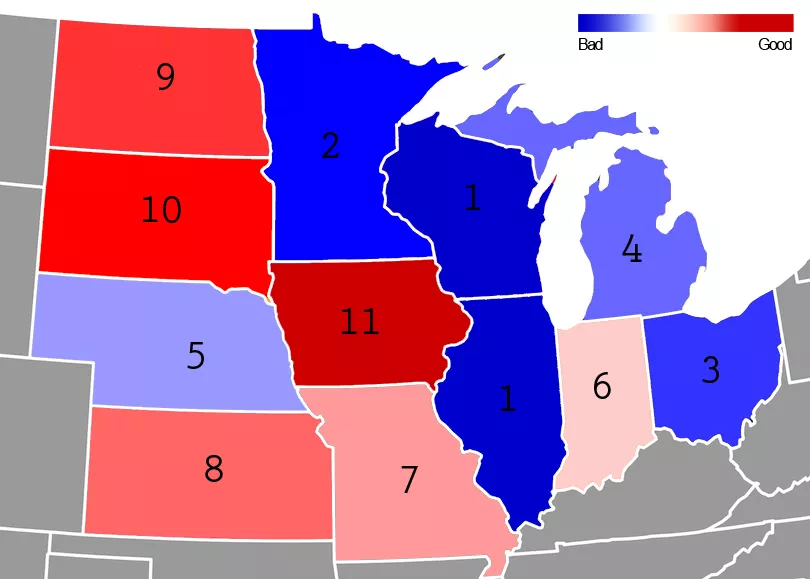
If you take all the state rankings and add them up, you can see how Wisconsin compares to its neighbors in overall policy. By this measure, Wisconsin is currently tied with Illinois for the worst record in the Midwest on public policy.
Throughout this project, MacIver will identify specific problems related to each of the six issue areas, how we propose to solve those problems, and track how those metrics change over time.

Interested in the content of this Article?
Reach out to the MacIver Institute to aquire more information


