
- Podcasts
 Podcasts
 - Videos
 Videos
 - Policy Issues
 Policy Issues
 - About
 About
About


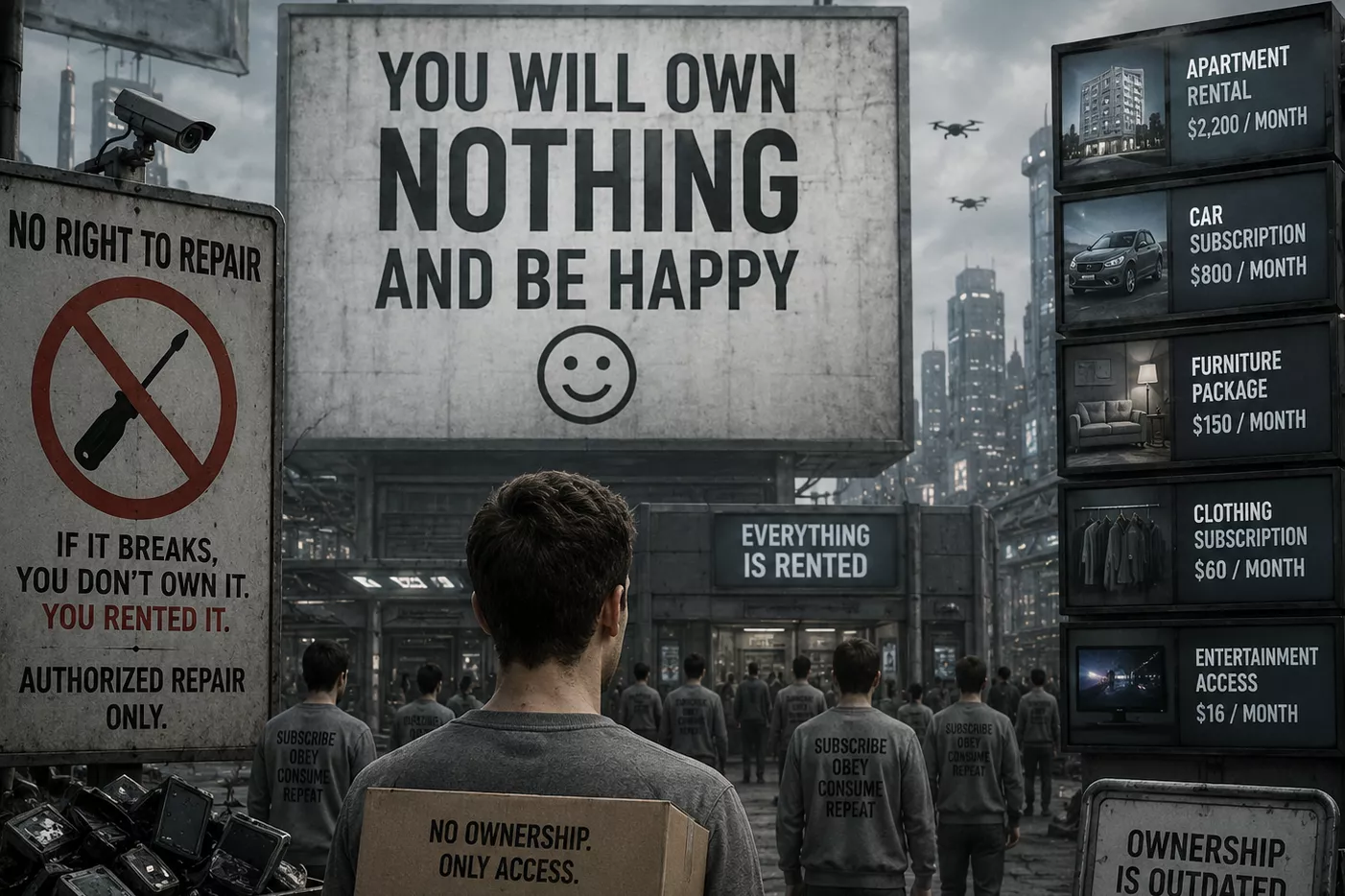
Monopoly: Go directly to jail
Sitting in the Oval Office on June 30, President Donald Trump did what Donald Trump does best—he translated an interminably convoluted and technical argument about property ownership and elite power into street language that everyday Americans could understand.
The issue was right to repair. That is, if your car breaks down, do you have the right to fix it yourself, or to choose whom you want to do the repairs, or must you kowtow to the manufacturer’s desire to tell you where, how, and even when such repairs will be undertaken?
Specifically, the presidential memorandum directed the Environmental Protection Agency (EPA) to issue guidance within 30 days clarifying what individuals may do when repairing their own vehicles’ emissions systems or having those repairs performed while remaining within the confines of the Clean Air Act. Current regulations essentially keep many legitimate repairs in manufacturers’ hands by granting them a monopoly over the knowledge, parts, and software required for such repairs.
In other words, when it comes to certain repairs, you can’t fix your own car. While the arguments are complex, the perception is decidedly not, and the president broke down the elite group-speak in his typically easy and inimitable way:
“I think it’s very important, it’s going to lower the price of your car, and it’s going to lower the price of fixing your car. Has to do with affordability. Has to do with a lot of things. I mean, think about it. It came to my attention because I noticed they were arresting people for fixing their car. That’s not even believable. Anyway, so it’s right to fix, and I think it’s really common sense. Some of these people are better mechanics than the mechanics in the shop. They’re telling the mechanic and the shop how to fix their car or their truck. Can you imagine that? They want to put you in jail if you fix your car.”
Well, OK, maybe that’s not entirely accurate—though a Wyoming case comes pretty darn close—but the broader point is spot on, and that raises an important property rights question: If you buy property, and hold legal title to it, but cannot exercise practical authority or control over that property, do you really own it?
And where is the line drawn? When is ownership no longer ownership in any real-world context?
Trump was speaking the day after he signed a memorandum to the EPA ordering the review of right-to-repair. Earlier, the EPA had already updated its guidance to clarify that the Clean Air Act does not prevent farmers and independent mechanics from making their own repairs. Crucially, the EPA now allows farmers and independent mechanics to temporarily override emission control systems for the “purpose of repair” to that equipment to obtain proper functionality, and manufacturers can no longer hide behind federal air quality regulations to block access to repair tools, diagnostic software, or essential maintenance information.
This federal shift paved the way for broader access to machinery diagnostics, empowering farmers to avoid mandatory dealership visits and significantly reduce operating costs, the EPA stated. Then, too, just days after Trump signed his June 29 memorandum, the Federal Trade Commission (FTC) announced a settlement with John Deere in a separate right-to-repair case that the FTC had brought against the company.
In that settlement, the FTC and five states, including Wisconsin, signed an agreement with Deere & Company to ensure that farmers can exercise the right to repair their own John Deere tractors and farm equipment. The FTC’s settlement requires Deere to provide farmers and independent repair providers with the same equipment repair resources, including applicable software capabilities, that it currently provides to authorized Deere dealers, the FTC announced. The agreement will remain in place for a decade under the supervision of the FTC and plaintiff states.
According to the FTC, Deere makes the only software repair tools capable of performing all electronic repairs on Deere equipment but has previously made such tools available only to its authorized dealers, forcing farmers to rely on those dealers for many necessary repairs. The FTC and the states filed suit in January 2025.
“By withholding these repair capabilities, the complaint alleged Deere unlawfully acquired and maintained monopoly power in markets for repair services for Deere farm equipment,” the FTC stated in announcing the settlement. “Deere’s practices led to service delays and higher costs for farmers.”
The broader debate
The EPA guidance revisions, the Trump memorandum, and the John Deere settlement are all examples of a broader philosophical debate that is rapidly taking shape in the warm policy currents of Washington and beyond. Not least, it is forcing the right to think about what ownership really means, and that’s important to be able to counter what the left thinks it means—government and government-sponsored corporate ownership in all instances.
To Trump, and to many populist conservatives, ownership necessarily includes the right to control and use and manage what you own. If you cannot repair your car or farm machinery when it’s broken—or choose whom you want to repair it—do you really own it? These conservatives say control is a necessary condition of any definition of property ownership.
The Trump memorandum lays out that argument in terms of oppressive regulations and burdensome higher costs, but between the lines emerges a property rights debate in David-versus-Goliath terms, as government regulations help large manufacturers monopolize control of the aftermarket for products they no longer (supposedly) own. Some might call that fascism, incidentally, or running feverishly close to a concept where government runs interference for favored big businesses and industries, so long as those favored big businesses and industries obey the government, i.e., things such as Clean Air mandates.
Fact is, oppressive regulations and burdensome higher costs are a form of confiscation of private property, and here’s how the Trump memorandum put it:
“During the previous administration, crushing environmental regulatory burdens caused the average cost of vehicles to soar. My administration has therefore taken historic action to reduce or remove these burdensome regulations and decrease the rising costs that consumers face. With the largest deregulatory action in United States history, my administration rescinded regulations concerning greenhouse gas emissions for light-, medium-, and heavy-duty vehicles, and affirmed the right to fix agricultural and non-road equipment. To further ensure vehicle affordability, it is the policy of my administration that consumers should be able to fix their vehicles with affordable parts without being deemed to have circumvented emissions controls. The administrator of the EPA shall consider deprioritizing civil tampering enforcement actions against anyone who, in good faith, attempts to fix his or her own vehicle to its original configuration.”
So, yes, he is setting free these “criminals” who dare to assert a right to repair, but the key words in that policy argument are “fix his or her own vehicle.” That concept shifts the debate within the right. For decades, conservatives have largely viewed property rights through the lens of limiting government intrusion and protecting intellectual property. But software-controlled products—not to mention land-use environmental control schemes—have created a new question: if someone else controls your ability to repair what you purchased (or to control the land you have title to), do you really own it? Trump’s embrace of right to repair and the John Deere settlement suggest that a new “ownership conservatism” may be emerging alongside traditional free-market conservatism.
Interestingly, FTC chairman Andrew Ferguson pointed to the Founders as the basis for right-to-repair and the ownership conservatism underpinning it:
“Our first five presidents were all farmers, believing that ‘[t]he cultivators of the earth are the most virtuous citizens and possess most of the amor patriae.’ Farmers made up the bulk of the Continental Army that bravely fought for America’s independence from tyranny. And it was the farmer who, according to Jefferson, would sustain America as an ‘empire of liberty.’ Beyond these contributions, our nation’s farmers also played a pivotal role in shaping the nation’s earliest antitrust laws. So it is only right that this settlement protects those that Jefferson designated as the nation’s most valuable and virtuous citizens.”
Here’s the thing…
While the turns of events in EPA actions, Trump’s June 29 memorandum, and the Deere settlement seem at first glance a victory for conservatives writ large, and especially so for yeoman farmers and suburban car owners, well, not so fast.
Turns out, some conservatives and libertarians aren’t on board with right to repair—though they don’t like excessive environmental regulations, either—not on board with Trump’s memo, and not on board with the John Deere lawsuit brought by the FTC and the states.
It should be noted that the FTC’s Ferguson dissented from bringing the lawsuit, but, as he pointed out later, he did so for procedural reasons—settlement negotiations were already underway—but these conservatives and libertarians oppose the lawsuit and right-to-repair law on philosophical grounds.
To grasp why, it’s important to understand how traditional conservatives and libertarian scholars have historically approached right to repair. Their priority is to protect free markets (defined as free from government interference), contracts, patents, copyrights, trade secrets, and intellectual property. That’s the starting point for organizations such as the Competitive Enterprise Institute (CEI), the Cato Institute, and the Hudson Institute. Their concern is not whether repair should be easier day-to-day but whether government should force one private owner—the manufacturer—to surrender another form of private property to the consumer. It elevates abstract principles of contract and intellectual property over the practical realities of ownership, and so they often overlook a simple intuition shared by most Americans, that, when you buy something, you expect to own and control it, not merely possess a licensed platform whose essential functions remain under the control of its manufacturer.
Intellectually, the Hudson Institute makes the strongest argument against right to repair in an August 2022 policy assessment by Devlin Hartline and Adam Mossoff:
“Proponents of these ‘right-to-repair laws’ argue that consumers should be able to do whatever they want with their devices, whether a smartphone, a smart TV, or a gaming console. Right-to-repair advocates, however, ignore inconvenient facts. These state laws conflict with federal copyright law and are unconstitutional, and they are bad policy as well.”
They are unconstitutional, they argue, because they mandate the disclosure and distribution of the code in the computer programs that make devices work, such as operating systems, apps, and the “digital locks” that protect the computer programs from unauthorized access and copying. Federal copyright law protects all of that, Hartline and Mossoff write:
“These laws upset the long-standing balance of rights implemented by federal copyright law. For over 200 years, Congress has enacted copyright laws to secure to authors and innovators the fruits of their creative labors. These laws have properly balanced the rights of creators, the rights of companies that produce and distribute their copyrighted works, and the rights of consumers and the public. As a result, federal copyright law has been a launching pad for the economic and cultural revolutions in books, movies, music, and now digital games and the internet of things.”
Strong points, yes, but right-to-repair proponents argue that all that is a red herring because software can be provided to allow its use without surrendering proprietary code when supplying diagnostic information, repair manuals, replacement parts, calibration procedures, and access to software needed to complete repairs.
From the Hudson Institute argument, the right to repair opponents head downhill like a fallen skier on an icy slope. Writing for Cato in 2024, Ike Brannon, a senior fellow at the Jack Kemp Foundation, argued that manufacturer control is essential to comply with government environmental mandates and then goes further to say it is a reasonable proprietary demand for safety reasons.
“A wide range of unintended and potentially harmful consequences would arise if the most commonly introduced versions of R2R are adopted by more legislatures,” Brannon wrote. “Products often include intricately crafted hardware and software that typical consumers and independent technicians are not trained to repair on their own.”
So suddenly it’s somewhat less about property rights than speculative risky outcomes and, besides, the people aren’t smart enough to figure all this stuff out. Also, Bannon writes, many people are by nature outlaws:
“Some equipment owners attempt modification of their engines to bypass these constraints and boost performance. This usually cannot be done without manipulating the emissions control software, and the EPA directs companies to make it difficult or impossible for owners to defeat the emissions control equipment. That mandate becomes useless when consumers are free to tinker with the software, with no repercussions.”
That sounds shockingly nanny-state-like for a libertarian writer. And he goes further yet, throwing in a sop to the green agenda and to protecting the fundamental technology used by government for population control:
“Since the early 2000s, the EPA has attempted to constrain the actions of motorcycle shops that install after-market equipment, which often results in increased greenhouse gas emissions. As such, the push by the Federal Trade Commission and Congress to make manufacturers provide owners unfettered access to the elemental software of this equipment is incongruous with the Biden administration’s stated objective of reducing greenhouse gas emissions.”
CEI research fellow Alex Reinauer criticized the commission’s action from the start, writing in late 2024 on the CEI blog that right-to-repair was just short of being downright Bolshevik:
“The movement is deeply rooted in the neo-Brandeisian worldview, one that views big business as inherently bad and small business as inherently good. Former Commissioner Christine Wilson has drawn parallels between the neo-Brandeisian movement and Marxism. Similarly, the so-called right-to-repair movement, at its core, is an attack on those with the means of production. Despite its name, it’s an antitrust movement, not a property rights movement.”
In addition, Reinauer argues that right-to-repair advocates have ignored the productivity gains resulting from monopoly control of repair ecosystems:
“Farm yields in the US have nearly tripled since the 1950s, even as labor and land inputs have declined over the same time period. This growth is attributable to innovations in the agricultural industry, including new fertilizers and crop genetics. But agricultural equipment is also partially responsible.”
He goes on to actually argue against competition in the aftermarket secondary sector: “The larger right-to-repair movement views every manufacturer as a monopolist, as they advocate for legislation that forces companies to sell parts, tools, and repair information to independent repair shops that compete against authorized repair outlets.”
In the end, though, he says it happens anyway:
“Those same advocates speak as if zero repairs are occurring outside of manufacturers’ authorized repair networks. But that’s not true. The North American Equipment Dealers Association conducted a survey of its members in 2022 and found that 56 percent of parts are sold ‘out the door,’ meaning they were installed either by the owner of the equipment or an independent repair shop. Further, the average dealership sells parts to nine independent repair shops.”
But if manufacturers already permit and profit from a substantial amount of independent repair, then why not just open the dealer or barn door wider? If independent repair has not destroyed innovation or intellectual property, what principle justifies restricting the repairs that remain?
Sure, Reinauer asserts, farmers are right to be annoyed by the complications caused by EPA emission standards, which he acknowledges add costs and complicate maintenance. But instead of expanding antitrust over secondary repair markets, he asks, why not just repeal regulations that make those proprietary restrictions necessary in the first place?
Yes, why not? Except Reinauer never confronts the philosophical argument about who controls the machinery after it’s sold and what that means for ownership, not to mention the use of government power to maintain that control. These writers never contemplate the other side of the equation, namely, those who voluntarily market their products should a) strongly disclose the manufacturer’s after-purchase control; b) be restricted from enforcing repair control through government-backed mechanisms, such as expansive copyright law or broadly interpreted emissions regulations.
If they want to control the market, then it must be through the market that they attain and maintain that control. Otherwise, the purchase is less a private contract and more the use of government mandates and rules to prevent competition in the repair market.
It’s like buying a house and having the home builder tell you how many times a day you can use the oven or requiring that their technicians fix it if it breaks. We’d laugh them out of the neighborhood if they tried to do that, but it’s exactly what car and farm equipment manufacturers have been trying to pull, using proprietary arguments that benefit only the company, the government, and their allied environmentalists.
Bottom line: Reinauer stops short of saying people ought to have the right to repair what they buy and, in every ordinary sense of the word, own.
Once again, as headlines about war, inflation, and immigration dominate the world stage, the Trump administration is making fundamental changes on a variety of fronts within the infrastructure of government and asking significant questions about the inner workings and logic of the deep state. From dismantling a gargantuan nonprofit infrastructure to ending DEI to taking on lawfare and land grabs that would make the Founders spin in their graves, the Trump administration is making a positive impact on Americans’ daily lives.
Opening a discussion on the meaning of ownership is another significant policy front, for over time it has been subverted to mean something entirely different from what the Founders conceived of as they fashioned the laws of liberty. Foremost on their minds was freedom, not enforcing government mandates through the charade of haughty proprietary secrets that can easily be protected.
As with tariffs, libertarian intellectuals sometimes forget to put people into the equations they concoct in their academic worlds. That’s where Trump shines best. The president isn’t talking about patents or trade secrets or national security. He’s not thinking about copyrights. He’s talking and thinking about average Americans. That’s farmers and commuters—working people. He is a president who is concerned about leading in innovation, but his insights tell him not to omit the people from the calculation. He asks instead: Why can’t Americans fix things they already own?
That shifts the discussion away from antitrust or consumer protection and toward ownership itself and begs the question: Can legal ownership be separated from practical ownership and still have any real meaning at all?
I mentioned land use earlier as a parallel. If you own title to land, but a conservation easement drafted by the government and NGOs decades earlier, with a now-dead owner, deprives the current owner of control and the right to make choices about how the land is used, does that current owner really own the land?
The bottom line is, a society in which government and its favored corporations hoard information and technology that people need to live their lives, and to control the things they sell—to repair cars or tractors, to make transactions without currency surveillance and permission, to control the use of the land—such a society is not free.
It all points to increasing government-corporate control in an age where bureaucratic institutions use favored industries to control the lives of citizens. Writing in March, right-to-repair advocate Justin Rzepka put it this way:
“The principle behind it is straightforward: If you buy a product, then you should have the right to decide who fixes it. Yet increasingly, manufacturers control not just the vehicle itself but also the data and software needed to service it. When only one repair channel has the keys to that information, competition disappears, and prices rise.”
When competition disappears, of course, so does freedom:
“The reason is simple: The ‘right to repair’ is fundamentally about ownership. As Thomas Jefferson wrote, ‘The true foundation of republican government is the equal right of every citizen in his person and property and in their management.’ Jefferson understood that property rights were central to American liberty. If citizens cannot control how their property is used and maintained, then ownership itself becomes little more than a formality. For conservatives, that principle should make the right-to-repair issue an easy call.”
This past week, former Rep. Tim Huelskamp pointed to the real barometer to watch:
“Kansas farmers have had a hard few years. Farm bankruptcies increased by 70 percent in the Midwest last year. Nationally, the suicide rate for farmers is 3.5 times higher than for the general population. This year’s weather problems will result in a smaller-than-usual wheat harvest, and our state’s net farm income is projected to be around 5 percent lower than it was in 2025. Letting our farmers fix their own equipment will ease some of that financial pressure, keeping more farmers on their land while also helping them preserve a key element of our national character.”
The ploy here, Huelskamp argues, is to hoist freedom upon the petard of proprietary information and the sanctity of corporate secrecy, and he bemoans that “the virtue-forming practice of ownership is giving way to the infantilizing subscription model. Critical thinking is being replaced by consumer conformity.”
“The farmers who’ve been fighting for the right to repair embody the belief shared by America’s great poets and statesmen that only self-governing men can sustain a self-governing republic. R2R restrictions threaten to erode that character, making us passive, dependent, and excessively deferential to ‘experts.’”
That’s totalitarianism, by any other name.

Interested in the content of this Article?
Reach out to the MacIver Institute to aquire more information


