
- Podcasts
 Podcasts
 - Videos
 Videos
 - Policy Issues
 Policy Issues
 - About
 About
About


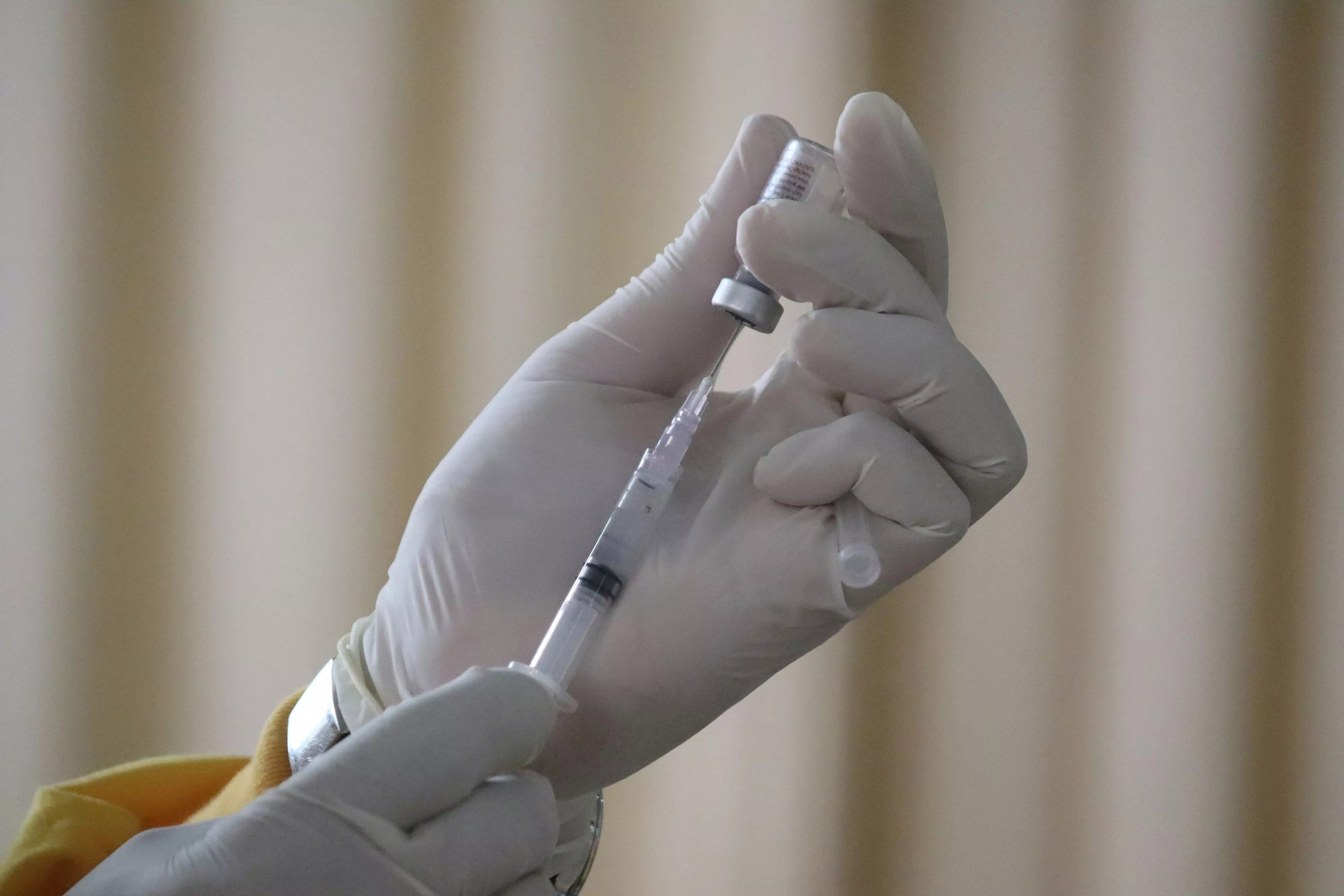
Here’s what’s not in the news
OK, everybody, the weather is a little cool here in Wisconsin, so let’s grab ourselves a cup of hot cocoa (sugar-free, of course) and gather round the fire (please don’t inhale the wood smoke!), for there is a tale to tell.
It’s a tale of a cultural shift in our society and the abuse of power that goes with it.
Specifically, I am speaking of our scientific culture in public health, though the same principle can be applied to other sectors of society, from education to agriculture to the climate.
In this case, I look back and yearn for the days when scientists were of a different strain. Their commitment was to seeking the truth, not to grabbing hold of some irrefutable consensus or sacred-cow outcome. Their name was Science and their game was inquiry, and they fearlessly challenged irrefutable consensus and sacred cows alike to see if they could withstand scrutiny.
What the old scientific culture feared was missing danger to the public. Unfortunately, that fear no longer exists among the scientific elite. Rather, the new culture fears undermining institutional hegemony.
And that, more than any particular controversy, may be the real scandal now unfolding before the country. Late last month, U.S. Sen. Ron Johnson (R-Wisconsin) released what he called a “blockbuster revelation” involving the federal government’s handling of vaccine safety surveillance during the Covid pandemic.
The revelation was, according to Johnson’s interim majority report by the U.S. Senate Permanent Subcommittee on Investigations, released on April 29 and titled “Unmasked: How Biden Health Officials Purposely Turned a Blind Eye Toward Covid-19 Vaccine Safety Signals,” federal health officials were made aware as early as 2021 that a newer and more sensitive statistical monitoring method was identifying dozens of potential adverse-event safety signals associated with Covid-19 vaccines that the government’s existing system, known as VAERS (Vaccine Adverse Event Reporting System), had failed to detect.
“Rather than alerting the public, they covered it up,” Johnson said on May 8. “It’s a grotesque abuse of power. People died and were permanently disabled because they were denied fully informed consent on the Covid injections.”
Johnson rightfully said his expose should be all over the news. It wasn’t, so hopefully I can make up for it a little now. Still, while all he says is true, this is not merely a story about Covid shots. It is not even primarily a story about vaccines. It is a story about what happens when scientific institutions become political garrisons—when the preservation of bureaucratic legitimacy becomes more important than the pursuit of the uncomfortable truth.
Now, I want to be careful here, because this is the part of the story where the dishonest left—and there’s not an honest one in the dwindling crowd, at least that I know of—likes to twist the truth of vaccine injury reporting.
So let’s be clear: VAERS was never designed to prove causation. It is an early warning system, a self-reporting canary in the coal mine intended to identify unusual clusters or temporal associations of injury with vaccination that merit further investigation. All things being equal, high numbers of injury reports—outside the pattern of the usual number of reports—raise a red flag that allows researchers to swing into action, often, as we shall see with RotaShield, achieving impressive results. But VAERS’ reports do not prove causation, and that distinction matters.
In this case, during Covid, several scientists developed a new algorithm to improve VAERS, while also reporting signals that the existing system failed to pick up.
The problem is that, according to the interim report, federal officials treated the newly discovered warning signals not as red flags to verify and investigate but as political threats to manage. And that is a radically different scientific culture than the one governing public health institutions only a generation ago.
Back then, regulators often erred on the side of vigilance and due diligence. They did not hesitate to pull the plug on products out of an abundance of caution. Today, increasingly, they err on the side of institutional preservation, and that change may be one of the defining cultural shifts of our age: They act out of an abundance of caution to protect government narratives, not public health.
Let’s dig into this.
Taking off the mask
For starters, the committee’s interim report states, FDA official Dr. Ana Szarfman and statistician Dr. William DuMouchel developed and used a newer data-mining method known as RGPS—Regression-Adjusted Gamma Poisson Shrinker, there’s a mouthful—that reduced what researchers call “masking.”
To put it simply, masking occurs when large numbers of adverse-event reports associated with multiple products drown one another out statistically, making it harder to identify whether a particular product is generating unusual safety signals. In plain English, if multiple Covid vaccines produced similar adverse-event patterns, the government’s baseline comparison system could, in theory, normalize the abnormal.
Using the newer RGPS method, the interim report says researchers identified approximately 25 statistically significant safety signals that were not previously detected using the FDA’s existing methodology. They included, but were not limited to, sudden cardiac death, Bell’s palsy, pulmonary infarction, acute myocardial infarction, embolism and thrombosis, and other increased mortality signals.
Now, again, and I can’t stress this enough, a statistical signal is not proof of causation. Still, historically, signals were treated seriously precisely because they might indicate causation. It was a starting point for further investigation, a red flag, and that was the entire point of a system like VAERS.
And here is where the story becomes deeply unsettling.
Instead of embracing the newer methodology, the report asserts, some FDA officials became concerned about the political consequences of the findings.
“In April 2021, after Dr. Szarfman emailed a data mining analysis apparently underscoring the limitations of FDA’s current system, one senior FDA official wrote to his colleagues, ‘[b]efore we potentially reach out to Ana, we should meet internally—many considerations not suited to email…” the report stated.
By May 2021, the report continued, senior officials in the FDA’s Center for Biologics Evaluation and Research (CBER, the unit responsible for Covid-19 vaccine safety surveillance), including Drs. David Menschik, Narayan Nair, and Craig Zinderman, drafted an email to Szarfman that Zinderman eventually transmitted to her, directing Szarfman to “hold off on creating and sending data mining reports and analyses.”
“Dr. Peter Marks, a staunch supporter of the Covid-19 vaccines who at the time led CBER, eventually warned Dr. Patrizia Cavazzoni, the then-director of CBER, that Szarfman’s data mining could ‘create erroneous conflicts that feed into anti-vaccination rhetoric,’” the report stated.
What’s apparent is that the scientist bureaucrats were worried more about the rhetorical impact of bad reports about the Covid shots than about the risks of the shots themselves. Indeed, when they received Szarfman’s findings, the response was not to consider further investigations to verify the results, to pursue follow-up studies to see if her findings were in fact erroneous, or even to pause distribution while reviewing safety profiles; it was to try to bury the findings.
That is not the language of inquiry and truth-finding. That is the language of institutional risk management.
And therein lies the real crisis because the scientific method is supposed to be disruptive. The scientific method is not about risk management. It is supposed to challenge assumptions and follow uncomfortable evidence wherever it leads. What makes the interim report especially striking is that these concerns did not originate from fringe outsiders or internet cranks. The concerns came from inside the machinery itself.
To be sure, Szarfman was not some anti-vaccine activist with a podcast. According to the report, she helped develop the FDA’s own data-mining system years earlier. In other words, this was an insider warning the system about weaknesses in its own analytical framework.
And yet, senior officials eventually directed her to “hold off” on distributing her analyses.
Szarfman wasn’t happy.
“Although senior officials at FDA instructed Dr. Szarfman to ‘hold off’ on generating and distributing her and Dr. DuMouchel’s analyses, she continued,” the report states. “Dr. Szarfman tried to convince her colleagues that the data mining method she was sharing was more effective than the method FDA was using. She wrote to FDA officials in early May 2021 that her and Dr. DuMouchel’s method ‘strongly reduces confounding’ and that the safety signals in this method are much higher than the signals detected in FDA’s method, particularly for acute myocardial infarction.”
As the report pointed out, on May 24, 2021, “draft notes from a meeting involving federal health officials contained the question, ‘Is [the Vaccine Adverse Event Reporting System (VAERS)] signaling for myopericarditis?’ The answer stated: ‘For the age groups 16-17 years and 18-24 years, yes.’ Despite this unambiguous acknowledgment of the myopericarditis signal, Biden health officials continued to fail to immediately warn the public about the risks of cardiac events associated with the Covid-19 vaccines.”
Already, as was the case throughout Covid, Biden administration officials, the corporate media, and pro-vaccine shills had downplayed the importance of case reports to VAERS and of detecting existing signals, constantly reassuring the public that VAERS was irrelevant to causation. Things were obviously even worse behind the scenes, where Szarfman was finding that the warning signals were actually more than VAERS was picking up.
“In early June 2021, Szarfman emailed an FDA colleague about ongoing discussions between the FDA and the Centers for Disease Control and Prevention (CDC) about Covid-19 vaccines and ‘myocardial events and the lack of signals in VAERS and other data resources,’” the interim report stated. “She enclosed DuMouchel’s data mining analysis from a month earlier, showing higher statistically significant safety signals for acute myocardial infarction and noted that she and Dr. DuMouchel ‘also detected clear signals for other similar events.’ Dr. Szarfman wrote, ‘I am not astonished that [FDA’s data mining system] was unable to detect these signals.’”
In July 2021, Szarfman also warned FDA officials that she and DuMouchel’s data mining method detected an increased mortality signal with the Covid-19 vaccines, the report continued, and she reminded her colleagues that she and DuMouchel used “a method that automatically unmask[s] signals that remain hidden by other data mining methodologies, including by MGPS [FDA’s current data mining method abbreviated for Multi-item Gamma Poisson Shrinker].”
Again, in September 2021, the report stated, Szarfman urged senior FDA officials to utilize her and Dr. DuMouchel’s data mining method, arguing it was much better at unmasking signals than MGPS: “It automatically identifies and corrects for confounders. This is an important function to have, given the pandemic situation.”
But the mission wasn’t to improve VAERS; it was to discredit it altogether. And so, the interim report states, records indicate that the FDA did not make any adjustments to its data-mining methodology.
“However, Dr. Szarfman continued to advocate for the newer methodology, eventually co-authoring a June 2022 paper with Dr. DuMouchel and others published in the journal Drug Safety, which discussed their data mining technique and stated that masking ‘is roughly eight times more likely to occur with Covid-19 vaccines than with other vaccines,’” the report states.
To say the least, the report stated, FDA officials were not thrilled with Szarfman’s publication.
“In August 2022, Dr. Richard Forshee, the then-Deputy Director of CBER’s Office of Biostatistics and Pharmacovigilance, wrote to Dr. Marks, ‘we have just learned that Dr. Szarfman is a co-author on a recently published paper based on Covid-19 vaccines and VAERS,’” the report stated. “‘We believe there are a number of issues with the paper and its findings, and we are discussing how to best respond.’ It remains unclear based on the records received to date whether FDA officials confronted Dr. Szarfman about her paper.”
Even before then, though, back in September 2021, the bureaucrats had already asked Szarfman to “cease and desist” her data analyses, with Marks complaining that her work had “become a major distraction.” Even more astonishingly, the report states, officials later discussed limiting circulation of certain weekly data-mining reports amid growing Freedom of Information Act requests and public scrutiny.
“FDA officials’ decision to prevent Dr. Szarfman from conducting data mining on Covid-19 vaccines appeared to be part of a larger effort to restrict access and distribution of FDA’s Covid-19 vaccine data mining analyses,” the report stated. “About a month before Dr. Szarfman was directed to ‘cease and desist,’ Dr. David Menschik, a senior official in FDA CBER who had been distributing weekly data mining reports to individuals at FDA and CDC, informed a CDC official, in August 2021, that FDA’s ‘plan is actually to limit its distribution, largely for data security reasons.’”
As the report observes, no security reasons were ever given, but one can bet that one perceived security threat was the increasing number of Freedom of Information Act requests for the data.
One could argue, I suppose, that officials genuinely feared false positives and that an unvalidated model could produce misleading signals during a public-health emergency. One could argue that, but I doubt it’s the case.
Even if it were, though, that would be an argument for even more transparency, not less. The omission and suppression of information from the public turned out to generate more uncertainty and demoralization, and it likely needlessly endangered the health of millions of Americans. What it certainly did was deprive Americans of informed consent, as Johnson has pointed out.
“Peter Marks—with the knowledge that he was treating vaccine injuries, and they weren’t mild injuries, these were life-threatening injuries, they are total disability-type injuries— knew it,” Johnson said at the April 29 hearing. “He was treating them. He knew that his safety surveillance system was masking these signals.”
All the while, Johnson said, the victims of the vaccines were essentially begging him to release the information.
“Dr. Peter Marks, the former FDA official in charge of vaccine surveillance, met with vaccine-injured patients during the pandemic,” Johnson said on May 8. “They were pleading with officials at FDA and NIH, who knew they were severely injured by the vaccine, counting on them to make that public, to study their results so that others could get treated. To this day, they have not done that.”
The problem is clear, and it still exists, Johnson said.
“We’ve got a real big problem in this country about vaccine-injury deniers,” he said. “Again, these vaccine injuries are real, but it’s being denied. And you know, Mr. Science himself [Anthony Fauci] accused a lot of people of being science deniers. I’ll accuse people of being vaccine-injury deniers.”
A tale of two cultures
Such outrageous behavior is why the contrast with earlier vaccine controversies, not to mention scientific culture, is so illuminating. Let’s inject ourselves for just a moment into the past, so to speak, and see how scientists used to act when confronted with unusually high reports and signals in new vaccines.
Exhibit A is the RotaShield vaccine. Many younger Americans have probably never heard of it, but the RotaShield episode tells us a great deal about how scientific culture has changed.
RotaShield was a rotavirus vaccine approved in 1998 after nearly a decade of clinical trials and initially welcomed as a major public-health breakthrough. Rotavirus was a serious cause of childhood diarrhea, and the vaccine promised to dramatically reduce hospitalizations and illness among infants. Within months of its introduction, as L. E. Nigrovic and K. M. Thompson of Children’s Hospital Boston observed in their 2006 review of an older Lyme vaccine, the American Academy of Pediatrics (AAP) and the Advisory Committee on Immunization Practices (ACIP) added the RotaShield vaccine to the routine immunization schedule for all infants.
But reports of vaccine injury surfaced as well. AERS quickly began receiving rare reports of intussusception, a potentially life-threatening intestinal blockage, and subsequent large case-control and population studies confirmed the association, the authors reported. In July 1999, the CDC recommended that health-care providers and parents postpone use of the vaccine while further study was conducted, and, after review, withdrew its recommendation.
“This action was based on reports to the Vaccine Adverse Event Reporting System of intussusception (a type of bowel obstruction that occurs when the bowel folds in on itself) among 15 infants who received rotavirus vaccine,” the CDC stated in November 1999:
“Also at that time, the manufacturer, in consultation with the Food and Drug Administration, voluntarily ceased further distribution of the vaccine. On October 22, 1999, the Advisory Committee on Immunization Practices (ACIP), after a review of scientific data from several sources, concluded that intussusception occurs with significantly increased frequency in the first 1-2 weeks after vaccination with [RotaShield], particularly after the first dose. ACIP no longer recommends vaccination of infants in the United States with RRV-TV and withdraws its recommendation.…”
Now let’s review this behavior of the scientific community back then, before it was bureaucratized: Shortly after rollout, VAERS began receiving reports of intussusception, a rare but potentially life-threatening bowel obstruction. How many reports triggered an alarm?
All of 15. Fifteen. Yup, you’re reading that right. Just 15 reports were enough for regulators to pause, investigate, and ultimately reevaluate the vaccine’s risk-benefit profile. And it is a good thing they did because subsequent epidemiological studies suggested that the vaccine increased the risk of intussusception by approximately 1 to 2 cases per 10,000 vaccinated infants. Concluding that the risk outweighed the benefits, the company withdrew the vaccine from the market.
Notice what happened there. VAERS did not “prove” causation, nor did anyone claim it did. VAERS raised warning flags that scientists took seriously. The vaccine was paused for further investigation, and those findings led to a policy change.
That is exactly how the system was and is supposed to work.
Indeed, regulators at the time appeared deeply concerned about missing even rare harms. In other words, the older scientific culture feared overlooking lurking dangers to the public, not only from diseases but from vaccination itself, which always involves collateral risks. It’s always a matter of balancing risks against benefits.
Contrast that with the Covid era, when such balancing was treated as heresy. According to Johnson’s interim report, federal officials were internally acknowledging limitations in their statistical monitoring systems, discussing masking effects, and considering improved methodologies that might uncover hidden signals. Yet now, because institutional bureaucrats rather than scientists called the shots, the instinct increasingly was to defend the institutional narrative, even if it was wrong.
The other instinct was to protect Big Pharma, not the public. Science had traveled to a very different place.
The same contrast emerges in the story of LYMErix, the only previous Lyme disease vaccine approved in the United States. This matters now because Pfizer and Valneva are currently moving forward with regulatory submissions for a new Lyme vaccine candidate after posting Phase 3 trial results showing efficacy above 70 percent.
The new vaccine may ultimately prove safe and effective. Perhaps it will become an important tool in combating Lyme disease, which continues expanding across the Upper Midwest and Northeast, including Wisconsin.
But the history of LYMErix also offers a fascinating window into a different scientific era.
Approved by the FDA in 1998, LYMErix demonstrated roughly 76 percent effectiveness in preventing Lyme disease during clinical trials involving more than 10,000 participants.
Within a year, however, as told by Nigrovic and Thompson in their 2006 “The Lyme vaccine: a cautionary tale,” reports of arthritis-like symptoms and musculoskeletal complaints began surfacing. Once again, spiking reports in VAERS prompted scientists to quickly investigate what was happening. In this case, unlike with RotaShield, the vaccine got a relatively clean bill of health from the FDA. Again, this is important. Federal reviews were initiated based on VAERS reports, but this time concluded that LYMErix did not cause widespread autoimmune disease.
A CDC VAERS review found no “unexpected or unusual pattern” of adverse events compared with clinical-trial findings, aside from some hypersensitivity reactions. Approximately 905 adverse-event reports were submitted after 1.4 million doses were distributed, including 66 classified as serious.
Unfortunately for the manufacturers of LYMErix, the release of the vaccine and reports of adverse reactions occurred at about the same time as those for RotaShield. Media coverage amplified anecdotal accounts, the Nigrovic review reported, lawsuits followed, and public trust—and demand for the vaccine—collapsed. The manufacturer withdrew the vaccine in 2002.
The key point is that, back then, the scientific and regulatory culture still largely accepted the legitimacy of aggressively investigating warning signals—even at the risk of undermining confidence in a product. That culture could sometimes overreact, and probably did with LYMErix. It could be excessively precautionary and, in the case of LYMErix, apparently contributed to the demise of a vaccine that may have been safe.
But that was the cost of protecting the public, not the pharmaceutical industry and public health bureaucracy. Science remained fundamentally oriented toward inquiry.
Today, the culture is just the reverse, and it extends far beyond vaccines. It haunts education, agriculture, the climate industry, and more. Increasingly, the governing instinct of elite institutions is not to test hypotheses rigorously; it is to defend their preferred outcomes to the death out of institutional loyalty.
Perhaps the most devastating detail in Johnson’s interim report is not any individual safety signal at all. It is the clear concern that certain analyses might “feed into anti-vaccination rhetoric.” One wonders why that was even a concern. The priority should have been public pronouncement and investigation of safety signals. Period. Instead, the bureaucratized public health regime filtered scientific inquiry through anticipated political reactions they did not want, thus subordinating science to the preferred messaging.
It leads to cover-ups, and then to bombshell reports. But not before serious damage is done.
The previous Lyme disease vaccine is not without current relevance, either. Right now, Pfizer is pursuing regulatory submissions for a new Lyme vaccine. Its Phase Three clinical trial, like its predecessor, was underwhelming. According to Pfizer and Valneva, the Phase 3 VALOR trial—short for “Vaccine Against Lyme for Outdoor Recreationists”—showed efficacy of 73.2 percent from 28 days post dose 4 in reducing the rate of confirmed Lyme Disease cases compared to the placebo group and efficacy of 74.8 percent from one day post dose 4.
Researchers also acknowledged that fewer Lyme disease cases occurred over the study period than expected, and that the trial did not fully meet one of its pre-specified statistical benchmarks. However, the companies said the overall efficacy results remained “clinically meaningful” and announced plans to pursue regulatory submissions.
“Lyme disease can cause potentially serious consequences—where individuals and families face symptoms that can disrupt daily life, work, and long-term health—and there is currently no vaccine available,” said Annaliesa Anderson, senior vice president and chief vaccines officer at Pfizer. “The efficacy shown in the VALOR study of more than 70 percent is highly encouraging and creates confidence in the vaccine’s potential to protect against this disease that can be debilitating.”
They also say the vaccine was generally well tolerated and that no major safety concerns had emerged.
Perhaps they are right about efficacy and safety. Hopefully so, for Lyme Disease can indeed be debilitating. But, if and when that vaccine is marketed, how will the scientific culture approach it? Hopefully, the companies’ assurances of safety will prove accurate. But if not—if adverse reactions spike in VAERS—what will happen then?
Will scientists heed the red flags raised and investigate, or will they suppress the safety signals or even seek to mask them? Will the culture of cover-up and preservation of institutional interests exposed by Ron Johnson continue, or will protecting people come first under the Trump administration and the Robert Kennedy-led health agencies?
Let’s hope the latter, for the government, last time I checked, is not supposed to function as a shield for pharmaceutical companies and bureaucracies. Its purpose is not to calm the public but to pursue truth as honestly as flawed human beings can. Let’s hope the latter, too, for it’s time not only for a political change but for a culture change, and there’s no better place to start than in the public health sciences.

Interested in the content of this Article?
Reach out to the MacIver Institute to aquire more information


