
- Podcasts
 Podcasts
 - Videos
 Videos
 - Policy Issues
 Policy Issues
 - About
 About
About


Tommy Thompson Center Ideological Diversity Survey
The Tommy G. Thompson Center for Public Leadership released a survey on March 8, titled “Faculty Perspectives on Academic Freedom, Free Expression, and Campus Climate at UW-Madison.” The results yielded interesting insights about the severity of the ideological diversity problem that Wisconsin’s biggest university faces.
The survey was led by the director of the Tommy G. Thompson Center and professor of political science, Alex Tahk, and collected answers from 633 tenured-track and tenured faculty members at the University of Wisconsin-Madison across a wide variety of colleges and departments.
This survey comes after great concern about First Amendment rights and the lack of ideological diversity at Wisconsin’s public universities. An analysis also conducted by Professor Alex Tahk and his former colleague, Ryan Owens, in 2024 found that over 99% of political donations from UW-Madison in the last decade went to Democratic candidates or left-wing groups.
The Tommy G. Thompson Center’s recent faculty survey delves further into this analysis to discover faculty attitudes surrounding free speech, ideological diversity, and conservative viewpoints.
Overall, the survey found that 70% of faculty members at UW-Madison identify as some kind of liberal. Only 9% of faculty members identify as some kind of conservative, with the vast majority describing themselves as being only "slightly conservative.” Altogether, only 3% of UW-Madison consider themselves to be “conservative” or “extremely conservative.”
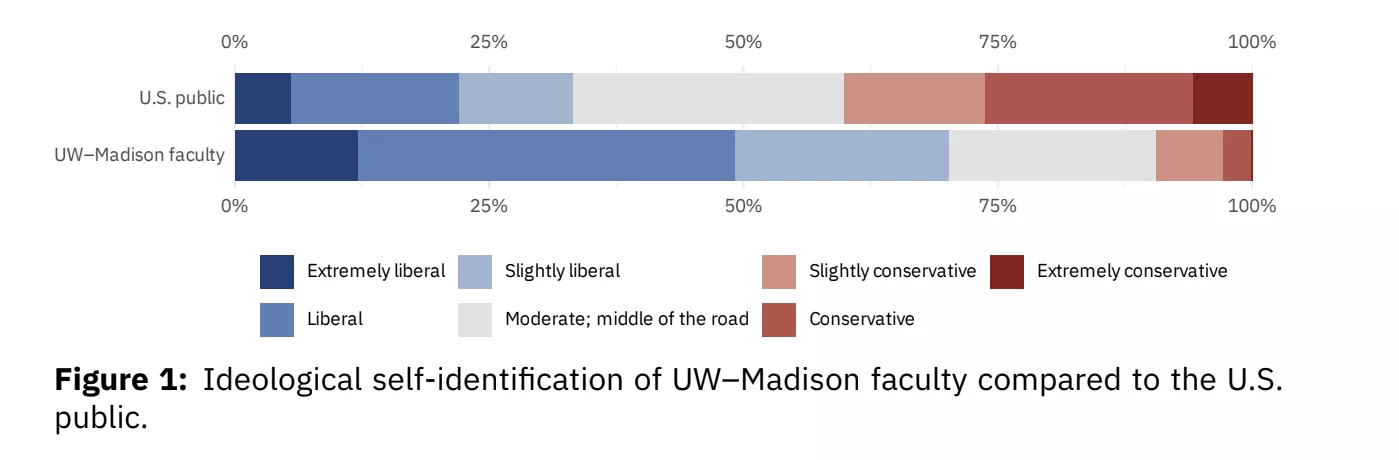
The survey notes that this ideological distribution is vastly different from that of the rest of the country, where 28% of the U.S. population identifies their views as being “conservative” or “extremely conservative.”
A common critique from progressives on why there are not many conservative faculty in higher education is that there are just far fewer conservatives pursuing doctoral degrees than liberals. However, the data suggests that this cannot fully explain the ideological imbalance at UW-Madison given that 21% of Americans who have doctoral degrees identify as being “conservative” or “extremely conservative” compared to only 3% of faculty at UW-Madison.
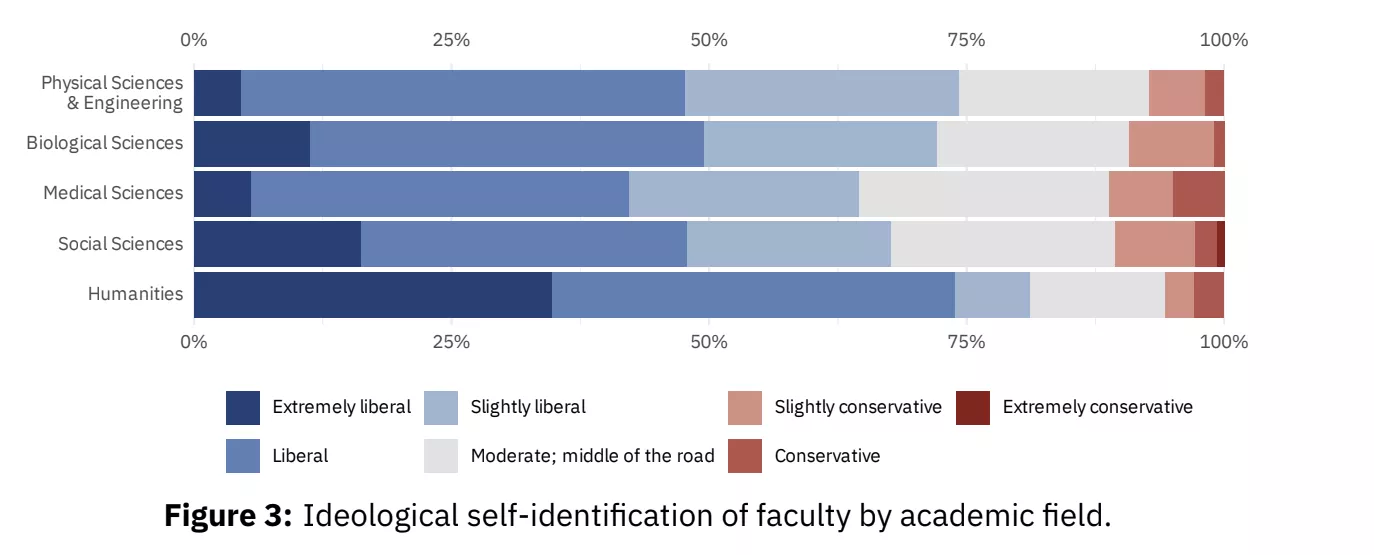
The survey also found that the area of study with the highest proportion of liberal faculty was the humanities, with 74% identifying as liberal and only 6% identifying as conservative. The area of study with the highest proportion of conservative faculty was economics, with 24% of faculty describing themselves as some form of conservative.
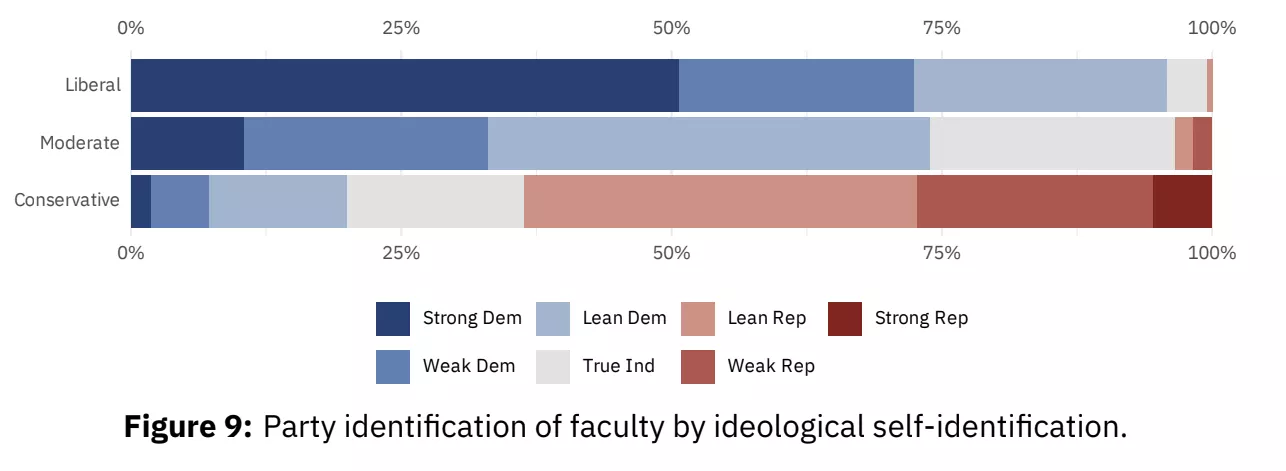
When looking at political party affiliation, the imbalance becomes even more apparent. 96% of the liberal faculty lean towards the Democratic Party, while only 64% of the conservative faculty lean toward the Republican Party. This is likely due to the fact that most faculty who identify as conservative only consider themselves to be "slightly conservative.”
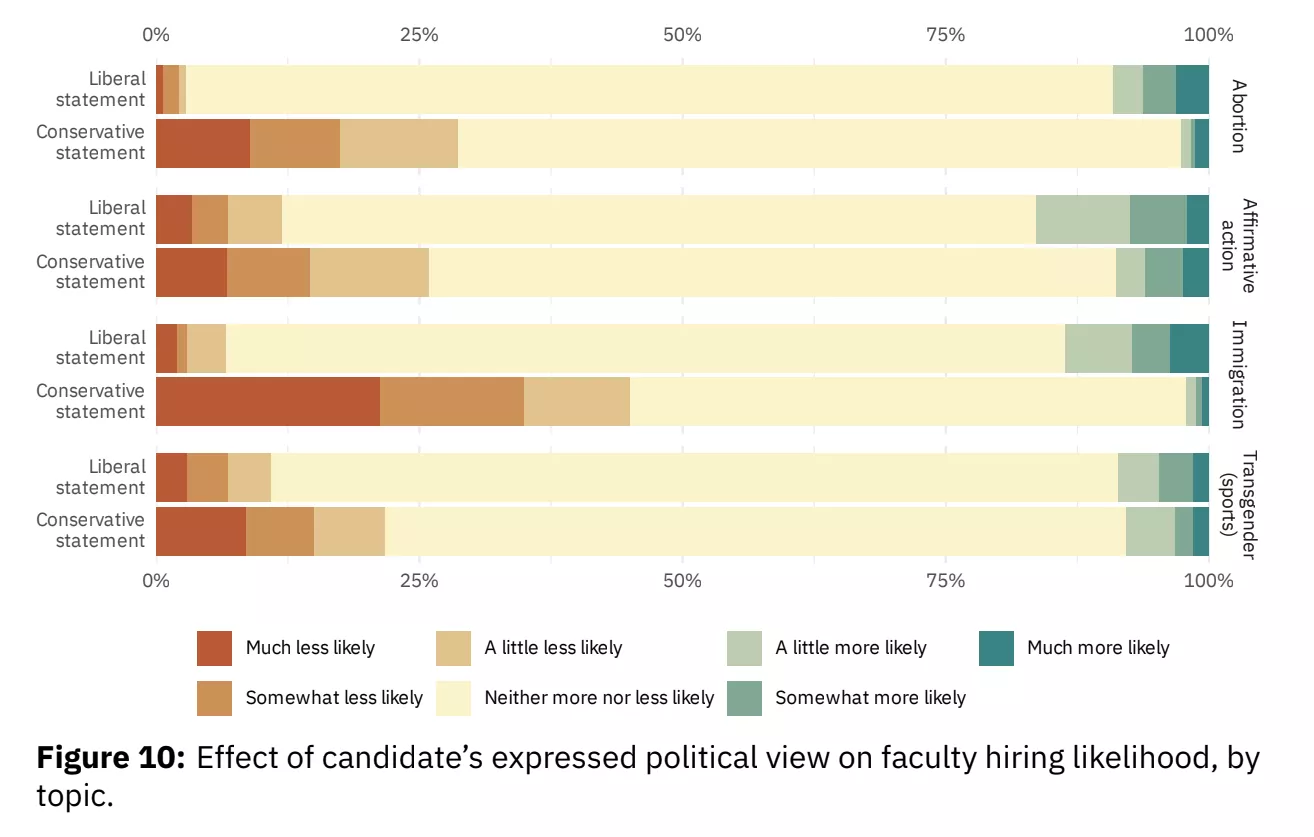
A very interesting aspect of this survey was that it analyzed potential hiring biases among faculty members at UW-Madison. The survey asked faculty if they would be less likely to hire a candidate based upon a political statement that they made. Survey respondents were randomly assigned either a liberal or a conservative statement made by the imaginary candidate on the topics of abortion, immigration, affirmative action, and transgender sports.
The results showed that across all four topics, UW-Madison faculty reported that they would be less likely to hire the candidate who expressed the conservative view point at higher rates than the candidates who expressed the liberal view point.
The topic with the biggest difference was immigration. The liberal statement was "The U.S. should allow immigrants without legal status to remain in the U.S. and offer a path to citizenship,” and the conservative statement was “The U.S. should strictly limit immigration and deport those who are here illegally."
45% of faculty given the conservative statement said it would make them less likely to hire the job candidate. Only 7% of faculty who received the liberal statement said the same.
For the abortion question, only 3% of respondents said they would be less likely to hire a candidate if they expressed their view that “abortion is a basic human right and should be available on demand.” However, 29% of respondents said they would be less likely to hire a faculty candidate if they expressed the view that “abortion is the taking of a human life and should be illegal in most cases.”
This poses a problem when most new faculty at UW-Madison are hired through the shared governance process, which gives current faculty members primary jurisdiction over searching for and reviewing candidates for new faculty positions. If a significant portion of faculty are less willing to hire candidates who express certain political views, it raises a concern that conservatives will be less likely to get hired in the first place, further tipping the ideological imbalance on campus.
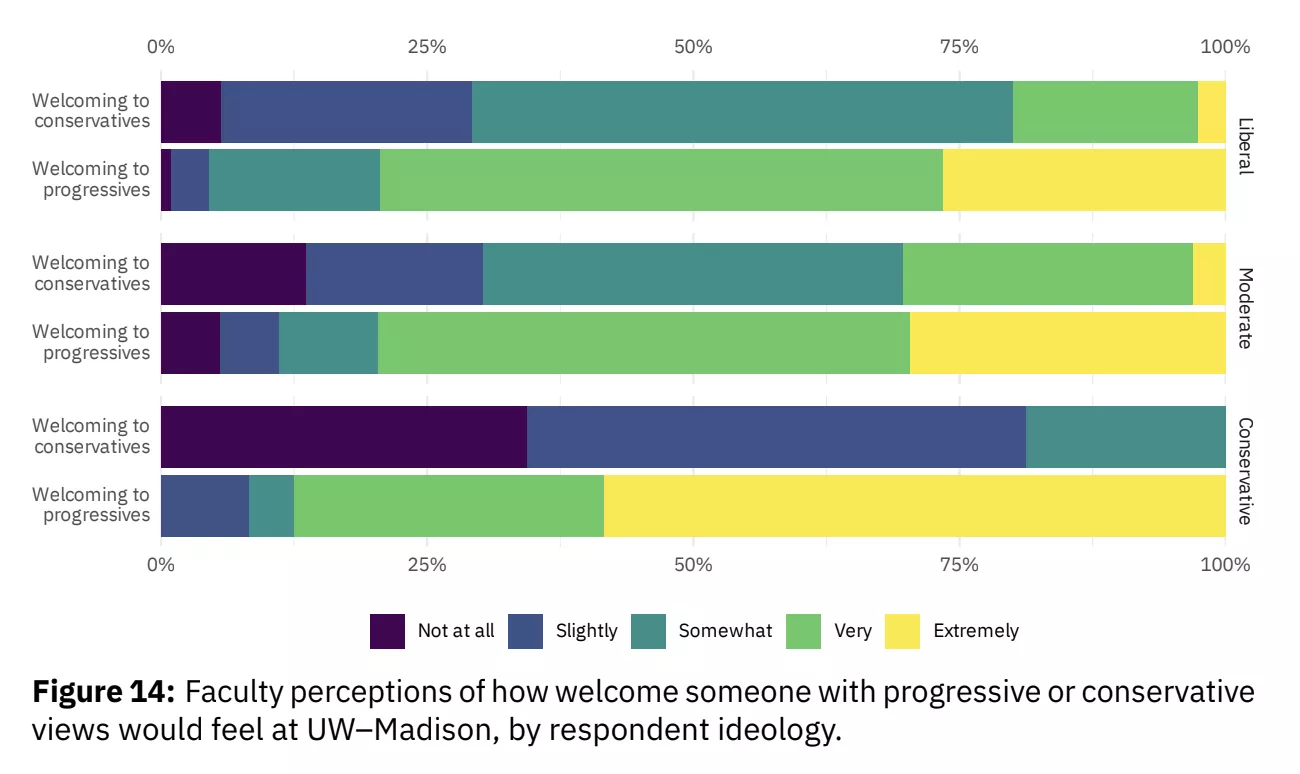
The campus climate for conservative views was also not rated well by faculty. The vast majority of liberal faculty members agreed that the campus environment was “not at all” or only “somewhat” welcoming to conservatives. The vast majority of liberal faculty also said the campus climate was “very” to “extremely” welcoming to progressives. This shows that the hostility of the campus climate toward conservative ideas is recognized by most faculty regardless of their political leanings.
Out of all the conservative faculty members in the survey, not a single one said UW-Madison’s campus environment was “very” or “extremely” welcoming to conservatives.
Liberal professors also showed a gap between whether they believed that the inclusion of different racial groups or conservative viewpoints was important. No faculty said that the inclusion of different racial groups was “not at all” important, and only a very slim number rated it as being “a little” or “somewhat” important.
However, when asked the same questions about the inclusion of conservative viewpoints, some liberal faculty did say it was “not at all important," and even more said it was only “a little” or “somewhat” important.
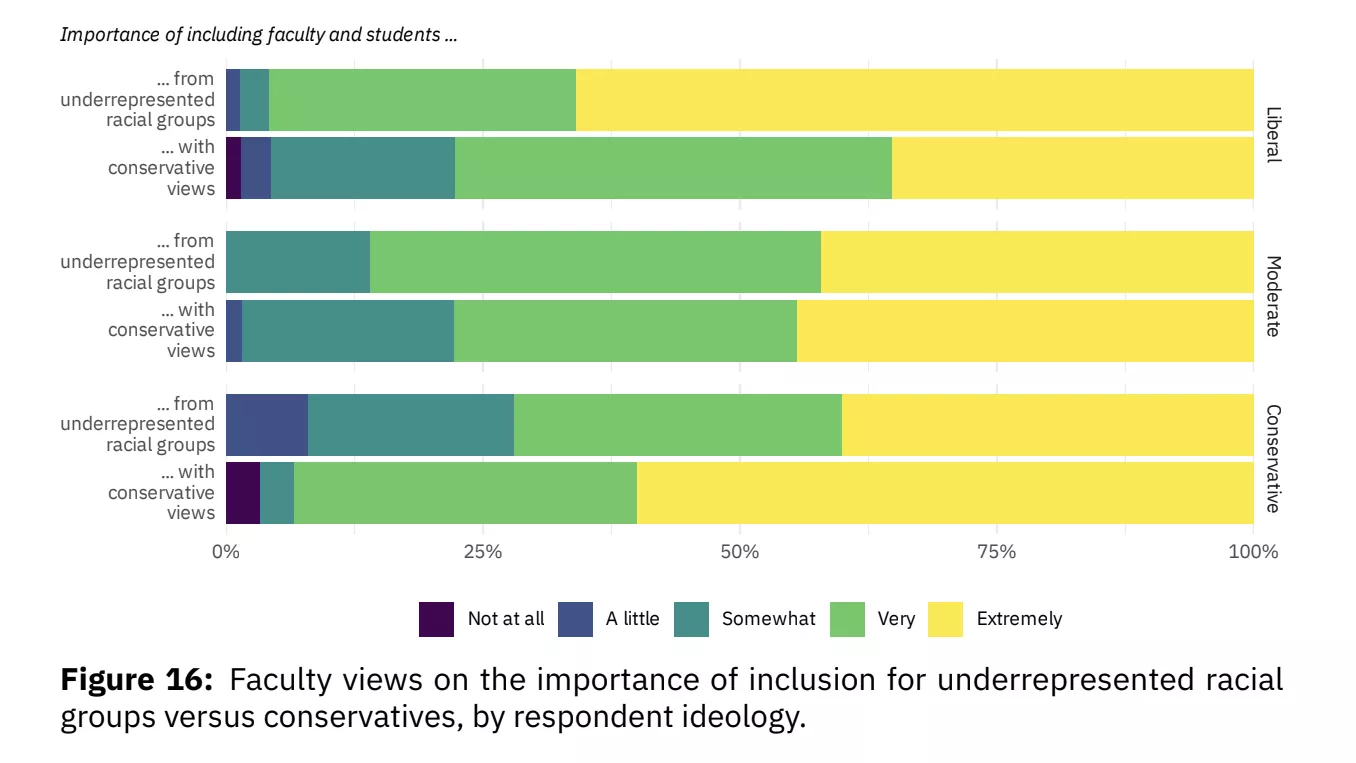
It is worth noting that a majority of liberal faculty still rated the inclusion of conservative viewpoints as being “very” or “extremely important.”
Unsurprisingly, the survey also found a huge gap in conservative and liberal faculty’s comfortability in expressing controversial views. While 55% of liberal faculty said they felt “very” or "extremely" comfortable expressing controversial views on campus, only 23% of conservative faculty said the same.
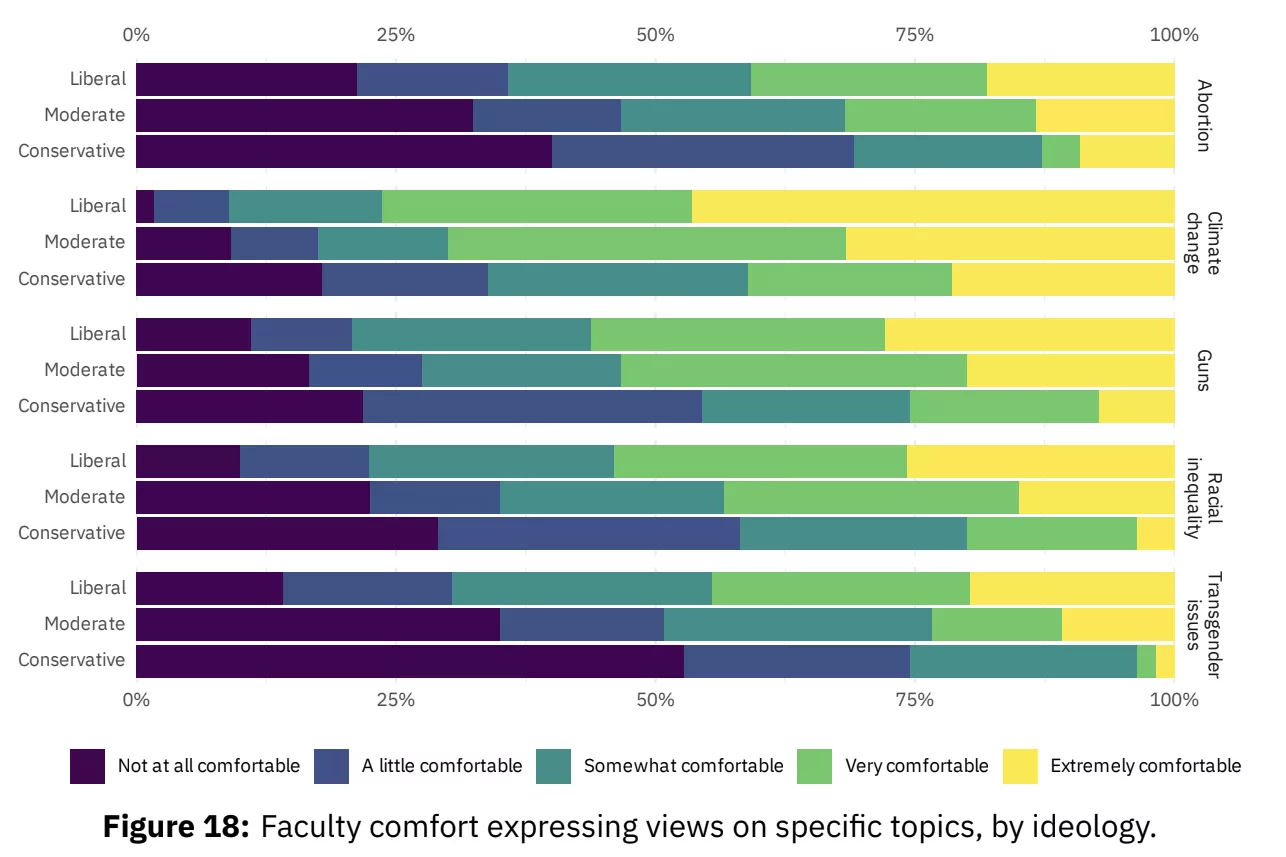
In fact, 77% of conservative faculty reported that they are “not at all” to only “somewhat” comfortable discussing controversial topics with other faculty members.
Conservative faculty also reported feeling less comfortable on specific topics, particularly transgender issues, where 69% report feeling “not at all” or only “a little” comfortable expressing their views, compared to 36% of liberal faculty.
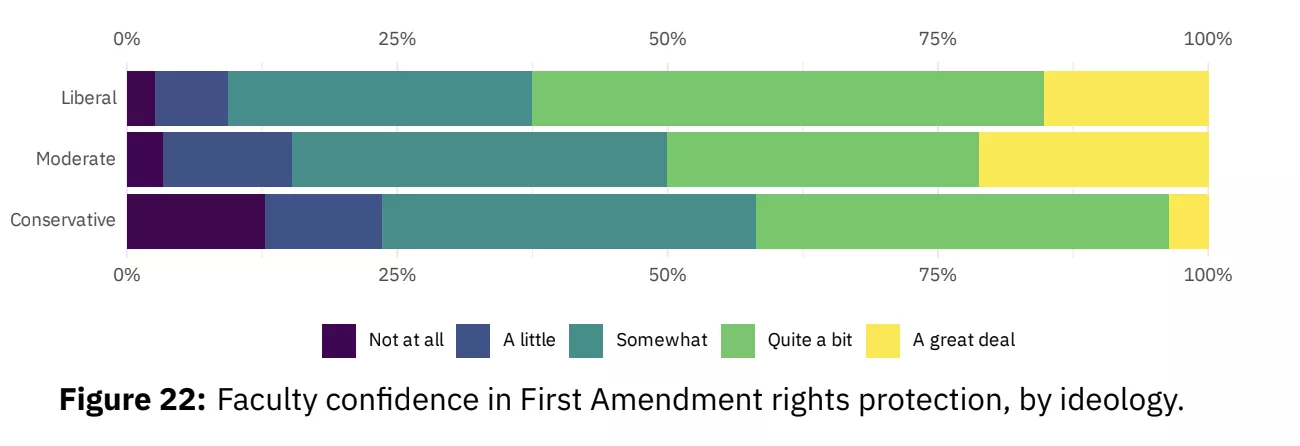
Many conservative faculty also felt like their First Amendment rights were less protected on campus than their liberal colleagues’. Only 42% of conservative faculty said they felt their First Amendment rights were “quite a bit” or “a great deal” protected, compared to 63% of liberal faculty when answering the same question.
The survey also examined if there were differences between liberal and conservative faculty facing punishments after expressing a controversial view. The data showed that while liberal faculty members were far more likely to express controversial opinions, conservative faculty members were far more likely to face negative consequences for doing so.
Among faculty who shared controversial views on social media, 30% of conservative faculty reported institutional repercussions, compared to 8% of liberal faculty. Additionally, among faculty who expressed a controversial view in the classroom, 20% of conservatives said they faced an institutional consequence versus only 1% of liberals.
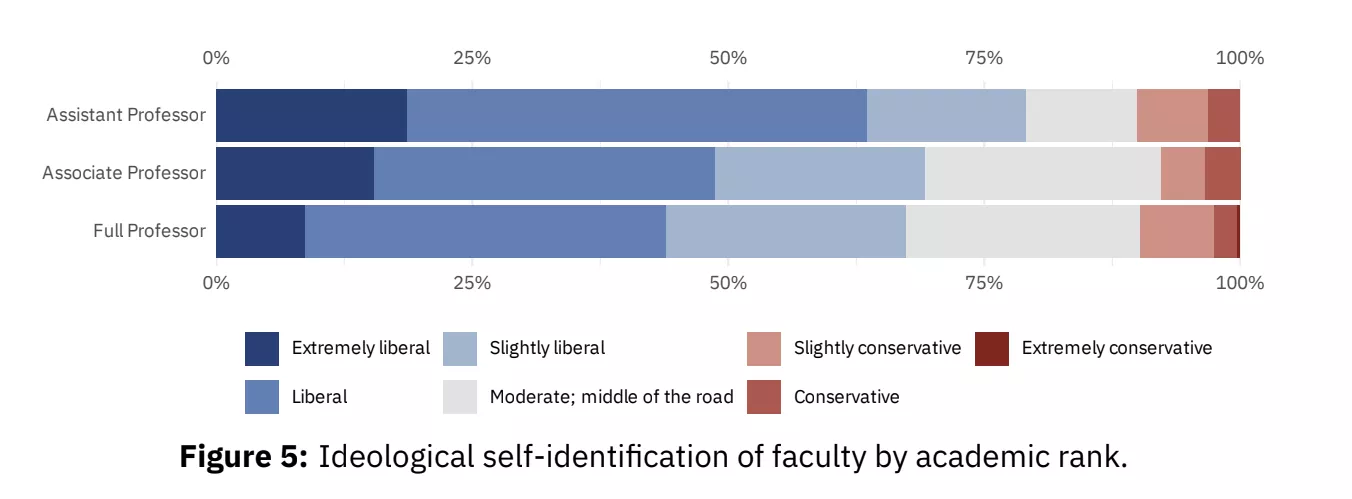
There is also growing concern that universities will continue to become more liberal as time goes on. Data from the survey provides some evidence for this given that junior faculty at UW-Madison were more likely to identify as liberal than senior faculty.
The difference is significant, with nearly two-thirds of junior faculty self-identifying as “liberal” or “extremely liberal,” compared to less than half of tenured faculty. While this phenomenon could be explained by faculty moderating over time, another possible explanation could be that UW-Madison’s faculty cohorts are slowly shifting further left due to hiring more progressive candidates.
Professor Alex Tahk said in an interview with WPR that he was not surprised by the findings of his survey.
In fact, many of his study’s conclusions mirror the findings in the UW System Student Views on Freedom of Speech survey, which was conducted in the fall of 2022 across all of Wisconsin's public universities. The UW’s system survey found that many students, particularly conservative students, did not feel comfortable expressing their views on campus out of fear of social and academic consequences.
The UW System survey found that 67% of Republican students at UW’s campuses said that they were uncomfortable expressing their views on transgender issues, and 55% of Republican students said they were uncomfortable sharing their views on abortion.
This is comparable to the Tommy G. Thompson Center’s survey, which found that 69% of conservative faculty reported feeling “not at all” or only “a little” comfortable expressing their views on transgender issues, and nearly 70% of conservative faculty reported feeling “not at all” or only “a little” comfortable sharing their views on abortion.
The UW System survey also shed light on the fact that many students, particularly on the left, did not feel like Wisconsin’s public universities should be places of completely free and open speech. 33% of Democrat students at UW system schools believe that administrators should ban the expression of views that they feel cause harm. Only 9.5% of Republican students agreed with this. 45% of Democrat students in the UW system also think that views they find to be “offensive” are an act of violence toward vulnerable people.
Similarly, the Tommy G. Thompson Center’s survey found that 45% of faculty respondents believe the University of Wisconsin-Madison should prohibit hate speech, even though it is protected at public universities under the First Amendment.
The survey from the Tommy G. Thompson Center gives valuable insight into the climate surrounding free speech and political discourse at the University of Wisconsin-Madison.
It can also help explain the findings from the UW System’s 2022 free speech survey, where students showed discomfort expressing political views and a distaste for completely free and open dialogue. The campus climate begins in the classroom, where faculty play an integral role in teaching students how to engage in political discourse and encounter views that they do not agree with.
Moving forward, it will be important that the University of Wisconsin-Madison addresses the ideological imbalance among its faculty members to ensure that an academic environment is being created that is conducive to the purpose of higher education: the free exchange of diverse viewpoints in pursuit of truth.

Interested in the content of this Article?
Reach out to the MacIver Institute to aquire more information


