
- Podcasts
 Podcasts
 - Videos
 Videos
 - Policy Issues
 Policy Issues
 - About
 About
About


The SAVE America Act Can Wait
The SAVE (Safeguard American Voter Eligibility) America Act passed the U.S. House last month and has been under Senate consideration in a very dramatic way with no results to date for passage. Americans deserve better.
The SAVE America Act is pretty simple––proof of citizenship to register, photo ID to vote and clean, accurate voter rolls. No American citizen would be disenfranchised from voting.
Sen. Ron Johnson(R-WI) put it perfectly last month on an appearance on Newsmax:
“Americans don’t want their legitimate votes canceled out by fraudulent ones…Across the political spectrum, people need to feel confident that our elections are legitimate, regardless of the outcome…The SAVE America Act will boost confidence by requiring proof of citizenship to register and a photo ID to vote.”
The US Senate began debate their debate on March 17 and after an 11-day filibuster, America is no further along as the senators got out of DC in the dead of night. While you were sleeping, the U.S. Senate voted to recess until April 13—without delivering the SAVE America Act to the American people. They didn’t run out of time. They chose to stop and take a vacation. While Americans demand secure elections, the Senate hit pause. That’s not leadership. That's not representative government.
“If anyone can illegally exercise a right of American citizenship, like voting—then American citizenship means nothing,” stated Senator Mike Lee.
For more than 30 years, Congress has helped set national rules for federal elections. The Constitution gives the federal government both the authority—and the responsibility—to protect the integrity of federal elections. Federalism doesn’t mean the federal government has no role in elections.
Wisconsin already bars noncitizens from voting and requires ID at the polls, but it has never forced documentary proof of citizenship at the registration stage.
Only Citizens Can Vote–But Wisconsin Election Officials Refuse to Enforce It
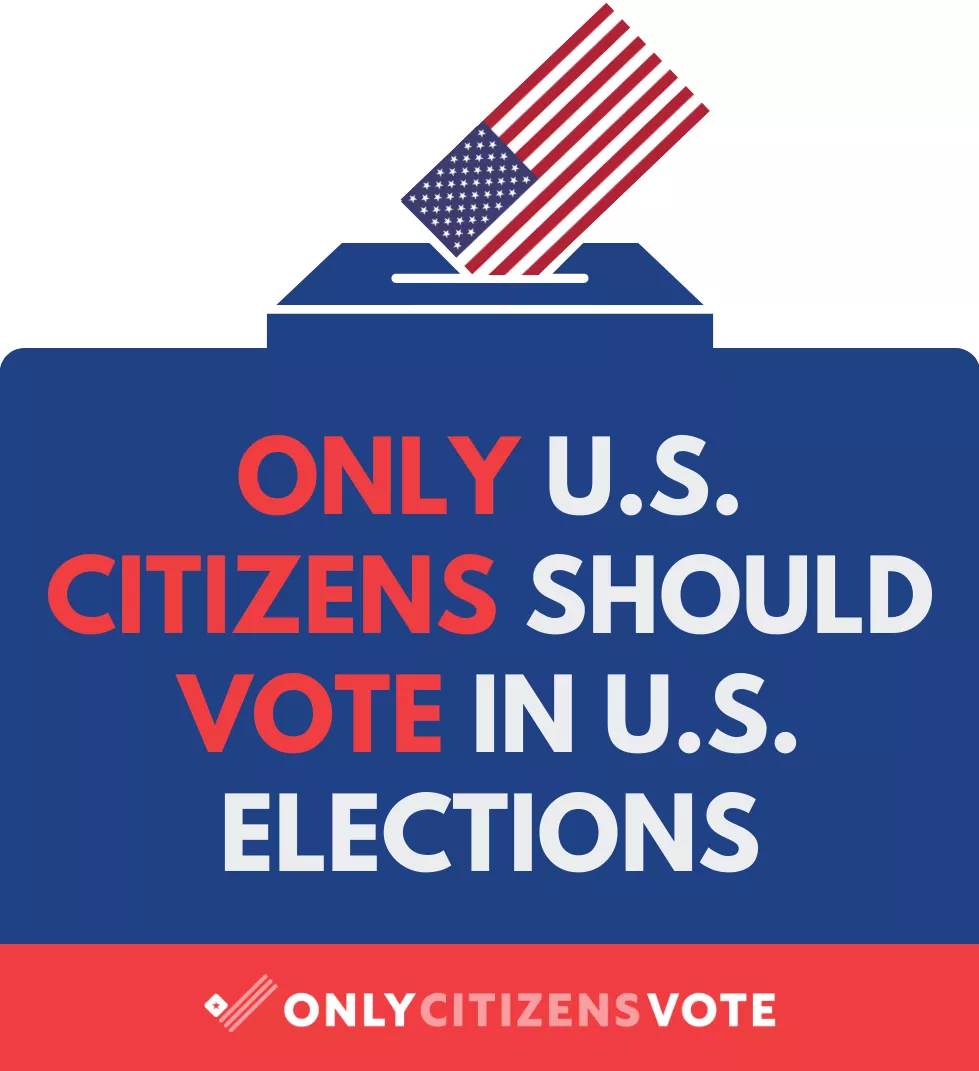
In November 2024, Wisconsin voters overwhelmingly approved a constitutional amendment (Question 1) that changed the state constitution from saying “every” U.S. citizen may vote to declaring that only U.S. citizens may vote in any election. The measure passed with roughly 70.5% support, reflecting strong public demand for explicit citizenship protections at the ballot box.
Yet more than 16 months later, Wisconsin’s election statutes and administrative practices have not been updated to provide meaningful, proactive enforcement of that new constitutional command. The result is a system that still relies almost entirely on self-attestation, with no routine documentary proof of citizenship, no mandatory use of federal verification tools, and no clear markings on state-issued IDs to distinguish citizens from non-citizens.
Reliance on a Sworn Oath Instead of Documentary Proof
Wisconsin law requires every voter registration applicant to check a box and sign a statement swearing, under penalty of perjury, that they are a U.S. citizen. Making a false statement is a felony. However, no documentary proof such as a birth certificate, passport, or naturalization papers is required at the time of registration.
This “honor-system” approach was already in place before the 2024 amendment and remains unchanged today. It creates an obvious vulnerability: a non-citizen who is willing to lie on the form can register and vote undetected. In a 2025 lawsuit, Waukesha County Circuit Judge Michael Maxwell ruled that the Wisconsin Elections Commission (WEC) must begin verifying citizenship, but WEC and Wisconsin’s Department of Justice immediately appealed, and the order was stayed. As a result, the self-attestation system continues unchanged.
No Mandatory Use of the SAVE System
The U.S. Department of Homeland Security operates the Systematic Alien Verification for Entitlements (SAVE) database, a fast, low-cost tool that allows states to check an individual’s immigration and citizenship status against federal records. Dozens of states now use SAVE to audit voter rolls or screen new registrations.
Any non-citizen matches flagged by the SAVE system that turn out to be U.S. citizens can be quickly and easily resolved. Naturalized citizens or individuals whose federal records have not yet been fully updated can simply provide standard proof of citizenship (such as a U.S. passport, naturalization certificate, or certified birth certificate) to their local clerk. Once verified, the individual would be immediately confirmed as eligible, and any temporary flag removed from the voter roll. This process is routine, low-burden, and already used successfully by dozens of other states and federal agencies for programs like Social Security, Medicaid, and REAL ID. In practice, legitimate citizens who appear as potential non-citizens in SAVE are almost always cleared within days, while actual non-citizens are prevented from registering or voting.
Wisconsin does not use SAVE for voter eligibility checks.
Without SAVE or any comparable cross-check, the state has no systematic way to flag potential non-citizens already on the rolls or attempting to register. This is the exact enforcement mechanism the 2024 constitutional amendment implicitly demands. Yet, WEC refuses to take any steps at all to verify citizenship out of concern for voter “disenfranchisement”, subverting the will of over 70% of Wisconsin voters who voted for the Only US Citizens Vote constitutional amendment.
No Citizenship Demarcation on State-Issued IDs
Wisconsin’s voter ID law requires voters to show a photo ID at the polls (or when requesting an absentee ballot). Acceptable forms include a Wisconsin driver’s license or state ID card. However, standard Wisconsin driver’s licenses and ID cards do not indicate citizenship status.
This creates a practical loophole: a non-citizen with a legally obtained Wisconsin ID can present it at the polls, and poll workers have no way to know from the ID alone whether the holder is eligible to vote. The only safeguard remains the voter’s earlier self-attestation during registration.
The Enforcement Gap in Context
The Wisconsin Elections Commission maintains that noncitizen voting is “extremely rare,” citing only a handful of documented cases over the past decade. Election officials emphasize that existing safeguards like voter ID, perjury penalties, and poll-book checks make widespread abuse unlikely.
WEC’s claim that it's "extremely rare" is because very few cases are reported or prosecuted through the existing complaint-driven system. They do not conduct proactive citizenship audits or use tools like SAVE, so undetected illegal voting would not show up in their data. This is the core point of ongoing debate and lawsuits in Wisconsin.
Yet the constitutional amendment was passed precisely because voters wanted more than self-policing. Without statutory mandates for proof of citizenship (SAVE verification or ID demarcation) the amendment remains largely symbolic. A 2025 attempt to force verification through the courts was halted on appeal, and no comprehensive legislative fix has passed.
Until Wisconsin updates its statutes to require active, verifiable enforcement, rather than passive reliance on an oath, the gap between the people’s constitutional command and the reality on the ground will persist. That gap represents the clearest vulnerability in the state’s election laws today.
Wisconsin Must Immediately Enforce Voter Citizenship Amendment: State Officials Obligated to Act
Wisconsin voters spoke clearly and decisively in November 2024, approving by a resounding 71% margin a constitutional amendment declaring that only United States citizens aged 18 or older who reside in an election district may vote in elections for national, state, or local office, or in statewide or local referendums.
This amendment, now enshrined in Article III, Section 1 of the Wisconsin Constitution, is the supreme law of the state. It supersedes conflicting statutes, regulations, or practices.
Yet, despite this clear mandate and overwhelming voter support, state election authorities have taken no proactive, statewide steps to fully comply. Current registration relies primarily on self-attestation of citizenship under penalty of perjury, with limited routine checks.
Wisconsin Elections Commissioner Don Millis (Republican appointee) recently addressed related federal efforts in comments on the Safeguard American Voter Eligibility (SAVE) Act, which passed the U.S. House and would require proof of citizenship for voter registration (alongside reinforcing voter ID):
"The SAVE Act that passed the House had just really two provisions. It was a citizenship requirement and the voter ID requirement. We already comply with the voter ID requirement; the citizenship requirement would be a hurdle. That would be a challenge."
While Millis notes Wisconsin already meets photo ID standards, the state constitution now imposes a parallel and higher citizenship eligibility rule that demands enforcement. The amendment reflects voters' will to close any potential loopholes and ensure only citizens participate in elections. Non-citizen voting remains illegal under state and federal law (with severe penalties), but the constitutional change strengthens safeguards and public trust.
Failure to act proactively risks eroding confidence in Wisconsin's elections, especially in close races. The state has a duty to implement the amendment in good faith - through audits, process updates, or legislative support if needed. Voters demanded citizenship-only voting; officials must deliver.

Interested in the content of this Article?
Reach out to the MacIver Institute to aquire more information


