
- Podcasts
 Podcasts
 - Videos
 Videos
 - Policy Issues
 Policy Issues
 - About
 About
About


CPI Red Hot in May
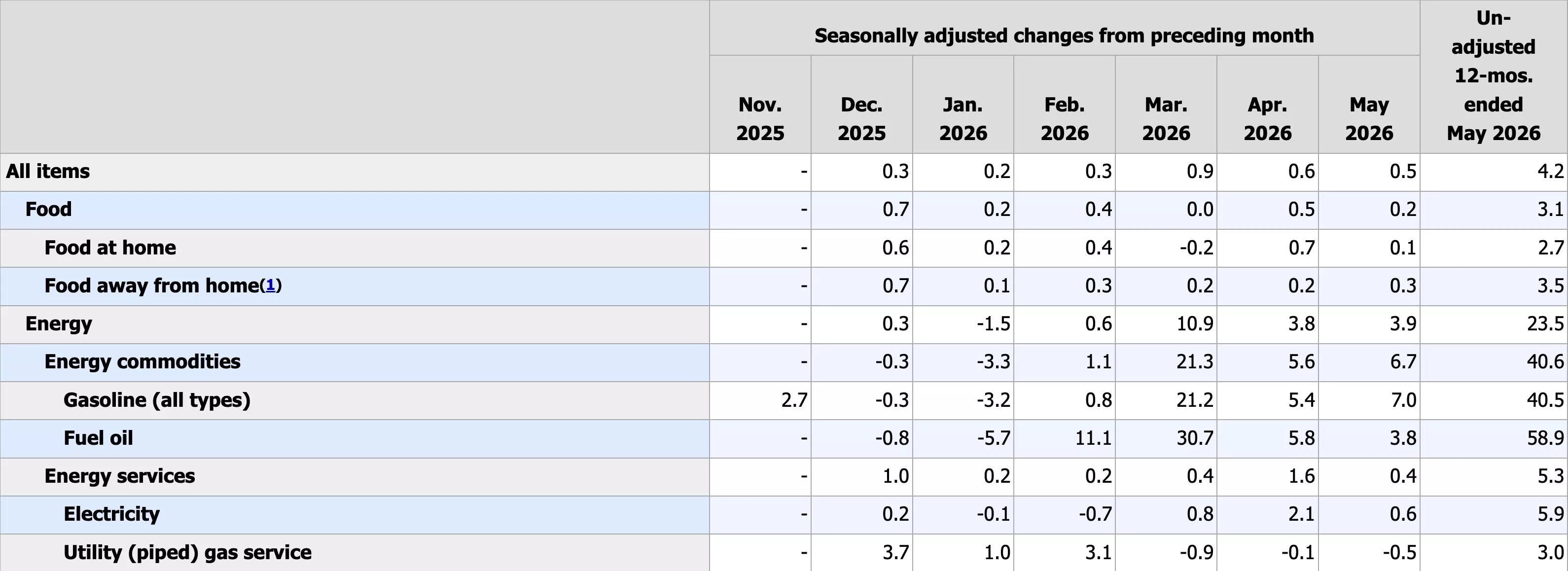
The BLS's CPI: All Items measure of price inflation came in red hot for the month of May, driven almost entirely by increases in fuel prices.
It's looking like 3% price inflation may be the new normal. In May, the index increased to 4.17% from 3.78% the prior month.
Food prices increased by 3.1%, energy as a whole increased by 23.5%, electricity increased by 5.9%, and shelter increased by 3.4% year-over-year. When we look at the energy category broken down into Gasoline (all types) and Fuel oil, there we see that prices increased by 40.5% and 58.9%, respectively.
While gas and utility prices increased dramatically throughout the month of May due to intense scarcity in global crude oil supplies, in recent weeks, prices at the pump have come down.
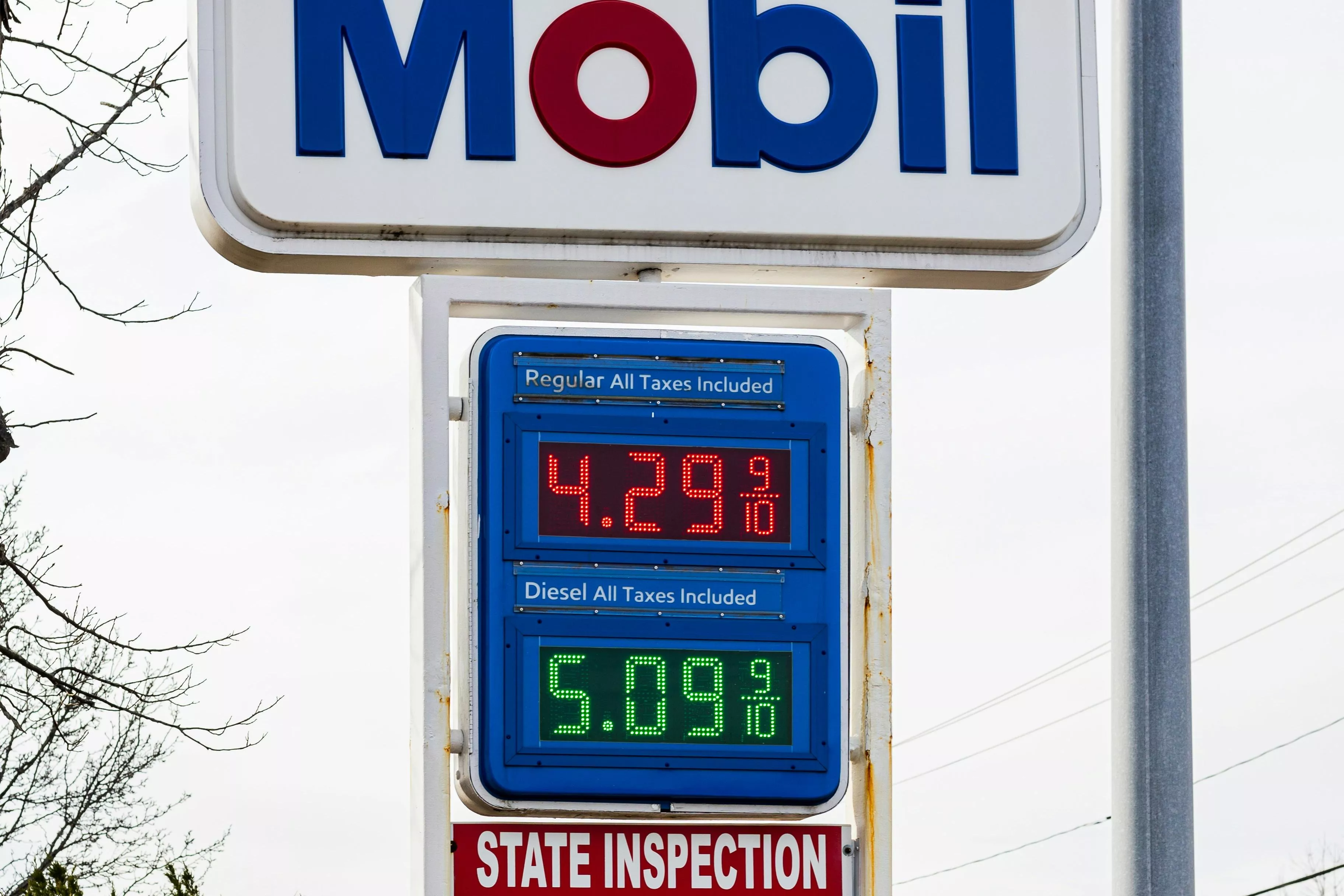
Regular gasoline's recent high price of $4.50/gal on May 11th fell to $4.15/gal on June 8th, due to slightly lower crude oil prices and increasing optimism among oil market participants (and markets, generally) that the war in Iran will come to an end.
Spot prices for both Brent (light, sweet) crude and West Texas Intermediate (light, sweet) crude fell from their recent highs of $138.21/bbl and $114.58/bbl to $97.46/bbl and $95/bbl as of June 8th.
If those betting on a resolution to the Iran war are wrong, though, the U.S. oil industry's rapid drawdown in oil supplies could quickly turn oil scarcity into an outright shortage.
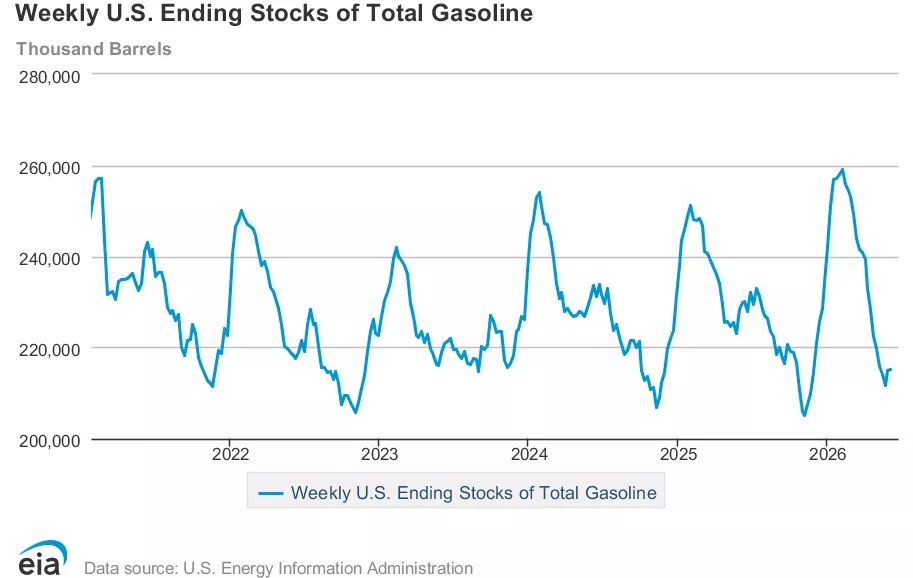
According to data from the EIA, the decrease in the supply of gasoline between February and May is the largest ever recorded, resulting in a drawdown of 47 million barrels. Typically, a drawdown of this magnitude takes place over the course of an entire year, not 4 months. Given that peak summer fuel consumption has yet to occur, drawdowns could accelerate.
Should the war be prolonged and the strait remain closed, market experts expect the price of oil to break $100/bbl and rise, potentially, to $150/bbl. That result has been held off due to large global inventories, some of which is held as strategic petroleum reserves, but their importance can be overstated.
Robert Rapier explains the situation like this:
The key point is that the market has not solved the problem created by a prolonged closure of the Strait of Hormuz. It has simply deferred the consequences.
We are effectively financing the disruption with stored barrels, spare capacity, and incremental demand adjustments. Those tools are finite. They were designed to smooth short-term disruptions, not to replace a major artery of global oil trade indefinitely.
This is why the current price level can be misleading. It reflects the system’s ability to absorb the initial shock, not its ability to sustain that balance over time.
If the disruption persists, the math becomes increasingly unforgiving.
If the disruption drags on, inventories continue to fall, spare capacity is further depleted, and the margin for error disappears. At some point, the market is forced to reprice the remaining supply more aggressively.
That is when the move toward $150 becomes much more plausible. It’s not necessarily because something new has happened, but because the buffers have been exhausted.
Those betting that the Iran war will come to an end may very well be correct. After a couple months of deals being struck, then being struck down, President Trump's decision on Thursday to cancel planned strikes is being taken as confirmation that the conflict is truly coming toward a resolution.
Others speculate that it is more of the same, but virtually all leaders in the oil industry are convinced that there will be a definitive end to the conflict in the near future. The sentiment among these experts is that the strait is simply "too important" to remain closed.
In that event, consumers can likely expect gasoline and oil prices to remain elevated above their pre-war levels, but can expect prices to decline within 6 to 12 months depending on the extent of the disruption and the market's ability to adjust to whatever the new circumstances may be.

Interested in the content of this Article?
Reach out to the MacIver Institute to aquire more information


