
- Podcasts
 Podcasts
 - Videos
 Videos
 - Policy Issues
 Policy Issues
 - About
 About
About


Another week, another target: The livestock industry
The state’s bureaucracy has a way of making me look like a genius.
And not just me, but other critics of the administrative state who have offered cautionary tale after cautionary tale about what Tony Evers’s brutes would do if they were ever unsheathed from the covering of democratic accountability.
Now they have been—when in Evers v. Marklein the “progressive” Supreme Court tossed out virtually all legislative oversight of administrative rulemaking—and all our predictions are coming true, maybe faster than we believed they would.
For instance, Democratic accountability is a must, I wrote not too long ago, or “the bureaucratic gouging of Wisconsin consumers and taxpayers will continue and worsen, driving the state over its own cliff of regulatory inflation and control.”
State Supreme Court justice Rebecca Grassl Bradley can put the administrative state in its place much better than I or just about anybody else can, and she has done so more times than I can count. In her dissent in Evers v. Marklein, she wrote that the “majority rewrites the constitutional text to strangle ‘legislative action’ while unleashing unconstrained executive rule, exposing the people to the very nightmare against which [James] Madison warned.”
Over at the Wisconsin Manufacturers & Commerce, Scott Manley, the executive vice president of the state’s largest business association, warned what would happen if the court did what it ended up doing—that is, getting rid of the legislature’s ability to indefinitely object to a rule being promulgated, thereby removing the people from any real say over the regulations they must abide by.
“I’ll tell you what, the indefinite objection has brought agencies to the table to negotiate in ways that we’ve never seen before,” Manley told me in an interview last year when the decision was still pending before the court.
They negotiated then, Manley said, because they were afraid, and that was a much different scenario than it used to be.
“It used to be, for instance, when we would ask the DNR (Department of Natural Resources) to change a rule before it went to the board [Natural Resources Board], they wouldn’t do it,” he said. “Then the rule would go to the board and they’d adopt it, and it’d go to the legislature. Then the legislature would ask the agency to make changes, and they wouldn’t do it. They wouldn’t do it because they knew they could wait until the end of the session, and it would become law no matter what. Now they’re actually motivated to negotiate.”
Now they no longer are, and all these things are coming to pass—the leap off steep regulatory cliffs, the nightmare of unconstrained executive rule, the my-way-or-the-highway mentality. Or to say it another way, the DNR and other agencies are suddenly racing to recreate the hellishness of the Jim Doyle years, when bureaucrats were deemed to be infallible and endowed with unilateral power.
Now, as then, they have no fear. God help us if voters don’t have long memories.
In the past two weeks alone, the drenching rain of regulation has soaked our cultural and economic spaces. This past week, Assembly Republicans slammed a proposed Evers administration health rule that would replace gender-specific terms such as “mother” and “father” with gender-neutral alternatives, calling it a stealth campaign by the administration to impose a “radical gender agenda” and erase biological reality, bypassing the legislature and imposing the language via the administrative state instead.
Conservatives said the proposed rule was a perfect example of what they say state agencies have been planning ever since the court’s ruling in Evers v. Marklein, namely, a return to woke ideology as an intended consequence of the court decision.
“Fresh off of the state Supreme Court’s ruling that strips state lawmakers of their oversight ability of administrative rules, the Evers-Rodriguez administration is using their newfound power to enact their radical gender agenda through the rulemaking process without legislative approval,” Rep. Amanda Nedweski (R-Pleasant Prairie) said last week.
“After becoming a national laughingstock for proposing a state budget which referred to mothers as ‘inseminated persons,’ the Evers-Rodriguez administration is doubling down on erasing mothers while using administrative rule to advance their unpopular political ideology.”
So cocky is the DHS that it did not even bother to attend a September 3 legislative hearing on the rule language, instead sending a letter defending the proposed rule. In other words, we don’t have to answer your questions, and our language is what we’re going with.
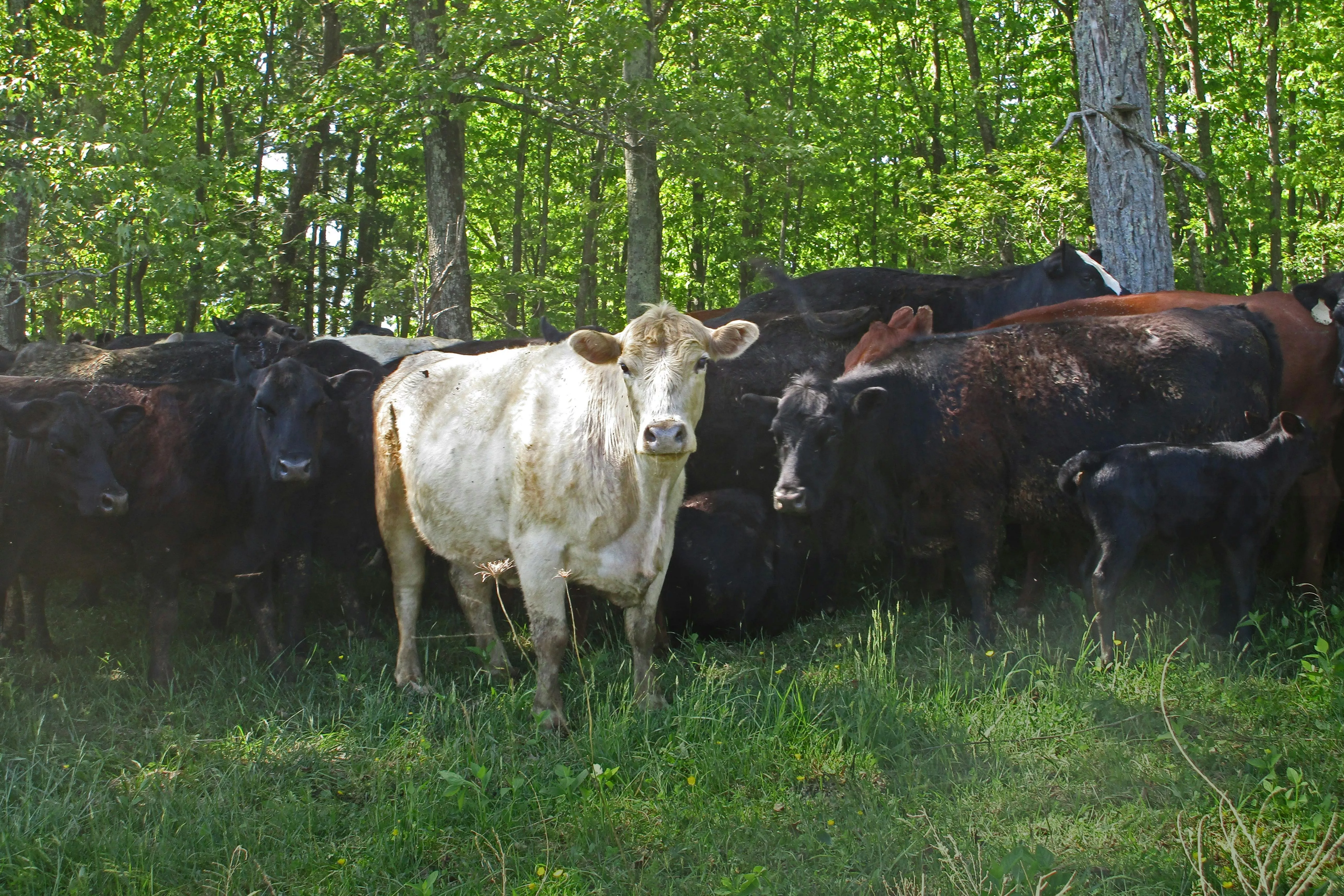
Turns out, the administrative state can multitask, so while they were trying to replace sex-specific descriptions of men and women in their parental roles with deconstructed woke creations devoid of both real meaning and humanity, another sector of the Borg was going after farmers. Seems that, by rule, the Department of Agriculture, Trade and Consumer Protection (DATCP) is proposing fee increases on livestock producers, dealers, truckers, and others that would likely bankrupt many in the industry, or force them to do business out of state. Some of the proposed fees would rise by as much as almost 1,700 percent.
Yes, you are reading that right: 1,700 percent. This is precisely what happens when bureaucratic bosses are allowed to do nearly anything they want, without legislative oversight or accountability.
The extensive fee changes apply to the Animal Disease and Movement rule, as well as to one regulating animal markets, dealers, and truckers. Specifically, one rule would increase costs for certificates of veterinary inspection, disease certifications, and certain annual farm registration fees, according to an analysis by Equity Cooperative Livestock Sales (ECLS); the other would raise annual registration fees for animal markets, animal dealers, and animal truckers. In the latter category, 258 animal dealers, 332 animal truckers and 1,001 animal transport vehicles would be affected.
Together, the rules govern how animals are inspected and moved, quarantined when necessary, and traded through markets, dealers, and livestock truckers. DATCP states that the updates are overdue because most of the current fees date back to 2008 and 2009.
Still, the department’s proposal goes well beyond an inflationary adjustment.
An Animal Market Class A license jumps from $420 to $7,430, or a 1,669 percent increase.
The late fee for Class A markets would rise from $84 to $1,486, or a 1,670 percent increase.
The registration fee paid by truckers transporting livestock in the state would increase by 517 percent, from the current price of $60 to $370.
Animal dealer licenses would climb from $220 to $670, a 205-percent increase. A vehicle permit for livestock haulers hikes from $20 to $79, a 250-percent increase.
These increases are not merely unprecedented; they are irrational. In neighboring states, market licenses run $200 in Illinois, $300 in Minnesota, and $50 in Iowa. At $7,430, Wisconsin would not even live in the same universe.
As the industry points out, animal health and inspection programs serve not just the industry but the public, and it’s not like the state doesn’t have the money. ECLF put it this way: “The department and the Governor need to find shared funding and not simply use increased user fees for this shortfall. In the past month, Governor Evers has announced nearly $500 million of funding for various projects, but he wants to put this $1 million shortfall on the backs of our farmers.”
Perhaps it’s not news, but the DATCP doesn’t care. In the wake of the Evers v. Marklein decision, just as Manley predicted, agencies no longer fear the Legislature’s Joint Committee for Review of Administrative Rules (JCRAR), and that means the people’s elected representatives can’t block rules or force agencies to sit down with those affected and try to come to a sensible resolution.
After all, as a starting point, the industry is being reasonable, recognizing the need to enhance revenues, as ECLS observed: “While we recognize that the current program appropriation cannot cover costs without adjustments, placing the solution solely on fee increases is short-sighted. A broader discussion is needed around alternative funding mechanisms or statutory changes that distribute the cost more equitably across the industry and the public programs it supports.”
But the bureaucracies loathe broader discussions.
Writing on Facebook, Rep. Romaine Quinn summed up the legislative pickle: “Evers is about to hammer livestock producers with massive fee increases. This could threaten the closure of Equity Cooperative Livestock Sales locations like Barron and Altoona, forcing farmers to travel even farther and erasing margins.”
And of course, there was the punch line, which unfortunately isn’t funny for anybody: “The crazy part is I can’t help you—Tony sued us and took away our oversight.”
It should be noted, too, that many people point out that some egregious rules were in the pipeline prior to the Supreme Court decision. But that’s the way it always is. The bureaucracy writes beyond-the-pale rules that overreach, and, at least in recent years, the legislature kept them in check and grounded them in the real world. No longer.
The DATCP, of course, says the fee changes are justified.
In an August 2025 presentation to the state DATCP board, the department asserted that fees must rise because the programs are operating with deficits. Revenues no longer recover costs, they said, and they stressed that, without increases, the programs would fail to meet statutory requirements. The DATCP also emphasized that fees have not been raised in 16 years, and its spokespersons have said the agency has hit the end of the line when it comes to reducing costs to revenue levels without raising fees.
Wanna buy a bridge?
The DATCP officials might as well have been trying to sell the board the Brooklyn Bridge. The board bought it anyway, knowing it would force farmers to drive right into the water.
Fortunately, those producers themselves weren’t buying it, and rightly so. Curt Larson of Equity Cooperative Livestock Sales told Brownfield Ag that, for 11 of Equity Cooperative’s 13 locations, annual licensing fees would jump from $5,460 per year to $81,730 per year.
“The only way any of us can recoup that cost is we have to go back to the producer and charge, you know, increase our fees to the producer in order to cover this, and we just don’t believe that this is all a producer item that the producers should be shouldering the full cost on this,” Larson told the publication.
According to Equity Cooperative Livestock Sales (ECLF) itself, “substantially higher costs on markets, dealers, and truckers would be passed down to producers, who would have to absorb the cost either through higher veterinary charges, increased transport fees, greater commission rates, or reduced sale proceeds.”
“This proposal comes at a time when many producers are already grappling with rising input costs, labor shortages, and volatile market conditions,” the group says in a call to action. “An additional financial burden—indirect as it may be—adds further pressure to an already strained sector.”
The Wisconsin Farm Bureau Federation (WFBF) also issued an urgent call to action, saying the result of such dramatic increases would be fewer marketing options and less opportunity to sell livestock in the state. That, in turn, would prompt producers to truck animals to neighboring states where it’s cheaper, the federation asserted.
“The inspections and animal health protections funded by these programs serve a broad public purpose, protecting animal health and consumer confidence,” the WFBF stated in its proposed pitch to DATCP. “It is fundamentally unfair to shift the entire cost onto farmers, truckers, dealers, and markets. Other states fund these programs with state support because the benefits are shared by everyone. DATCP should restore and continue that approach.”
Beyond the higher fees
The fight over DATCP’s rule is not just about economic sustainability and regulatory fairness.
It’s about brute bureaucratic power that can suddenly be wielded without any fear of accountability. Since Evers v Marklein, there’s a swagger in the bureaucratic gait. And, if that ruling was not bad enough, Evers made it worse by stretching its interpretation beyond the simply unreasonable to the obviously absurd.
In an August memo, the Democratic governor instructed agency heads not to wait for standing legislative committees of jurisdiction to review rules before sending them to the Legislative Reference Bureau for finalization and publication, giving them the force and effect of law: “There no longer remains any statutory requirement to wait for legislative committee review before promulgating a rule once I have approved it,” the governor instructed. “This is good and important news as it means we can—and must—continue the people’s work in earnest.”
The problem is, the Supreme Court ruling never mentions standing committees, only the JCRAR. Evers stretched the paint of one legal room into a thin veneer to cover all the others. A thin coat it is, too. Nonetheless, with such a purely political court ready to back him up, the governor has basically given agencies carte blanche to write rules when and how they see fit, just as they did back in the days of Democratic Governor Jim Doyle.
The result is as iridescent as a peacock on display. Under the just-jettisoned system, DATCP’s proposal would have been dead on arrival. Lawmakers would have slowed it, forced revisions, demanded compromise, or killed it. Now, the only brake is public comment at a handful of hearings in September, after which the agency knows it can have its way.
That is the real story, of course: an emboldened governor, an unleashed bureaucracy, and an democratically disarmed citizenry.
Speaking to State Farmer, Larson said he had run into a wall of bureaucrats who had acted arrogantly: “Wouldn’t common sense indicate that you reach out to the primary stakeholders and have a conversation before you just publish something?”
Can anything be done?
At first glance, the situation vis-à-vis the bureaucracy seems bleak, now that all of Madison’s Jack the Rippers have been unleashed under the dark cover of the state Supreme Court. It’s also true that progressives will hold the state Supreme Court until at least 2028, and the way things are going, unless Wisconsin’s voters wake up, it’s likely going to be a lot longer than that.
However, there are steps conservatives can take to challenge egregious rules like this. First, regarding this specific livestock rule, there is a simple fix that doesn’t require fees, and that’s the general fund, as Romaine Quinn wrote last week.
Writing on Facebook, Quinn said the fund has been running a negative balance for over a decade, but the department had always been able to reconcile the difference.
“If they are unable to, any overage would be covered by the general fund. After we passed the most recent budget, DATCP is now telling us that they anticipate even higher costs,” Quinn wrote. “Secretary Romanski should be in each of our JFC offices asking for more funding, not hitting the entire industry in one fell swoop.”
The worst part of it all, Quinn wrote, was that for decades, there had been a committee that could slow down or stop rules if the legislature felt an agency went too far.
“Governor Evers sued us and overturned decades of precedent—leaving agencies 100% in control of rules with no input from either house. This is a dangerous growth of power for the administrative state (the unelected, 4th branch of government).”
For the broader spectrum of rules, there are other remedies for what is quickly becoming an ongoing bureaucratic and judicial coup d’état. For one, the legislature can write tighter laws giving more detailed instructions to the bureaucracy with respect to implementation—a political rope-a-dope that would keep bureaucrats backed up helplessly against the ropes. The most direct remedy is statutory, and the more specific the instructions in law, the less room there is for interpretation by agencies.
Indeed, lawmakers must begin to think in more specific terms about how they want laws implemented and then write as much of that as they can into the statutes. Instead of authorizing DATCP to “recover costs,” lawmakers could define a formula, cap, or funding mechanism. Precision in the law is the counteragent to overreach in the rules.
Then there is the existence of oversight capabilities and the bully pulpit. Several years ago, when he was running for re-election to the court, former Justice Dan Kelly was adamant that protecting liberty requires that executive agencies be controlled by the legislature.
In fact, Kelly was so keen on legislative oversight that he wrote a manual for the legislature, in which he advised on how the legislative branch can exercise oversight through hearings and investigations, and why it is essential that each branch exercise only the authority the people have lent to it.
“This question of whether executive agencies are staying within their boundaries is something the legislature can and should be always looking into,” he said. “One of the responsibilities of the legislature is not just to make the law. Their job is not just to cast their work out onto the water and then turn around and walk away.”
Indeed, Kelly said, after they send their laws out into the public, lawmakers’ responsibility then is to watch: “Is it being enforced the way that was anticipated? Is it having the consequences that they anticipated? Has it accomplished its goals? Should it be repealed or amended? And that normally takes the form of oversight over the executive branch because they are the ones that actually carry this out.”
That means calling hearings. It also means subpoenaing recalcitrant agency heads who deem appearances at legislative hearings an inconvenience or an irrelevance. It means shining a light into the dark recesses of the administrative state, grilling officials in public, and giving public voice to farmers’ concerns.
The bully pulpit—press conferences, op-eds, social media, hearings—can mobilize public opinion. The intense light of interrogation has on more than one occasion sparked enough public will to compel agencies and governors to retreat.
Speaking of governors, the ultimate solution is political. A new governor with a different mindset is desperately needed. The current governor, the bureaucracy’s ultimate shill, must be replaced by someone who is not simply a proxy for the bureaucratic collective. Wisconsin deserves a government of checks and balances, not a fourth branch of unelected bureaucratic bosses.
In the end, it comes down to this: either Wisconsin reins in its bureaucracy and its high court, or the high court and the bureaucracy will rein in the rights of Wisconsinites, and, given how fast they are moving, it won’t even be a death by a thousand cuts.
They are going for the jugular, and that’s what everybody should take away from all the events flowing from Evers v. Marklein.

Interested in the content of this Article?
Reach out to the MacIver Institute to aquire more information


