
- Podcasts
 Podcasts
 - Videos
 Videos
 - Policy Issues
 Policy Issues
 - About
 About
About


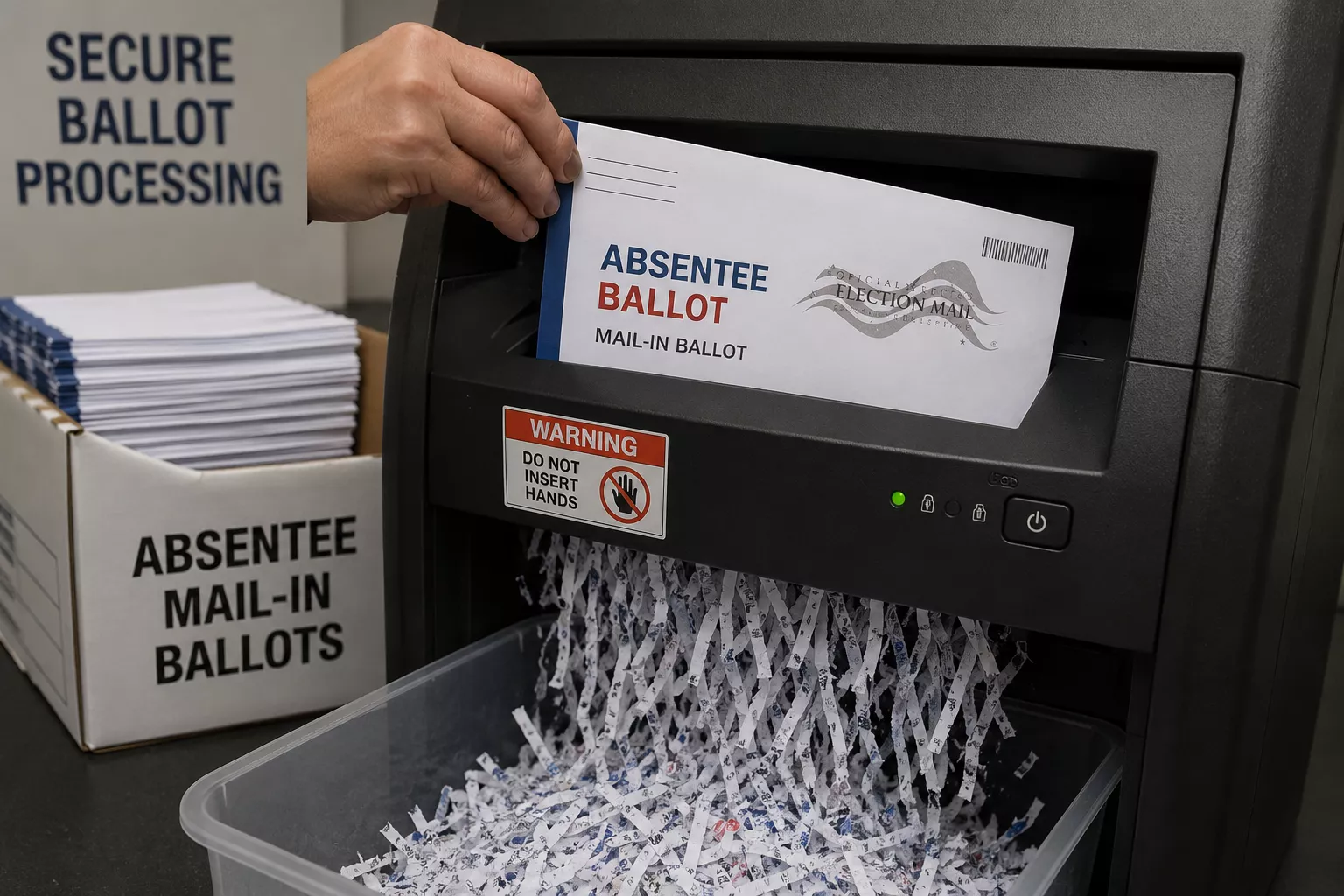
Your Vote Is Too Important
In Wisconsin, your right to vote is too important to leave in the hands of the U.S. Postal Service, or to lock in weeks before the candidates themselves have finished deciding whether they are still running.
As of late July 2026, more than 90,000 absentee ballots had already been returned for the August 11 partisan primary. By July 8, when Milwaukee County Executive David Crowley first suspended his campaign for governor, roughly 30,000 ballots were already back in the hands of clerks. By the time Lt. Gov. Sara Rodriguez dropped out on July 17 and Crowley re-entered the race the next day with Gov. Tony Evers’ endorsement, that number had climbed to approximately 70,000. Missy Hughes had already suspended her campaign in June. All three names remain on the ballot because the deadline to remove them had passed.
Tens of thousands of Wisconsin voters who mailed their ballots early therefore cast votes for candidates who later quit, or, in Crowley’s case, quit and then returned. Under current Wisconsin Elections Commission guidance, once an absentee ballot has been returned and sealed, the voter generally cannot spoil it and receive a new one.
Mail Delays Compound the Problem
Even when candidates stay in the race, the Postal Service itself remains a weak link. In the April 2026 spring election, hundreds of properly mailed and postmarked absentee ballots still arrived after Election Day and were discarded under Wisconsin law. Milwaukee alone reported 269 such late ballots. Clerks across the state told the Wisconsin Elections Commission that problems with mail speed were widespread. Governor Tony Evers and U.S. Senator Tammy Baldwin publicly demanded that the Postal Service address the delays.
Other recent problems reinforce the pattern:
None of these incidents prove coordinated fraud. They do prove that once a ballot enters the mail stream, the voter loses control of it, and that the system is being asked to handle a volume and a timeline it struggles to manage reliably.
A Better Approach
Wisconsin already offers convenient alternatives that eliminate the single largest variable: the U.S. mail. Early in-person voting is available for two weeks before every election. Election Day voting remains the gold standard: you appear in person, show identification, and your ballot is secured under the supervision of bipartisan election inspectors.
Voters who have no practical choice but to vote absentee (military, overseas, or those with serious health limitations) should of course retain that option. For everyone else, the safer choice is clear.
Mailing a ballot early locks in your choice before the field is settled and subjects that choice to the uncertainties of the Postal Service. In 2026 Wisconsin, with more than 90,000 ballots already returned and major candidates still dropping out or re-entering, the risks are no longer theoretical. Your vote is too important to gamble.

Interested in the content of this Article?
Reach out to the MacIver Institute to aquire more information


