
- Podcasts
 Podcasts
 - Videos
 Videos
 - Policy Issues
 Policy Issues
 - About
 About
About


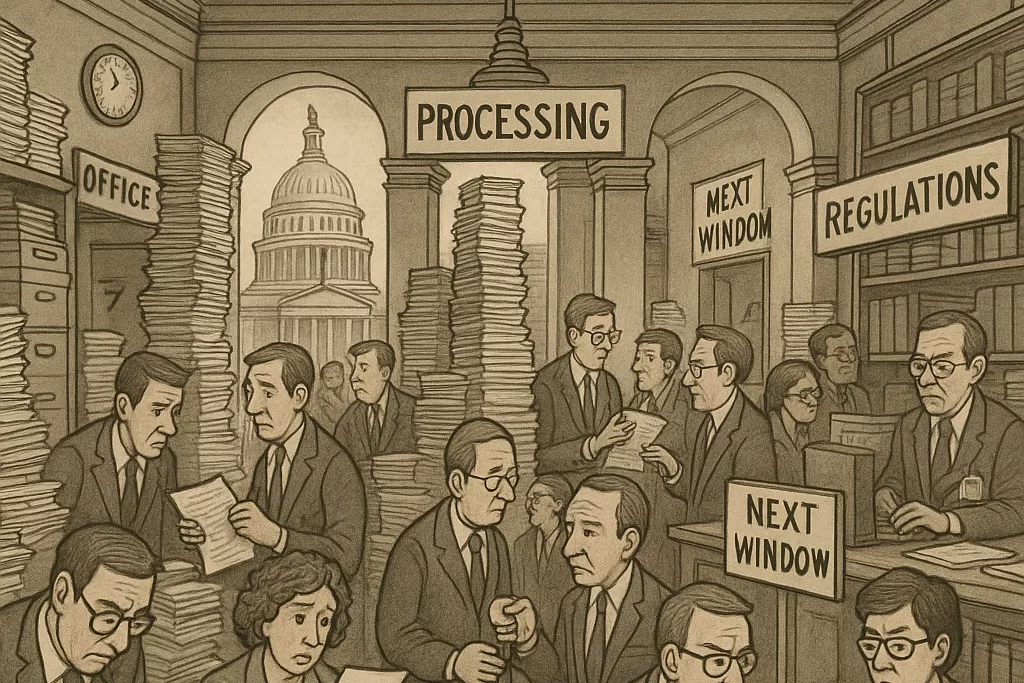
Hurt speech
No sooner had the U.S. Supreme Court struck down Colorado’s ban on conversion therapy as unconstitutional—because it regulates speech based on viewpoint in clear violation of the First Amendment and tries to transform protected speech into unlawful conduct—than Colorado Democrats set about trying to revive the same policy under a different label.
Specifically, Democrats from the so-called Centennial State prepared a bill that would—miracle of miracles—effectively redefine a therapist’s speech as conduct by opening the door to civil claims by those “harmed” by “coercive practices” in gender identity change therapy—the same talk therapy the Supreme Court just said was protected.
Presto. Problem solved!
Except, of course, it isn’t, and that was precisely the point the U.S. Supreme Court was making in Chiles v Salazar. Writing for the 8-1 majority, justice Neil Gorsuch was unequivocal in the rights that counselor Kaley Chiles has:
“Her speech does not become conduct just because the State may call it that. Nor does her speech become conduct just because it can also be described as a ‘treatment,’ a ‘therapeutic modality,’ or anything else. The First Amendment is no word game. And the rights it protects cannot be renamed away or their protections nullified by mere labels.”
We can now add the generic label “coercive practices” to Gorsuch’s list of word games Democrats like to play. Colorado is engaged in a kind of legal sleight of hand—a conversion diversion—and, if its new bill becomes law, it is likely to meet the same constitutional fate.
Which brings us to Wisconsin. The Badger state also bans conversion therapy, only by administrative rule rather than by statute. The distinction is procedural, not substantive. Under the reasoning in Chiles, it is unconstitutional, too.
That does not seem to bother Gov. Tony Evers, whose office said last week the rule would remain in place unless and until a court strikes it down. That means years of litigation, taxpayer costs, and uncertainty for therapists and their clients—individuals who may not be seeking “conversion” at all but simply the freedom to speak openly in a therapeutic setting.
And here is where our story gains existential heft. The persistence of this ban is not just about conversion therapy, though overturning that ban is essential to avoid real-life harms. Rather, it tells a story about how Wisconsin government now works, and, more important, how it does not work.
To be sure, the ban wouldn’t exist in Wisconsin if elected lawmakers had any meaningful authority over the administrative state. Legislators have repeatedly attempted to block the rule, which came into being only by bureaucratic fiat. Lawmakers correctly argued that it exceeded statutory authority—because there was none—and infringed on constitutional rights. But the state’s high court ultimately thwarted those efforts.
Ironically, it was in that very case, Evers v. Marklein, known as Marklein II, that the Wisconsin Supreme Court stripped the legislature of one of its most important oversight tools: the ability to repeatedly and indefinitely suspend administrative rules. The effect has been catastrophic for democratic accountability in the state. The court did not merely reinterpret procedural authority; it removed one of the legislature’s core checks on the bureaucracy and, in doing so, empowered agencies not only to enforce the law but to effectively make it.
In practice, that means rules—like the conversion therapy ban—can persist even when elected lawmakers object, even when statutory authority is questionable or nonexistent, and even when constitutional concerns are obvious.
And they did so on the very case the legislature warned was unconstitutional, which the U.S. Supreme Court has now confirmed.
Seeing Red: Evers vetoes the Reset
All this comes as this past week Evers vetoed the so-called Red Tape Reset, a series of reforms that sought to reclaim the legislature’s rightful role as the state’s lawmaking body. Among other things, the proposals would have required administrative rules to automatically sunset after seven years, unless they were affirmatively reapproved.
With a sunset, the legislature might not be able to block or suspend a promulgated rule anymore, but the default would change on the back end. Citizens would no longer have to prove why a regulation should die. Instead of rules living forever, government would have to prove why it deserves to live. That would flip the script.
The package included other regulatory reform proposals in addition to that bill, such as prohibiting multiple regulations from being promulgated via a single scope statement, allowing recovery of attorneys’ fees for successful challenges to rules, and requiring agencies to repeal existing rules to offset new ones.
It wasn’t perfect legislation. It did not sunset agencies themselves, as some states do, and later amendments diluted aspects of the reapproval process. But its core premise was sound: Regulations should not remain in place forever without review. No matter the specifics, the GOP’s Red Tape Reset package had the right thrust, and the legislative intent behind sunsetting is particularly important.
That said, those still weren’t the most important reforms offered this past session to resuscitate democracy. Just as important as sunsetting, and perhaps more so, Republicans advanced legislation to clarify that agencies may issue rules only when explicitly and specifically authorized by statute and to restore, through a constitutional amendment, what the Supreme Court took away in 2025.
These get to the heart of the need to bookend the administrative state so that it cannot make laws on the front end by concocting new rules out of thin air and on the back end by requiring the people’s elected representatives to sign off on the rules before they take effect.
The latter must take the form of a constitutional amendment restoring the oversight the Supreme Court took away. The measure passed the legislature this session, but it must also pass in the next session to head to the voters for approval. Given polling on the question and the obvious common sense of it, voters will approve it if they get a chance.
Specifically, the proposed amendment would allow the legislature to suspend any administrative rule by passing a joint resolution adopted by a majority of both legislative houses. The suspension of an agency rule would last indefinitely or for a specified period in the resolution. The amendment’s logic was best articulated in testimony by Erin Gamble, the associate counsel at the Wisconsin Institute for Law & Liberty (WILL), in February.
“With this constitutional amendment in place, it would permanently establish that the legislature has final say over rulemaking in Wisconsin,” Gamble testified. “After all, rulemaking is a legislative function.”
The administrative state and its agencies, Gamble observed, exist only because the people of Wisconsin willed them into existence by creating them in state law through the legislature.
“As a result, they have only those limited powers explicitly given to them by the people of Wisconsin,” she testified. “Because the power to write laws is inherently a legislative function, when agencies engage in rulemaking, they must strictly abide by the statutory process and be subject to all of the transparency and oversight measures contained therein.”
Therefore, Gamble said, when a majority of both houses of the legislature agree that an administrative rule falls outside the bounds of power that the legislature granted to the agency, the legislature should simply be able to pass a resolution to suspend the rule.
“This isn’t a controversial or political proposition,” she testified...
“Rather, it makes agencies responsible and accountable to the will of the people. Moreover, Wisconsin would not be the first state to ratify such an amendment. In fact, at least six states have amendments in their constitutions that allow the states’ legislatures to suspend or nullify rules. Some state constitutions allow a single legislative agency to review and suspend rules, which is similar to how the Joint Committee for Review of Administrative Rules (JCRAR) could operate before Marklein II.”
The amendment was a common-sense solution that would re-establish legislative oversight over rulemaking, require bicameral action to suspend a rule, and ultimately make agencies accountable to Wisconsinites through their representatives, Gamble testified.
How important is this? Just imagine what life would be like with a rogue Artificial Intelligence (AI) that has no programming limitations, is let loose in the world with robotic body forms, and is not as smart as it believes it is, and, well, you pretty much have what life is like in Wisconsin, only insert bureaucracy for AI.
While the amendment is crucial to restore the pre-Marklein balance of power, even then the balance was not really balanced. That is how the bureaucracy could come up with a conversion therapy ban rule in the first place, without any legislative request to do so, which then soared far beyond the creation of a licensing qualification or standard.
In that regard, Rep. Brent Jacobson’s (R-Mosinee) bill would remove from the statutes a broad grant of authority given to state agencies that allows them to create rules or regulations interpreting statutes, even if that statute does not grant specific rulemaking authority.
“This legislation replaces this broad grant with a requirement that state agencies have specific and explicit authority in statute to promulgate rules related to that statute,” Jacobson testified.
“Administrative rules and regulations carry the weight of law, and it is critical that rules interpreting statutes do not exceed or diverge from what was intended by the legislature. Writing the law is a core function of our branch of government, and this legislation would ensure that agencies do not promulgate rules that we never intended to give them the authority to promulgate.”
As Jacobson said in testimony about both bills: “These bills are not about giving Republicans a partisan advantage but ensuring [that] good governance and our democratic system of checks and balances are in effect regardless of which party is in control of which branch of our state government.”
The state and the republic need to be governed not by nameless, faceless bureaucrats but by people with an authentic connection to their communities, as ratified in elections, Jacobson said.
“The Task Force on Rulemaking held three public hearings across our state, where we listened to testimony from farmers, builders, taxpayers, and businesses,” he testified.
“Not one of the people who came to testify in the hearings was comfortable with their elected representatives having no voice in the rulemaking process. When asked, all of them could identify who their state representatives and senators are and knew how to contact them if they had a concern or question about a bill or law. In contrast, none of them knew the name of the bureaucrat who writes the regulations affecting them, much less how they might contact them directly. No body in our state government is more accountable to the people of our state than the legislature, and these bills will restore our ability to represent our constituents and provide them with the regulatory accountability and predictability they need to prosper.”
Jacobson’s bill requiring not only explicit but more exacting specific statutory authorization for rule promulgation sailed through the legislature, but, as of this writing, Evers has not signed or vetoed it, though one would expect him to almost certainly veto it.
As for the constitutional amendment it must pass the legislature a second time before it can head to the voters, where it almost certainly will win approval.
How we got here
For years, Wisconsin operated under a system that favored bureaucratic expansion. For many years, the state’s passive review of regulations—in simple terms, requiring the legislature to pass and the governor to sign a bill blocking a rule rather than to implement one—gave the bureaucracy a decided upper hand. Rogue bureaucrats flourished during Gov. Jim Doyle’s tenure. That passive review shifted under Gov. Scott Walker and the REINS Act, which strengthened legislative oversight.
Then came Marklein II. The court not only reversed those gains, it effectively erased them. The decision came quite close to abolishing the legislature altogether, at least as a meaningful body.
Indeed, in the wake of Chiles v. Salazar, Wisconsin’s rule banning conversion therapy offers a textbook case for why legislative oversight—the red tape reset, the constitutional amendment, and the bill on specific statutory authorization—are essential. From the get-go, the legislature sought to enact the will of the people, only to be thwarted at every turn.
The rule first appeared in 2019 and 2020 when the Marriage and Family Therapy, Professional Counseling, and Social Work Examining Board proposed a rule that listed conversion therapy as “unprofessional conduct.” There’s that labeling again because, by conduct, they included talk therapy, aka speech. In February 2020, the governor signed and approved the rule.
The thing is, no one in the legislature had asked for the rule. The rule couldn’t match legislative intent because there was no legislative intent, period. There was no legislative directive and no clearly expressed intent to ban the practice in statute. That left the board to rely on broad, generalized authority to enforce ethical standards—exactly the kind of vague delegation lawmakers now seek to rein in.
Recognizing that overreach, the Joint Committee on the Review of Administrative Rules (JCRAR) objected to and suspended the rule under its REINS Act authority. Lawmakers argued that the board lacked statutory authority and that the rule encroached on constitutionally protected speech. However, because the legislature failed to pass a bill permanently blocking the rule—a veto loomed on the horizon if it did—it went into effect. JCRAR suspended it again, only for that suspension to expire with the legislative session. As the Supreme Court later noted, the rule was halted for years but remained alive, sustained by a system that required lawmakers to prove why it should not exist rather than requiring agencies to prove why it should.
That inverted process is the real problem. Rules are supposed to implement legislative intent, not substitute for it. Yet here, the burden fell on elected lawmakers to stop a rule they had never authorized in the first place.
So with the conversion therapy ban, the legislature tried in vain to block what is now confirmed to be an unconstitutional rule from taking effect. However important the free speech issue is—and it is—the conversion therapy rule is not the whole story. It is once more a case of conversion diversion, using a hot-button issue and a lot of huff and puff to mask the defenestration of democratic mechanisms with absurd claims about how private speech between a therapist and a client can—in the exalted opinions of the licensing boards and mental health care establishment—cause broad harm.
Legal challenges are likely. An attorney with the Wisconsin Institute for Law and Liberty has argued that the rule is especially vulnerable because it is regulatory, not statutory. Perhaps. But it is still embedded within the broader bureaucratic framework, which may prolong its life.
Meanwhile, “harm” arguments are still being made elsewhere. As reported, in Colorado, officials continue to insist that such policies regulate “conduct,” not speech, so we can anticipate the same argument will be made in Wisconsin.
Indeed, it’s already being made. Marc Herstand, executive director of the Wisconsin Chapter of the National Association of Social Workers, told Wisconsin Public Radio just that after the decision came down: “This is not a free speech issue. We’re dealing with standards of conduct so that people are not harmed, and each profession is given that responsibility to design that to protect people.”
In other words, it’s OK to use talk therapy to encourage and affirm a child’s self-identified “gender” but not OK to encourage or explore whether it’s OK to accept the body and the sex that child has.
That argument runs headlong into Gorsuch’s warning:
“Colorado may regard its policy as essential to public health and safety. Certainly, censorious governments throughout history have believed the same. But the First Amendment stands as a shield against any effort to enforce orthodoxy in thought or speech in this country. It reflects instead a judgment that every American possesses an inalienable right to think and speak freely, and a faith in the free marketplace of ideas as the best means for discovering truth. However well-intentioned, any law that suppresses speech based on viewpoint represents an ‘egregious’ assault on both of those commitments.”
Gorsuch likewise put bureaucratic licensing boards on notice about labeling conversion therapy bans as standards of conduct, as Herstand did anyway:
“Second, licensing laws have traditionally addressed what qualifications an individual must possess before practicing a particular profession. And whatever traditional interest a State may have in ensuring a professional possesses a particular set of qualifications, that interest does not automatically entail a right to dictate a professional’s point of view.”
For Wisconsin, the case spotlights a deeper problem: what happens when government erects a system in which unelected agencies can impose sweeping rules, insulated from meaningful legislative oversight. Wisconsin lawmakers have proposed a path back: regulatory sunsets, including civil liability for being harmed by capricious rules. More important is to restore legislative oversight through constitutional amendment and to require legislative authorization for specific rulemaking in the first place.
But those reforms face a hard political reality as we approach mid-year. They require not just legislation but election victories. If voters want a government accountable to them, they must elect leaders willing to confront the administrative state rather than defer to it.
They must do more. They must—must—elect a governor who will constrain the administrative state and will sign into law important reforms passed by the legislature, especially on specific statutory authorization. They must pass the constitutional amendment restoring oversight, and to do that, they need to elect a legislature that will approve the amendment in the next session, as well as one that will again approve the bill requiring specific statutory authorization.
At the end of the day, the only “conversion ban” Wisconsin truly needs is not of therapy but of governance—a ban on the imposter Bureaucracy’s power grabs that enable it to legislate. When the state dictates what a therapist can say, counseling becomes compliance. When it strips the legislature of oversight, it does the same to democracy itself.
The only diversion I see worth pursuing is one that redirects power where it belongs—with the people.

Interested in the content of this Article?
Reach out to the MacIver Institute to aquire more information


