
- Podcasts
 Podcasts
 - Videos
 Videos
 - Policy Issues
 Policy Issues
 - About
 About
About


A $95,000 Six-Pack
Sometime next year, coming to a Supreme Court hearing near you, will be a case about a six-pack of beer.
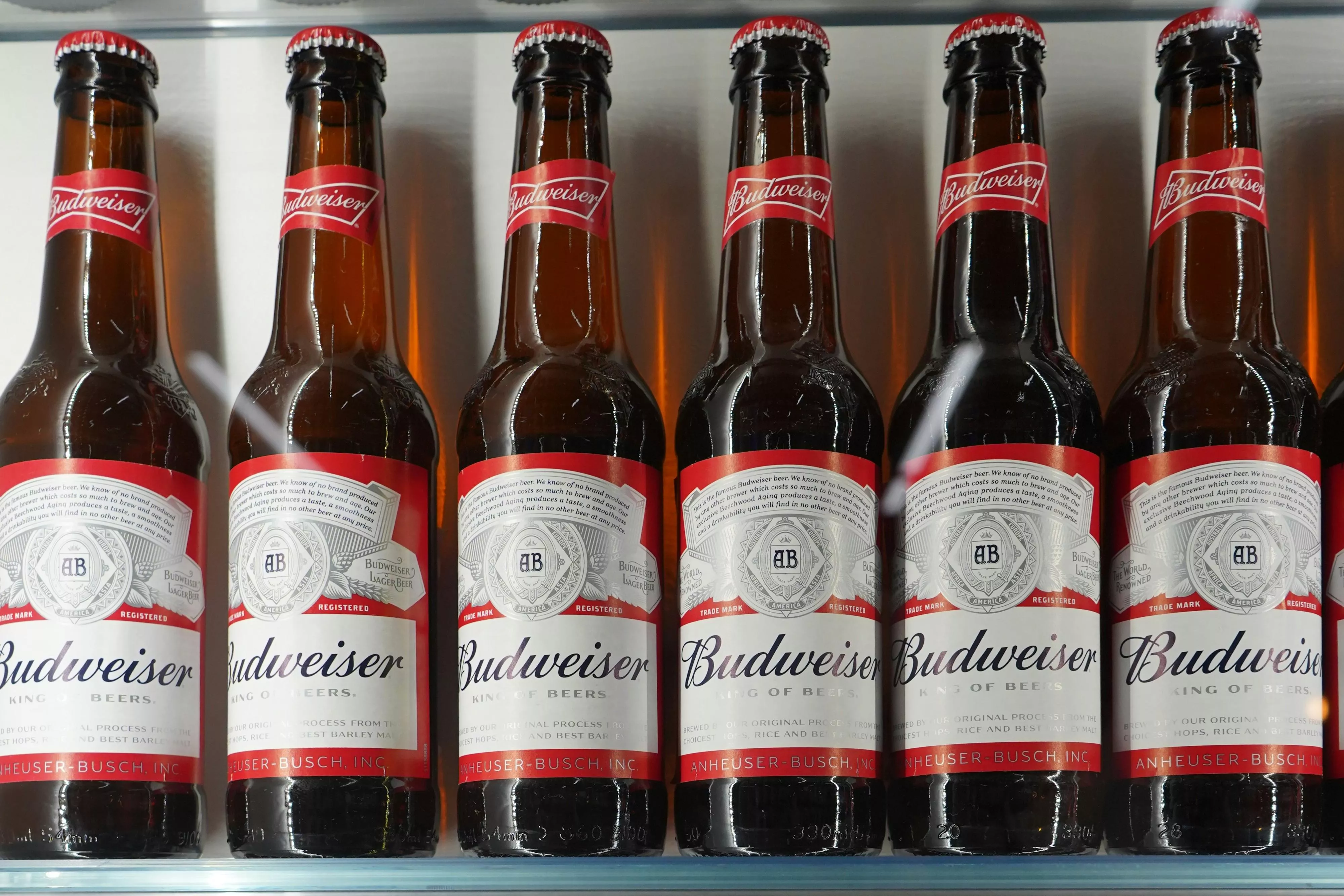
No, the justices won’t likely be popping cold ones, but beer will figure prominently in the case known as Jouppi v. Alaska, as will a $95,000 airplane and a first-time misdemeanor charge. That’s hardly the usual fare for the high court, but this one has all the markings of a landmark Supreme Court decision as the justices announced last week that they will take up the matter of an Alaskan bush pilot who had his plane taken by the state of Alaska over, of all things, a six-pack of Budweiser.
Ken Jouppi is asking the Supreme Court to throw out what he calls crushing forfeitures, specifically the forfeiture of the airplane over a citation for knowingly transporting a six-pack of beer into a remote village where alcohol was banned.
Of course, the case is about a lot more than the beer and planes. At stake is a fundamental constitutional principle: whether courts judge citizens based on what they actually did or on the worst hypothetical harms legislators imagined when writing a law. For if governments can impose severe penalties based on potential and speculative social harms rather than specific individual conduct, then the Eighth Amendment’s protection against excessive fines becomes little more than an empty shell, say Jouppi’s attorneys at the Institute for Justice (IJ), which is representing him.
The case is also another crystalline example of just how rogue government can be when it comes to civil asset forfeiture laws.
Jouppi is an 82-year-old bush pilot who spent decades serving remote Alaska villages and building a one-person charter business flying tourists, locals, and supplies into those places.
Then, 14 years ago, on April 3, 2012, Jouppi was scheduled to fly a passenger from Fairbanks to Beaver, one of Alaska’s so-called “dry villages,” where residents voted to prohibit the importation of alcohol. In the petition for the court to take the case, Jouppi’s attorneys, led by IJ’s Samuel Gedge, recounted what they call the horror of events that have unfolded since that day in 2012.
“Along with many other groceries, Jouppi’s passenger had three cases of beer packed in her luggage,” the petition states. “She herself was not a drinker. But she was traveling to Beaver to spend her birthday with her husband, who worked there; the beer (Budweiser and Bud Light) was for him.”
According to the petition, as Jouppi was loading the plane, state troopers arrived on scene, searched it, and found the beer.
“While Jouppi insisted he had no idea there was any beer in his passenger’s luggage, the officers maintained that, at a minimum, one six-pack of Budweiser was visible in a shopping bag,” the petition states.
The state charged Jouppi, his company, and the passenger with the misdemeanor offense of knowingly transporting an alcoholic beverage into a dry community. The passenger pleaded guilty. Jouppi did not, but he and the company went to trial and were convicted. The court sentenced Jouppi to 180 days in jail, with 177 days suspended, a $3,000 fine, with $1,500 suspended, and three years of probation.
But that wasn’t all: The state of Alaska wanted his plane, a Cessna U206D worth approximately $95,000.
“For the past thirteen years, the state has been pursuing Jouppi’s plane through in personam criminal forfeiture,” the petition states. “At first, the trial court held that the statute did not authorize the forfeiture. The plane hadn’t flown a foot toward the village of Beaver, the court reasoned, so it could not be said to have “transport[ed] or facilitate[d] the transportation of . . . alcoholic beverages imported into a dry village.’”
Unfortunately for Jouppi, the Alaska Court of Appeals disagreed, saying that, as far as the statute was concerned, forfeiture was required “regardless of whether the alcoholic beverages are actually transported toward their destination.”
On remand, the petition states, the trial court held a hearing on whether the forfeiture constituted an unconstitutionally excessive fine. The court ruled that it did. However, that got vacated on appeal, and so it was a topsy-turvy, back-and-forth journey landing in the Alaska Supreme Court, which determined that forfeiting Jouppi’s airplane was constitutional after all, “as a matter of law.”
The result, as IJ put it, was a $95,000 plane forfeited for a six-pack of Budweiser.
Taste testing the constitution
The case will finally head toward resolution next year, but it has now lasted more than 14 years.
More specifically, the U.S. Supreme Court will consider whether the Alaska Supreme Court’s conclusion that importing alcohol into dry villages causes such serious societal harm that forfeiture of the airplane was not constitutionally excessive. The Alaska court looked at the offense primarily through a legislative lens of preventing broader dangers rather than Jouppi’s individual conduct. IJ argues that the constitutional question is how courts measure proportionality.
“This case presents a threshold question concerning the standard for whether a fine or forfeiture contravenes the Eighth Amendment’s Excessive Fines Clause,” the petition to the Supreme Court states. “For over a decade, the State of Alaska has been trying to forfeit bush pilot Ken Jouppi’s 1969 Cessna airplane. The basis: One of Jouppi’s passengers had beer in her luggage, and the State maintained that one six-pack, at least, would have been visible to Jouppi.”
For certain Alaskan villages, it’s a crime to bring in alcohol, the petition acknowledges.
“And when the means of importation is an airplane, the plane is subject to forfeiture,” the petition states. “No matter that the offense is a misdemeanor. As here. No matter that the pilot is a first-time offender. As here. No matter that the alcohol is a six-pack of Budweiser. As here. No matter that it belonged to a customer. As here. The result: an airplane forfeited for a six-pack.”
The Excessive Fines Clause of the constitution was built for cases like this, the attorneys argue.
“In holding otherwise ‘as a matter of law,’ the Alaska Supreme Court broke with this Court’s precedent and with that of many lower courts,” the petition states. “‘[A] punitive forfeiture,’ this Court has held, ‘violates the Excessive Fines Clause if it is grossly disproportional to the gravity of a defendant’s offense.’ And in evaluating the gravity of the offense, many courts—including Alaska’s home circuit—start from a shared premise: ‘it is critical’ to ‘review the specific actions of the violator rather than by taking an abstract view of the violation.’”
Starting from that same premise, Jouppi’s attorneys observe, the Indiana Supreme Court on remand in Timbs v. Indiana “focus[ed] on the specific harms of specific acts” and held that forfeiting Tyson Timbs’s Land Rover was excessive...
“With its decision …, the Alaska Supreme Court adopted a minority view and embraced a fundamentally different standard. It examined the gravity of Ken Jouppi’s offense in paradigmatically abstract terms. It dismissed as ‘not particularly relevant whether Jouppi’s offense was part of a larger pattern of criminal activity’—despite this Court’s describing as ‘highly relevant’ whether a defendant’s offense ‘was unrelated to any other crime.’”
The Alaska court compared the airplane’s value to the very sort of theoretical statutory-maximum sentences this court in Bajakajian abjured, the attorneys argued.
“It ignored the ‘extent of the harm caused by Jouppi’s illegal conduct’ in favor of ‘the harm . . . addressed in the legislative history’ decades before,” the petition stated. “Only thus could it hold that ‘the illegal importation of even a six-pack of beer causes grave societal harm’ and that forfeiting Jouppi’s airplane ‘does not violate the Excessive Fines Clause.’”
Urgent action needed
Jouppi’s attorneys say the court’s intervention is urgently needed in an era when more and more civil laws are bringing more and more extravagant punishments.
“Only once (in Bajakajian) has the Court considered the standard for determining whether a fine is excessive,” the petition states. “In the twenty-seven years since, some courts—like Alaska’s—have locked themselves into a ‘hyper-deferential’ standard that provides virtually no check on exorbitant fines. Many others have become mired in ‘disorder,’ with ‘a patchwork of inconsistent tests’ and ‘a large degree of uncertainty regarding current excessive fines jurisprudence.’”
And all the while, the attorneys wrote, enforcement agencies increasingly depend heavily on fines and fees as a source of general revenue.
“Nationwide, police departments rely on fines and forfeitures for their budgets,” the petition states. “So, too, do prosecutors. In the most extreme instances, individual prosecutors are even given a personal financial stake in their forfeiture cases. In turn, those bearing the brunt are most often our nation’s most vulnerable, ‘the poor and other groups least able to defend their interests.’”
What’s more, the attorneys observe, five members of the court commented on this phenomenon just last year: “More than ever, the Excessive Fines Clause stands as a key check on the power to punish. With a standard like Alaska’s, however, it serves as no check at all.”
The case offers the court a rare and clean vehicle to correct course in a narrow but important way, the attorneys argue.
“The [Alaska] decision implicates a critical first-order question: not the virtues of one multi-factor test over another, but, more fundamentally, whether courts should evaluate the gravity of a defendant’s offense in the abstract or should instead evaluate the specific defendant’s wrongdoing,” the petition states.
This issue goes to the core of the Excessive Fines Clause’s guarantee, the attorneys contend.
“Each level of the Alaska judiciary addressed the excessiveness issue,” the petition states. “Under the trial court’s view, Ken Jouppi prevailed; under the state supreme court’s, he lost ‘as a matter of law.’”
As the petition comes to the high court, the attorneys asserted, it is a rare excessive-fines case with no factual wrinkles...
“Having cleared the table of all possible fact disputes, the Alaska Supreme Court teed up the question presented perfectly: It deployed a standard that looked to the gravity of the defendant’s crime only at the highest level of abstraction. Few excessive-fines cases will present the issue so sharply; a decision upholding the forfeiture of an airplane for a six-pack is a self-recommending candidate for review. The petition should be granted, the Alaska Supreme Court’s starting-gate misconception corrected, and the case remanded for further proceedings.”
The attorneys also noted that lower courts are split—the Ninth Circuit looks to actual conduct, as did Indiana’s court—and the case can resolve that split.
“The split is real, and it is a compelling one for this court’s intervention,” the petition states. “Given the Ninth Circuit’s longstanding view of the Excessive Fines Clause, Alaska’s contrary standard ‘pits a highest state court against the court of appeals whose circuit includes that state.’ Fines and forfeitures in Alaska are thus subject to two different Eighth Amendment regimes depending on whether the forum is state court or federal.”
That conflict also promises different real-world outcomes, the attorneys argue.
“Under the defendant-focused standard of federal courts like the Ninth Circuit and state courts like Indiana’s, Pennsylvania’s, D.C.’s, and Utah’s, Jouppi’s forfeiture almost certainly would not have been upheld. Meanwhile, forfeitures that those courts have invalidated would surely be blessed in Alaska. Tyson Timbs, for instance, unquestionably would have lost his Land Rover had he been in Alaska instead of Indiana. … The scope of a Bill of Rights protection should not vary radically based on geography. Yet Alaska’s plane-for-a-six-pack standard conflicts starkly with the standard articulated in Bajakajian and recognized by many courts nationwide.”
Like other Bill of Rights guarantees, Jouppi’s attorneys assert, the Eighth Amendment’s protection against excessive punitive economic sanctions is both fundamental to the nation’s scheme of ordered liberty and deeply rooted in the nation’s history and tradition. However, the attorneys add, 27 years’ worth of lower-court decisions have staked out “a patchwork of inconsistent tests” even among the federal courts of appeals.
“Often, it’s hard to discern whether or not one court’s multi-factor test differs materially from another’s,” the petition states. “And with many such cases appearing highly fact-bound, suitable vehicles for this court’s review are rare. Meanwhile, the lower courts’ increasingly baroque tests risk losing sight of ‘[t]he touchstone of the constitutional inquiry’: ‘The amount of the forfeiture must bear some relationship to the gravity of the offense that it is designed to punish.’”
The upshot? the attorneys ask.
“Nationwide, ‘a large degree of uncertainty regarding current excessive fines jurisprudence,’” they wrote...
“Or more colorfully: ‘a quagmire.’ Against that backdrop, the decision implicates a critical first-order question: not the relative virtues of one multi-factor test over another, but, more fundamentally, whether the courts should evaluate the gravity of a defendant’s offense purely in the abstract or should evaluate the specific defendant’s wrongdoing. Refocusing the lower courts on that baseline inquiry would not only correct jurisdictions like Alaska and the Eleventh Circuit, but also offer an important data point for the many court cases.”
In Jouppi’s view, if forfeiting a $95,000 airplane over one visible six-pack can survive constitutional review under Alaska’s theory, then the constitutional protection against excessive fines becomes meaningless.
That is ultimately what the Supreme Court is now being asked to decide.
Excessive fines, excessive forfeiture
Just as important as the excessive fines clause is the need to reform civil asset forfeiture. Civil asset forfeiture has always carried the stench of something ugly and un-American, a legal buccaneer that somehow wandered out of an ancient, unsanitary ship’s brig and into modern statutes.
Oh, it has support in law enforcement and national security quarters, among officials who insist it is an important tool in disrupting drug cartels, terrorist cells, and other criminal enterprises. I also know it was traditionally and effectively used in olden times to counter maritime crimes and piracy: The property could be seized even if the pirates could not.
But it’s an entirely different context today. In an era of bureaucratic collectivism, in an age when massive institutional forces thrive on power, civil asset forfeiture has become a weapon of choice against American citizens. It compromises liberty, undermines private property, and—what most people don’t recognize—devastates small businesses, the very beating hearts of our communities and economy.
So powerful is it, and because it is in the hands of a powerful institution, it cannot be reformed. Reform only works when political constraint and accountability are robust, and both are frail in modern America. Elected officials have surrendered or have been forced to surrender so much of their power that reform is little more than a sugar pill to make them feel better about selling our constitution down the river.
No, the only solution in its modern incarnation is to abolish it, incarnation and all.
These days, civil asset forfeiture defies common sense and, most destructively, the principle that citizens are secure in their property unless the state can prove wrongdoing. It flips the burden of proof, gives police a profit motive, and invites abuses that would have horrified our Founders.
The most chilling part? These abuses are not rare. They happen every year, in most months and in most states.
This case adds to the long list of cases showing that civil asset forfeiture is not an error-prone system in need of reform. It is a system that behaves exactly as it was designed: one that encourages the government to seize property without conviction, and often without charges.
This turns the constitutional presumption of innocence on its head. Under civil forfeiture, the legal case is against the property, not the person, and surreal case names immediately raise flags that these are fake prosecutions. Take, for example, State v. $2,293 in U.S. Currency or United States v. One 2004 Ford F-150. These were real cases.
The burden quietly shifts to you to prove your property is innocent. You become Perry Mason for your Volvo, and the Volvo is guilty until proven innocent.
Over time, such cases become wars of attrition. The process is nowhere near “due.” They grind you down with strict filing deadlines, complex pleadings, bond requirements in some states, months or years of delay, and no automatic right to a lawyer.
What’s more, modern asset forfeiture radically redefines what “property ownership” really means. Under civil forfeiture, property is no longer something you own. It becomes something you hold at the continued pleasure of the state, contingent on the government’s ongoing satisfaction with how it is used, stored, transported, or associated.
Historically, this is a radical departure. Anglo-American property law emerged specifically to prevent exactly this kind of arbitrary seizure. James madison penned the Fourth, Fifth, and Eighth amendments in direct response to such practices.
Tragically, however, the re-interpretation of civil asset forfeiture as a weapon against innocent owners correlates closely with the left’s re-interpretation of the constitution as a weapon against individual liberty.
Jouppi’s plane is a quintessential case for grasping the dangers of civil asset forfeiture. Prosecutors weren’t upset about a large smuggling operation, nor were they tracking bootleggers or organized crime. They merely happened upon and glimpsed one six-pack of beer in a passenger’s grocery bag as they were conducting a routine search.
Jouppi and his passenger are lucky they weren’t hanged in the fashion of ye-old-pirates, but they might as well have been Blackbeard or Henry Morgan nonetheless. The state’s reasoning treated a minor misdemeanor like a major felony simply because the statute allowed severe penalties in other scenarios. Instead of evaluating Jouppi’s actual conduct, the court evaluated the most serious conceivable offense under the statute and reasoned that such harm could have occurred.
That is the exact opposite of how the Eighth Amendment is supposed to work. The Excessive Fines Clause is a proportionality test; that is, the penalty must relate to the individual’s actual wrongdoing.
The End
Every “reform” proposal bandied about for civil asset forfeiture, from requiring additional hearings to larger thresholds for seizure, ignores a fundamental flaw: the system incentivizes government to seize property.
As long as law enforcement agencies can keep some or all of the proceeds, forfeiture will be used aggressively. Collectivist bureaucracies with ever larger and eternal funding needs depend heavily on fines and fees as a source of general revenue, and, when that revenue is tied to seizures, seizures become policy.
Simply put, if police and prosecutors have a financial stake in the outcome, constitutional due process stands upon a trap door in the floor of American liberty, waiting to send our freedom to a dungeoned basement below. The only sound legislative solution is to abolish civil asset forfeiture and replace it with criminal forfeiture only after conviction.
John Adams, writing in “Defence of the Constitutions of Government of the United States,” was as blunt as could be: “The moment the idea is admitted into society, that property is not as sacred as the laws of God, and that there is not a force of law and public justice to protect it, anarchy and tyranny commence.”
The fact that the government can seize property without charge or conviction is an admission—as long as forfeiture stands—that no force of law today protects private property, and thus tyranny is upon us. If that seems like hyperbole, remember that the state of Alaska took a man’s $95,000 plane over a six-pack of beer.
That’s tyranny pure and simple.
And because the beer turned out to be Budweiser to boot, well, that added woke insult to egregious constitutional injury.

Interested in the content of this Article?
Reach out to the MacIver Institute to aquire more information


