
- Podcasts
 Podcasts
 - Videos
 Videos
 - Policy Issues
 Policy Issues
 - About
 About
About


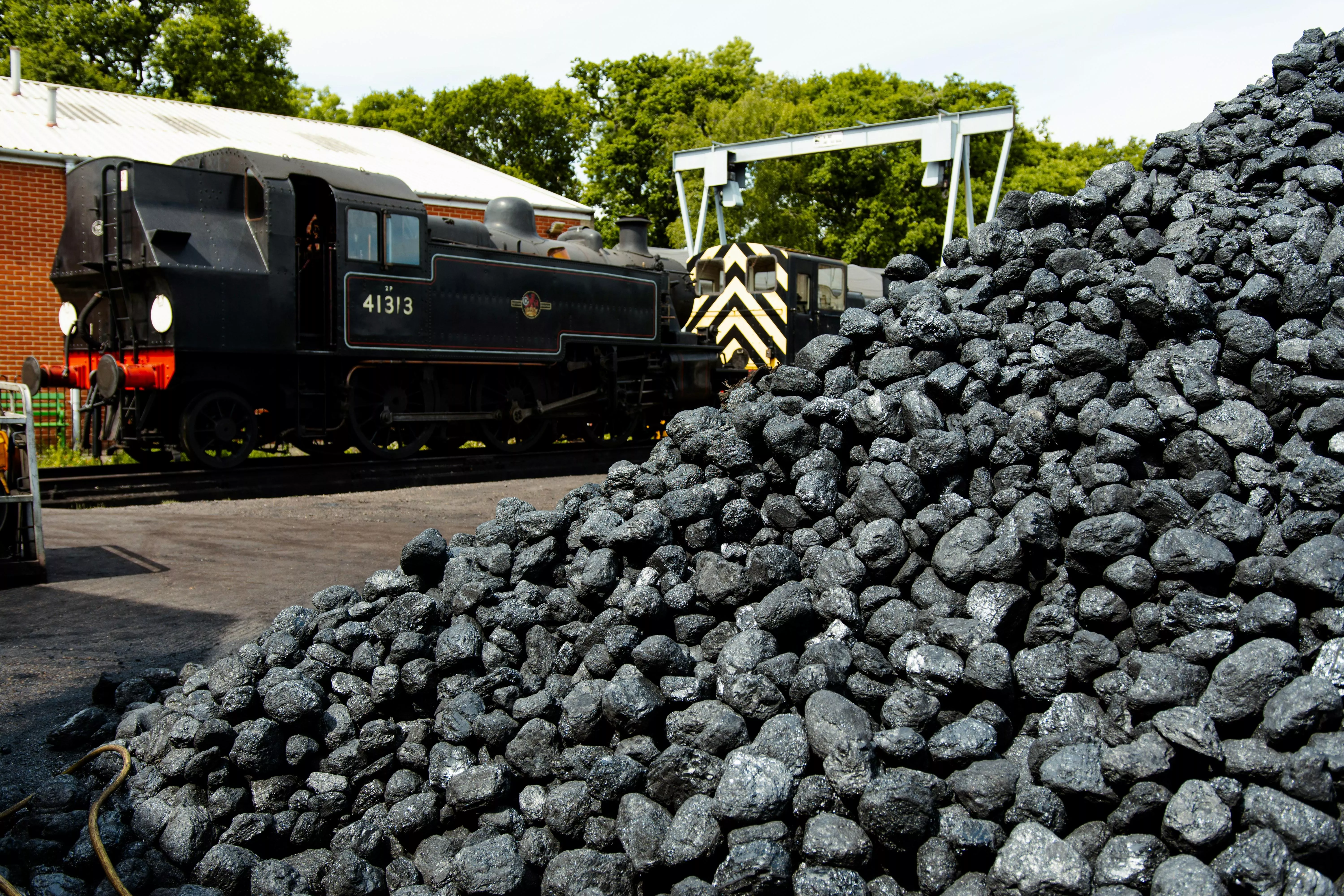
When I was a kid, my mother used to tell me that if I didn't behave, all I would get for Christmas was a lump of coal.
That prospect was terrifying enough that I straightened up in a hurry. I never did receive a lump of coal.
Now, after watching America’s left-wing green energy zealots try to flush our standard of living—not to mention modernity itself—down the toilet, I'm beginning to believe my mother was onto something. Like modern progressives, I didn't know what I was missing out on.
Not that coal can seriously be considered the final answer. It most certainly isn’t. Few serious observers argue that burning fossil fuels forever is the destination, but in the rush to embrace an all-renewable future, policymakers have often forgotten an inconvenient reality: civilization runs on dependable electricity, not on wishful thinking.
Or, to say it another way, when the lights go out, the rhetoric goes dark.
That’s why President Donald Trump’s announcement earlier this month to invest hundreds of millions of dollars into preserving and modernizing America’s coal-fueled power plants is a Christmas present for both Wisconsin and the nation. Critics dismiss it as archaic—that actually is one of the nicer terms—but it should be understood as an acknowledgment that, under Barack Obama, Joe Biden, and Democrats, the nation moved recklessly toward an energy transition before proving that the replacement system could actually carry the load.
They still can’t prove it; in fact, the evidence points in the opposite direction.
Two lumps in your stocking
For Wisconsin, the implications are immediate. Trump’s announcement landed in the state like Santa on his sleigh, among the presents a $19-million Department of Energy (DOE) federal investment in the state’s Columbia Energy Center under the Reliable, Economical, and Local Advancement in Modernized Coal initiative.
Combined with $29.5 million in non-federal funding, the Alliant Energy-driven project totals $48.5 million and will modernize the facility while maintaining dependable baseload generation and improving environmental performance. The Columbia Energy Center produces approximately 1,112 megawatts of electricity—enough to power hundreds of thousands of homes and businesses—and remains one of Wisconsin’s largest generating stations.
“This approach keeps the facility operating safely as it continues to deliver affordable, reliable power in support of customers,” Alliant senior communications manager Cindy Tomlinson told media outlets in a statement. “In addition, if our application is funded, it helps us sustain the work of nearly 100 high-skill union workers at the plant, represented by IBEW Local 965. Additional skilled trade employment opportunities are also expected to be generated during construction, thereby preserving high-wage employment opportunities and strengthening economic resilience in rural Wisconsin.”
The project is part of a much larger national initiative. On June 4, the administration announced up to $425 million in Defense Production Act funding to support 13 coal-fired power plants while providing another $75 million for the West Gateway Terminal in Oakland, California, which is intended to export more than 10 million tons of bulk commodities annually to allies, including Japan, South Korea, Taiwan, Vietnam, and Malaysia.
In addition, DOE will spend up to $350 million for two projects in Anchorage, Alaska, and Mt. Storm, West Virginia, one project in Guayama, Puerto Rico (to retrofit and modernize an existing coal-fired plant), and one recommissioning project in Cumberland, Maryland, a coal facility that ceased operations in 2024.
Overall, administration officials estimate the effort will support more than 14,000 jobs while helping avoid $50 billion in future electricity generation costs.
For Wisconsin residents increasingly worried about rising utility bills, that figure is dispositive, for coal’s resurrection under Trump 2.0 is not about nostalgia for mining communities and dinosauric fossil fuels but about preserving the reliability of the electric grid. Perhaps more important, it’s about preserving and boosting our standard of living.
And that last fact is why Trump, who knows a thing or two about both short- and long-term benefits—recent history notwithstanding—has been pushing coal’s benefits. Sure, the president every now and then might throw off a careless remark about not caring—remember, watch what he does, not what he says—but his coal push actually shows Americans just how much the president really does care.
Democrats shriek on and on about affordability these days, but let green energy fanatics take command of the economy, and affordability won’t even be in the dictionary. No one would be able to define it, such a thing of the past it would be. Sort of the same way Democrats feel about women—can’t define them and so, knowing not what women are, dismiss their rights out of hand.
Stupid is as stupid does
But I digress. In the Oval Office on June 4, the president was blunt about why America needs coal. The corporate media won’t report the case he and his top energy officials laid out, so I will.
“Today, we’re taking historic action to bring down the price of energy and the cost of living for all Americans with the power of clean, beautiful coal,” Trump said, adding that the nation under Obama and Biden had effectively been suckered into abandoning prosperity and competitiveness. Countries achieving industrial success continue to rely heavily on coal, Trump said, while those not so successful have jettisoned it.
“If you look at China, if you look at so many of the successful countries, they’re using coal,” Trump said. “If you look at some of the real great failures, they’re using wind. Just keeps blowing, blowing, blowing, and puts you right out of business. Very expensive, the most expensive energy there is. So, wind is not working very well, but they keep it going because people get subsidies from countries that are stupid.”
The president has a way with words, but most often they boil down to simple truths, in this case, if you don’t use coal, you’re stupid. It’s a no-brainer, and apparently, in Trump’s view, China isn’t stupid.
“China, by the way, last year built 52 coal plants,” he said. “They built about two windmills. You know, the only time they build a windmill is when they’re trying to sell them to stupid people from the United States, the suckers. And by the way, and all over Europe, they sell the windmills, but they don’t use them. I wonder why. They use coal plants and other things.”
In contrast, the president said, his investment would protect 14 coal plants and 42 coal mines, including the 13 coal plants in West Virginia, Kentucky, North Carolina, Indiana, Tennessee, Arizona, Arkansas, Oklahoma, North Dakota, and Wisconsin.
“By summer 2028, over 12 million tons of clean, beautiful coal per year will be shipped to countries all around the world,” he said. “Finally, we’re taking nearly $200 million—that was set aside for the Green New scam, but the Green New scam is history—and repurposing that money so that we restart a coal plant in Maryland and help build two brand new coal plants in Alaska and West Virginia.”
A critical point made in the Oval Office concerned the sabotage that progressives have allowed to happen, falling for or abetting the flimflam of depressing reliable and plentiful industry, even as the rest of the world laughed at us.
Interior Secretary Doug Burgum reinforced Trump’s argument.
“When you took office, the first thing you did was declare an energy emergency,” Burgum said. “Some people question that, but the prior administration under Biden had gone so far down the path of pursuing the highly subsidized intermittent weather-dependent sources of electricity that our grid was at risk. You understood that, and you understood how key coal is.”
Coal brings other benefits, Burgum said.
“With record coal leases, this is where we take federal public land, lease it to the private sector, they write a check that comes into the treasury, they create jobs, help support local communities,” he said. “There were zero coal leases held in four years under the Biden administration.”
Already in his term, energy secretary Chris Wight added, 17 coal plants were not closed because Trump is president, and that saved 17 gigawatts of electric generating capacity.
“Americans are upset about high electricity prices, and they should blame closing existing reliable, secure plants and replacing them with subsidized, unreliable plants,” he said. “That’s a guaranteed way to drive electricity prices up.”
Looking at whole-of-government efforts since Trump began his second term, Wright said 45 coal plants are open today that would not be open. And, though he didn’t mention it, that fact adds important context to debates about inflation.
Indeed, while Trump tariffs never added a significant long-term spike to prices, there’s no question the war in Iran has, and those are the two topics the corporate media hammer away at in trying to blame Trump for ongoing higher prices. They somehow never mention the significant actions that reduce pressures on prices, from regulatory rollbacks to the deep excision of government bankrolling of the non-profit sector, and, indeed, energy prices and the role of coal.
“Where would we be to re-industrialize America [without Trump’s actions on saving coal plants]?” Wright asked. “Where would electricity prices be if we had let all of those plants close? But we’re not doing it. That is $700 million of government funding, but it’s matched with $1.7 billion of private investment from the owners and operators of those plants."
Not a fair-weather friend
Wyoming Governor Mark Gordon made another important point. Once all the numbers are in, Gordon said, many environmentalists often solemnly concede they might be sacrificing a standard of living and a way of life, but they say the trade-off is worth it because the trade is for life itself.
But that’s not true, and the legacy media knows it. The lumps of coal I might get for Christmas today would be a whole lot cleaner than the coal I would have received when I was a kid.
“It’s high-tech jobs,” Gordon said. “At this point, we don’t mine coal the way we used to at all. It is very, very technologically proficient. And what’s more important, it’s environmentally sound.”
Gordon pointed particularly to Japan and Taiwan as two countries that were going to forego coal but have thought the better of it. And, he added, the administration’s latest initiative isn’t just about clean, beautiful coal.
“We have companies that are now saying we believe we can get rare earth minerals and critical minerals from what we’re doing,” he said. “So we are advancing technology, advancing the opportunities and the security of the state.”
Wright echoed that assessment.
“We wouldn’t have the buildings, the factories, the industry, the electricity grid we have today without the critical contribution of coal,” Wright said. “It’s been the largest source of global electricity for 125 years in a row and will be for decades to come. In the United States, it remains a critical source of our electricity. Also, a critical source for our industries. Can’t produce steel, cement, and other materials without coal. And beyond that, the impacts of coal in our electricity sector, just think of the direct impact on human lives.”
Ah, individual human lives. That’s a concept Democrats most often leave out of the equation.
But that impact was in full view earlier this year, Wright said, when severe winter storms struck much of the nation, especially winter storm Fern in late January. Wright asserted that the 17 coal plants saved in 2025 made a dramatic difference during that storm.
“Conservatively, hundreds of Americans would have lost their lives if those 17 coal plants had closed,” he said. “We pushed the East Coast electricity grid in the United States absolutely to the limit. A storm, Uri, hit five years ago in Texas, smaller in geographic extent, not the same magnitude, over 300 people died. But because we had those coal plants operating and running, and not only did they run, wind power disappeared when the storm hit. … Coal stepped up and produced 25 percent more electricity during this storm than its normal, reliable chugging out of electricity. Without those plants, without that increase in electricity production, we lost a lot of Americans and untold economic damage.”
To be sure, coal opponents will contest the specifics of such assertions coming from the administration. But the larger point is incontestable: Renewables can perform brilliantly when the weather cooperates, but coal shows its fundamental importance when it doesn’t and when electricity is absolutely necessary.
In other words, coal is not a fair-weather friend.
The reliability of production becomes increasingly important in an era of historic growth in electricity demand driven by artificial intelligence, semiconductor manufacturing, electrification initiatives, and industrial reshoring.
The extent of today’s demand was not even a gleam in the Obama administration’s eye. Back then, it seemed that green energy saints were on the verge of simply reaching out the window of reality and grasping the fantasy of infinite renewable power. The potential of renewables—both its production and its economics—didn’t work then, either, but the explosion of demand has consigned it to the dustbin of futuristic fantasy, along with such things as Ford’s 1958 prototype of a nuclear-powered car, the Ford Nucleon: They long for it wistfully, but it ain’t happening anytime soon.
If a bird in the hand is worth two in the bush, then the cost of that bird makes coal even more appealing. A 2026 analysis of Indiana’s Levelized Cost of Energy (LCOE) by Always On Energy Research to determine the lowest-cost means of serving existing residential, commercial, and industrial customers and meeting anticipated electricity demand from data centers showed that the continued use of Indiana’s existing hydroelectric ($17.75 per megawatt-hour (MWh)), combined cycle (CC) natural gas ($29.14 per MWh), and coal plants ($55.22 per MWh), along with new CC natural gas units, would be the most cost-effective means of serving existing customers and meeting growing electricity demand.
“New wind, solar, and nuclear power plants would be significantly more expensive than other resources, with unsubsidized costs of $67.10, $76.79, and $122.18 per MWh, respectively,” the report’s executive summary stated. “Wind and solar costs increase to $129 and $159.24 per MWh, respectively, when the cost of backup generation resources needed when the wind is not blowing, and the sun is not shining, are incorporated into their LCOEs.”
Such analyses challenge the environmental narrative that coal has become both economically obsolete and environmentally problematic. Instead, ideology rather than market competition has forced premature retirements.
The big winds of opposition
Ultimately, of course, the central case against coal is that it’s simply unclean and dangerous, nowhere close to being “clean and beautiful.”
The truth is, though, making that claim is like calling a handsome movie star ugly because he wasn’t the best-looking kid at age 8. Like the late-blooming movie star, once-ugly coal has blossomed. The EPA’s 2023 emission reduction data for 1995-2023, the latest available, documents that annual emissions of sulfur dioxide from power plants fell by 95 percent, and annual emissions of nitrogen oxides fell by 89 percent. Annual carbon dioxide emissions from power plants have also been falling, from 2.16 billion tons in 1995 to 1.56 billion tons in 2023. That’s a 28 percent reduction, made possible by advanced filtering and scrubbing, and other technologies.
Specifically, electrostatic precipitators remove fly ash from the flue gas stream, scrubbers remove unwanted sulfur dioxide and convert it into gypsum, and low-nitrogen-oxide burners limit the amount of nitrogen oxides produced. The University of Alaska Fairbanks’ modern coal facility reportedly operates with one of the nation’s lowest guaranteed particulate emissions rates for any coal unit while producing only about 20 percent of the nitrogen oxide emissions generated by the boilers it replaced.
None of which is to say that any technology can make coal completely carbon-neutral, but it can substantially reduce the amount of pollution produced and serve, at the very least, as a long-term bridge to a time when a viable alternative energy source emerges.
Speaking at the United Nations last year, Trump took inventory of what other nations were doing. It was fairly straightforward—which is, they are being bullied by environmental posers. Europe, Trump said, was an example not to follow.
“At extreme cost and expense, Europe reduced its own carbon footprint by 37 percent. . . ,” he said. “However, for all of that sacrifice and much more, it’s been totally wiped out, and then some by a global increase of 54 percent. Much of it comes from China and other countries that are thriving around China, which now produces more CO2 than all the other developed nations in the world.”
Air pollution doesn’t respect borders, and neither does garbage, Trump said.
“In Asia, they dump much of their garbage right into the ocean,” he said. “And over about a one-week and two-week journey, it flows right past Los Angeles. . . .Massive amounts of garbage. Almost too much to do anything about. Flowing past Los Angeles, past San Francisco.”
The primary effect of these green energy policies has not been to help the environment, Trump said, but to shift manufacturing and industrial activity from developed countries that follow the rules to polluting countries that break them.
“European electricity bills are now four to five times more expensive than those in China, and two to three times higher than in the United States,” he said. “And our bills are coming way down.”
At least they were before the war, but that doesn’t change the brutal reality that renewable energy spectacularly fails as a replacement for coal. Transitions succeed only when replacements outperform what came before. They do not succeed because politicians simply wave a magic wand. If that were the case, we’d all be driving Ford Nucleons.
Wisconsin’s Columbia Energy Center modernization reflects that practical reality. Rather than demolishing functioning infrastructure in pursuit of ideological purity, policymakers are acknowledging that dependable baseload generation still matters.
Maybe one day coal truly will become obsolete. Markets and technology—not political symbolism—should decide when that day arrives. Until then, the lump of coal sitting in America’s Christmas stocking may prove less a punishment than an insurance policy.
And given the stakes involved, Wisconsin may discover that keeping it around for a little while longer is not such a bad idea after all.

Interested in the content of this Article?
Reach out to the MacIver Institute to aquire more information


