
- Podcasts
 Podcasts
 - Videos
 Videos
 - Policy Issues
 Policy Issues
 - About
 About
About


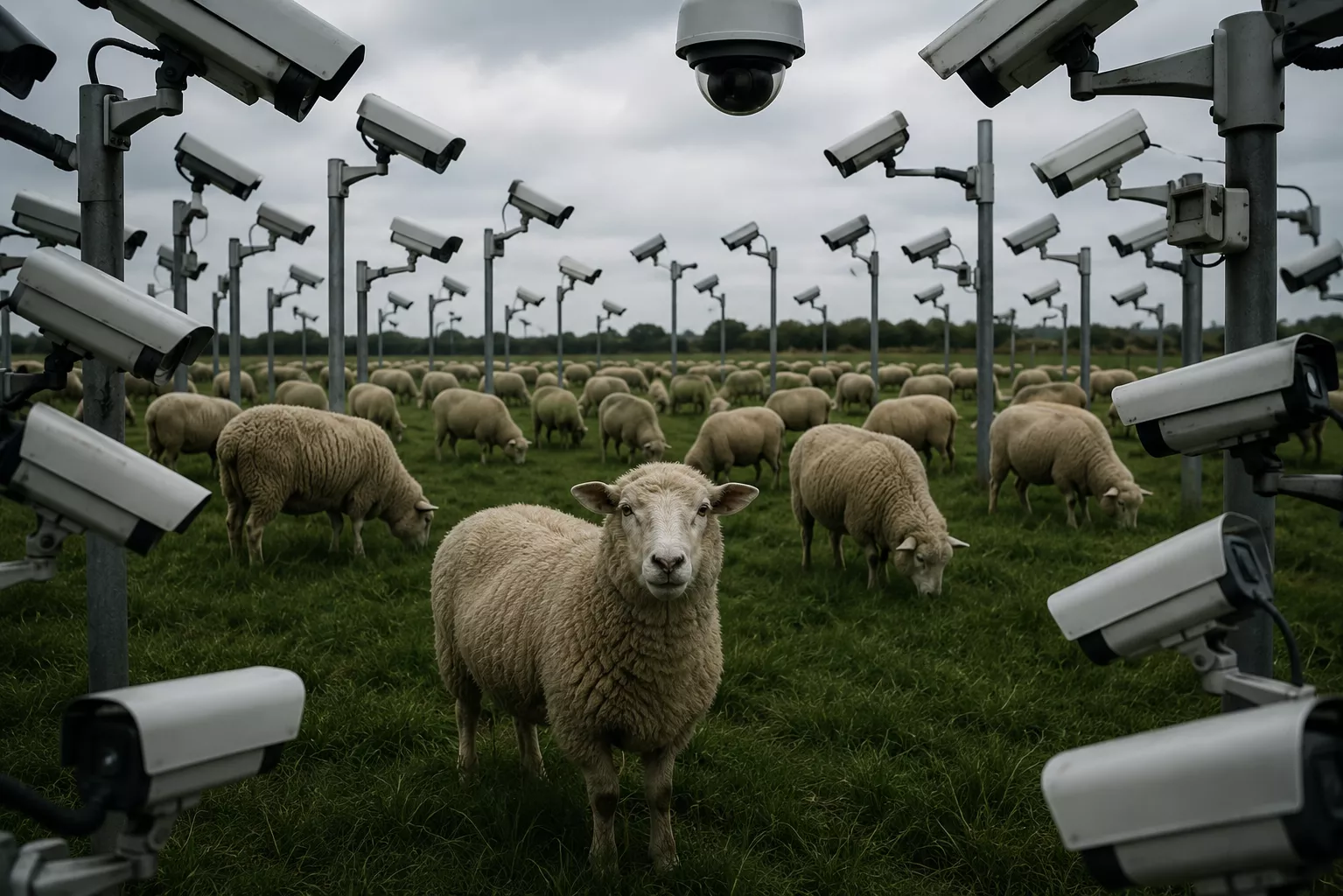
What are Flock Cameras?
Flock Cameras are a product of Flock Safety, a privately owned American manufacturing and surveillance company. The cameras are commonly known as ALPR (automated license plate recognition) systems and, according to the company itself, have assisted in over 1,000,000 police investigations and have found over 10,000 missing persons throughout the United States. Flock owns and operates all of its devices, leasing them to various categories of customers. Much of Flock's initial investment came from private venture capital funds associated with Peter Thiel. They primarily market their products to law enforcement agencies, but Flock also markets and sells its products to community organizations and other private entities.
However, Flock cameras have become a controversial talking point over the last month or so, with staunch defenders and staunch detractors on both sides of the political aisle having much to say about whether these cameras are truly geared towards public safety or, perhaps more sinisterly, a step towards an Orwellian surveillance state that could change American life for the worse.
The core question that has arisen as a result of these being adopted is this: what’s more important? Public safety on open roads or government accumulation of searchable data without legal warrants? As these cameras continue to become more prevalent in everyday American life, it’s important to understand the good, the bad, and the ugly of these cameras and what precedent they may set for a weakening of the Fourth Amendment.
What about the Fourth Amendment?
The key Fourth Amendment issue at hand is that most searches of the database don’t require any type of warrant. Critics argue that this warrantless search process creates a mosaic of movement tracking, similar to cell-phone or GPS tracking, previously ruled a Fourth Amendment violation by the Supreme Court in Carpenter v. United States.
More recent decisions have not spoken with one voice on Flock cameras. In January 2026, two decisions–Schmidt v. City of Norfolk and State v. Simonson–upheld limited deployments as constitutional. Both courts stressed that the outcome turns on the specifics of the program: how many cameras, how long the data is kept, and how far the net is cast. Meanwhile, the ACLU is pressing a Fourth Circuit case arguing that dense, pervasive ALPR networks cross the constitutional line under the same mosaic theory the Supreme Court used in the aforementioned Carpenter v. United States to rein in warrantless cell-phone tracking. The Supreme Court itself has never ruled on ALPR systems, however.
In short, the legality of any given city’s Flock network depends on camera density, retention periods, and the breadth of data sharing across agencies. The same technology can look very different and raise very different Fourth Amendment problems from one jurisdiction to the next.
The Good
An immeasurable amount of utility in terms of public safety has been attributed to Flock Safety and its products over the last couple of months, especially as it relates to their use by police precincts all over America. These cameras effectively provide real-time photographs of license plates, complete with a software-based database and data retention periods for whoever is using Flock. This has created a cross-jurisdictional database that law enforcement can and does use in order to support whatever specific needs spring up from that case.
As previously mentioned, Flock claims that they have assisted in over 1,000,000 police investigations, have found over 10,000 missing persons, and have also protected hundreds of schools by setting up “preemptive” perimeters as a result of the cameras. These numbers are undoubtedly impressive, especially as it relates to overall public safety and investigative utility. According to the company, information from these cameras is stored for less than 30 days and is encrypted so that only registered users can access location and vehicle data en masse.
On their website, Flock Safety states that their cameras aren’t capable of facial recognition, continuous identity tracking, or live video surveillance, three issues that the public has clung to, and which the company has claimed are a simple misunderstanding of the technology and its appropriate use cases. The single camera system employed by Flock is more often than not used for non-specific observation, but the system can also be used in order to create a dense network based on pattern recognition and reconstruction.
The Bad
The technology itself is quite neutral. The problem is state control over unregulated data and a current system of weak constraints on what these cameras are and aren’t allowed to do, as well as how efficient they are and their intended use case. Regarding this inefficiency, A 2021 study of the Flock Falcon camera found a 10% error rate in data output, leading to multiple wrongful arrests in multiple cities.
In 2025, a series of software vulnerabilities were found in Flock cameras, with the company stating that you would need to have physical access to the device in order to gain information. This was proven false later in 2025, as hackers were able to remotely gain access to live streams and administrator controls. Flock has claimed this has been remedied, but multiple online presences continue to hack into their software and hardware well into 2026.
An analysis by a local police department in Roseville, California, stated that 71% of the 1,427 vehicle alerts sent to them by Flock in 2023 and 2024 were incorrectly identified plates, and that Flock cameras had repeatedly failed to identify passing vehicles that were used in crimes. The company refuses to comment on the efficacy of its cameras or on its internal testing process. There’s work to be done on getting this system anywhere near usability.
The Ugly
Data sharing with other agencies and limited oversight has created clear risks of abuse, with hundreds of documented cases of police officers accessing it to stalk current and ex-partners. In March, for instance, an officer resigned from the Milwaukee Police Department after allegedly using the department’s network of ALPRs to track his romantic partner and one of the partner’s exes nearly 180 times over a two-month period.
There have been multiple instances of cameras being put up without consent or cooperation from local jurisdictions, with those cameras then being left up long after their cancellation date. In 2025, the City of Verona voted not to renew their contract with Flock, and the company didn’t turn the cameras off nor remove the physical units, leaving the city to cover all the cameras with trash bags in order to “stop the units from spying on people,” according to Verona Mayor Luke Diaz.
As touched on before, these cameras haven’t necessarily been known for their accuracy, with dozens and dozens of nationwide instances of misread license plates leading to false arrests and even instances of people being jailed for weeks and months due to false information and recommendations being handed to them by Flock’s AI systems. Public backlash over AI is already at an all-time high, and as Flock cameras continue to rise in the public consciousness, cities and towns are going to have to have very hard conversations regarding how they use this new technology, or whether they use it at all. Citizens have a legitimate interest in not having their routine movements catalogued and queried at will by the state.
Conclusion
Flock cameras have generated and continue to generate bipartisan backlash and media controversy, and a recent trend of cameras being destroyed, stolen, or obstructed continues to grow in popularity and public consciousness. An open-source website, www.deflock.org, also continues to grow in popularity, with the site acting as a mapping agent, allowing users to know where Flock cameras are and how to route their drives in order to avoid them. This will become harder to accomplish as more and more cameras are created, and more and more jurisdictions sign up to lease them. The demand and rapid adoption of this technology is outpacing regulation.
The government holds a uniquely coercive power here with what could very well be unfettered access to information without a warrant or reasonable suspicion. The reality is this: without clear rules, bureaucracies expand surveillance because the political costs of restraint are higher than the costs of overreach. The public needs to stay involved in this conversation without taking a black-and-white approach to these cameras. Practical recommendations could look like something like this:
Flock cameras illustrate a recurring challenge of the digital age: tools that enhance safety can also erode the presumption of privacy the Fourth Amendment was written to protect. A free society can pursue both effective policing and constitutional limits. The decisive variables are not the cameras themselves but the density of the network, the duration of retention, the breadth of sharing, and whether big government is forced to justify its queries rather than treat every driver as a potential data point. Conservatives and free-market advocates should insist on clear, enforceable rules that keep the technology useful without turning public roads into a permanent, warrantless Orwellian grid.

Interested in the content of this Article?
Reach out to the MacIver Institute to aquire more information


