
- Podcasts
 Podcasts
 - Videos
 Videos
 - Policy Issues
 Policy Issues
 - About
 About
About


Correction: A previous version of this article said that Larson posted the video on X on Thursday. The video was filmed before the August 11 primary, and not shared on Larson’s X account.
"Even Tiffany said he would repeal the tax break"
Some of the strongest criticism for David Crowley on data centers is not coming from Republicans in Wisconsin.
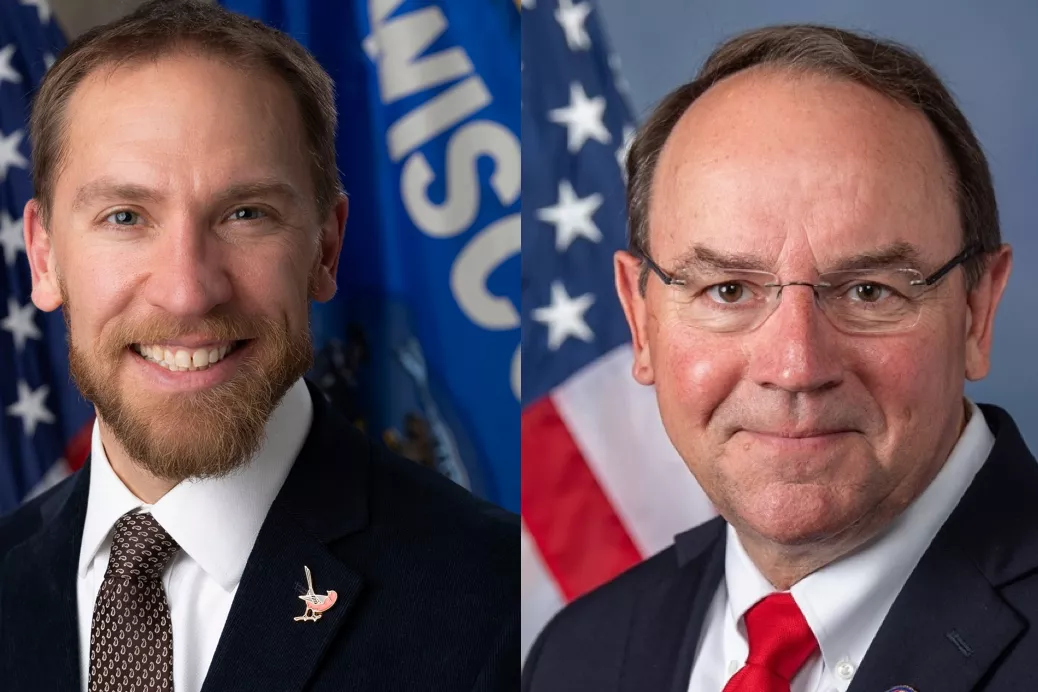
A video from progressive state Sen. Chris Larson, D-Milwaukee, started making the rounds this week. In it, Larson slammed Crowley for refusing to end the state tax subsidy that would have taxpayers cover the costs to build data centers across the state.
"David Crowley is the only candidate to refuse to repeal the $2 billion tax cut for data centers," Larson said in a video recorded before the primary and posted to social media. "Part of this may be that the $350,000 he got from interest groups immediately after his re-entrance into the race came from the same groups that are building data centers. Even Tom Tiffany has said he would repeal that sales tax break."
Larson has been one of the loudest progressive voices against data centers in Wisconsin.
The video of his criticism started being highlighted again just as Republican candidate for governor, Tom Tiffany, launched a statewide tour to hammer Crowley on data centers.
"David Crowley wants taxpayers to keep subsidizing Big Tech’s data centers. I don’t," Tiffany said in an X post. "As governor, I’ll end every data center subsidy in Wisconsin."
Data centers have become a somewhat surprising issue in the race for governor.
But it is clear that a lot of voters, particularly Democrat voters, don't like data centers.
A Marquette Law School Poll from February shows that 70% of voters in the state say they don’t support data centers. That’s up from 55% last October.
But among Democrats, those numbers are even higher. The poll shows that 85% of Democrats say any benefit of a data center is buried by the costs. Pollsters also say 76% of independents are also in the “No” camp on data centers. That's compared to just 55% of Republicans who say they don’t support data centers.

Interested in the content of this Article?
Reach out to the MacIver Institute to aquire more information


