
- Podcasts
 Podcasts
 - Videos
 Videos
 - Policy Issues
 Policy Issues
 - About
 About
About


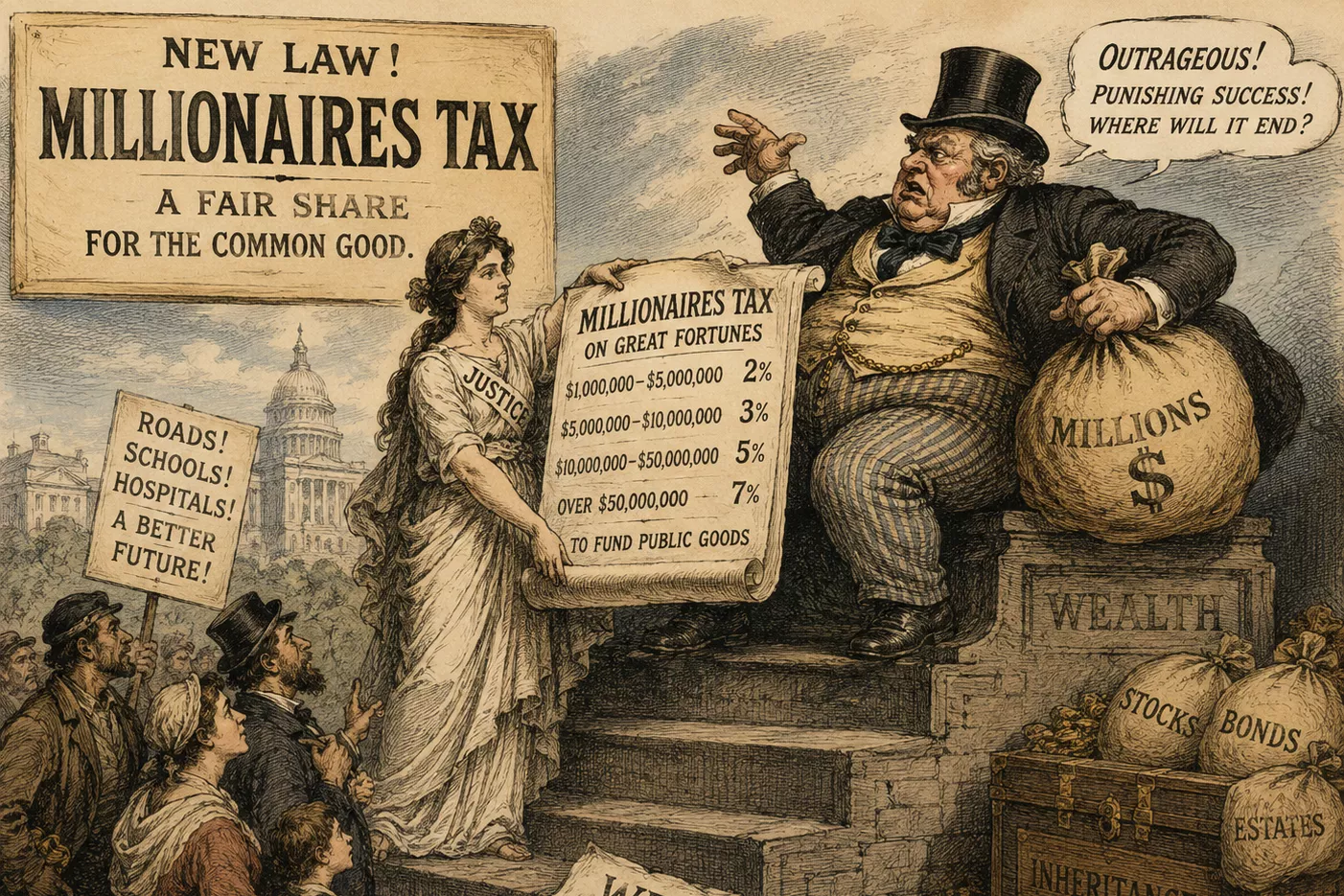
Hong Changes Millionaires Tax Plan?
At Tuesday night’s debate, Hong claimed she is simply looking to tax people making seven-figures or more.
“Those who are making the millionth-and-one dollar,” Hong explained about who she would raise income taxes for. “The billionaires as well. Increase [their taxes] that to point-nine percent.”
That would take Wisconsin’s top income tax rate from 7.65% to 8.55%.
But that is not what Hong’s Millionaires Tax legislation says.
Hong introduced a plan last spring that would raise income taxes on top earners in Wisconsin to 17.7%.
“[This] bill creates a 5th individual income tax bracket for taxpayers with taxable income of at least $750,000 for single taxpayers and $1,000,000 for married couples filing jointly ($500,000 if filing separately) and sets the bracket’s rate at 17.30 percent for taxable year 2025 and 17.70 percent for subsequent years,” the legislation read.
On Tuesday, Hong framed her plan as a millionaires tax.
“It is incredibly disappointing that some of our lower income earners are paying a higher tax rate than some of our highest income earners,” Hong added.
But that too is not true.
Wisconsin’s lowest earners, usually people who make under $14,680, pay an income tax rate of just 3.5%. The state’s second tax bracket, which covers people who make between $14,681 and $50,480, pay a tax rate of 4.4%, while people who make between $50,481 and $323,290, pay a tax rate of 5.3%. Wisconsin’s current tax bracket covers people who make over $323,290, they are taxed 7.65%. The income thresholds are higher for married couples who file jointly, while they are lower for married couples who file separately.
Still, Hong’s 17.7% income tax legislation would make Wisconsin the highest taxing state on top earners in the Country.
California currently holds that title with a 13.3% income tax, followed by Hawaii at 11%, and New York with a 10.9% income tax on its top earners.

Interested in the content of this Article?
Reach out to the MacIver Institute to aquire more information


