
- Podcasts
 Podcasts
 - Videos
 Videos
 - Policy Issues
 Policy Issues
 - About
 About
About


Activism > Learning
The latest speech from Wisconsin’s state superintendent is not going over well with education advocates in the state.
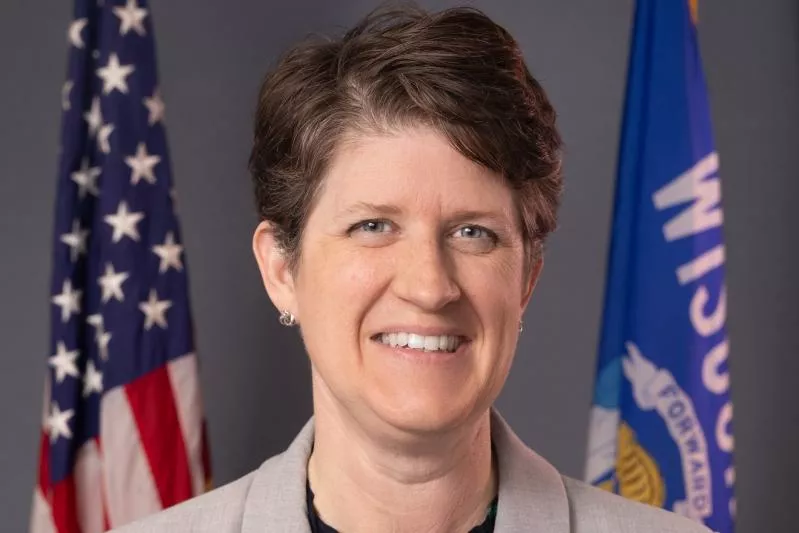
State Superintendent Jill Underly delivered her State of Education address on Thursday. She once again didn’t talk about reading, writing, math, graduation rates, or low test scores. Instead she talked about using schools to be welcoming places, and to empower children to participate in “democracy.”
"Every day, in school buildings across Wisconsin—from our largest cities to our smallest rural communities…students are finding their voice for the first time. They are raising their hand to express an opinion. They are beginning to understand that their perspectives matter," Underly said.
She also, once again, hammered on what she sees as a lack of funding for Wisconsin's public schools.
"Schools simply cannot absorb decades of below-inflation funding without consequences," Underly added. "When roughly 80% of a school district’s budget goes to people, stagnant funding has very real consequences: staffing reductions, larger class sizes, fewer student supports and opportunities, and increasingly difficult working conditions for educators."
Critics, however, quickly said money is not the problem.
"We spend more than we did in 2000 adjusted for inflation. And since then Act 10 has saved districts billions. If nearly $19,000 per student isn’t enough, what is the number that is?" Will Flanders with the Wisconsin Institute for Law and Liberty asked on X.
Kids Win Wisconsin boss and former state superintendent candidate Brittany Kinser said the problem is that too many kids in Wisconsin cannot read, write, or do math properly.
"According to the Nation’s Report Card, only 31% of Wisconsin fourth graders are reading at or above NAEP Proficient. Avoiding that reality will not help more children learn to read well and succeed,” Kinser said after the speech.
Even with Wisconsin’s new, and lower test scores, nearly half of kids are not “proficient” in either reading or math.

Interested in the content of this Article?
Reach out to the MacIver Institute to aquire more information


